Yearly Chimney Inspection: 7 Critical Reasons Every Homeowner Needs One Every Single Year
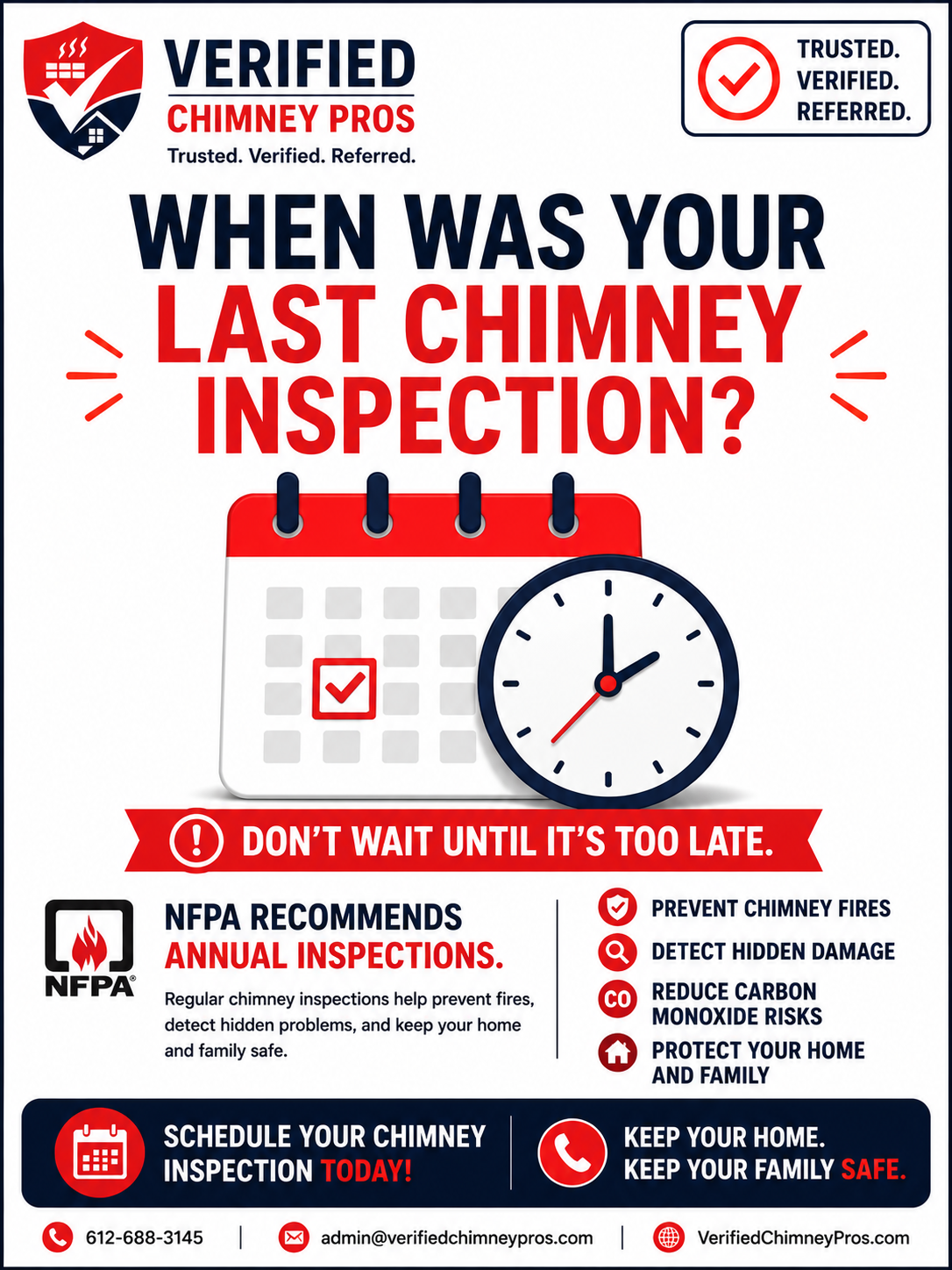
When was your last chimney inspection? If you have to stop and think about it—or worse, if you can’t remember at all—it’s overdue.
Most homeowners assume chimney inspections are optional. They figure if the fireplace looks fine and smoke goes up the chimney, everything’s working properly. But that assumption puts families at serious risk every single year.
According to the National Fire Protection Association (NFPA), failure to clean chimneys is the leading factor contributing to home heating fires. Between 2016 and 2020, U.S. fire departments responded to an average of 25,000 home fires involving chimneys, fireplaces, and venting systems annually. These fires caused an average of 20 deaths, 60 injuries, and $178 million in property damage every year.
An yearly chimney inspection prevents these tragedies. It catches hidden dangers before they become emergencies. It extends the life of your chimney system. And it gives you peace of mind knowing your home is safe.
This guide explains exactly why the NFPA recommends yearly chimney inspections for every homeowner, what professionals check during inspections, and how to find a verified chimney pro you can trust near you.
Why Most Homeowners Skip Yearly Chimney Inspections (And Regret It Later)
yearlyLet’s be honest: chimney inspections aren’t exciting. They’re not urgent. And when nothing seems wrong, it’s easy to put them off year after year.
Most homeowners skip their yearly chimney inspection for three reasons:
“Everything looks fine.” From the outside, chimneys rarely show obvious problems. Homeowners see bricks, a cap, and smoke going up when they light fires. What they don’t see is creosote buildup inside the flue, deteriorating mortar between bricks, or hairline cracks allowing water infiltration.
“I barely use my fireplace.” Many homeowners assume infrequent use means inspections aren’t necessary. But chimneys deteriorate whether you use them or not. Water damage, animal nests, and structural settling happen regardless of how often you light fires.
“Inspections are expensive.” Compared to emergency repairs after a chimney fire or carbon monoxide incident, inspections are incredibly affordable. The average annual chimney inspection costs $100-$250. Emergency repairs? Often $2,000-$10,000 or more.
Skipping inspections doesn’t save money. It just delays inevitable problems until they become expensive emergencies.
What the NFPA Says About Yearly Chimney Inspection Requirements
The NFPA 211 Standard is the nationally recognized guideline for chimney, fireplace, and venting system safety. Here’s what it says about inspections:
“Chimneys, fireplaces, and vents shall be inspected at least once a year for soundness, freedom from deposits, and correct clearances. Cleaning, maintenance, and repairs shall be done if necessary.”
Notice three critical points:
- “At least once a year” — This is a minimum requirement, not a suggestion
- “Regardless of frequency of use” — Even unused chimneys need annual inspections
- “Cleaning, maintenance, and repairs if necessary” — Inspections identify what needs fixing
The NFPA doesn’t recommend yearly chimney inspections arbitrarily. These standards are based on decades of fire investigation data, engineering research, and real-world incident analysis.
According to the Chimney Safety Institute of America (CSIA), homeowners who follow NFPA guidelines and schedule regular inspections prevent 85% of chimney-related fires and carbon monoxide incidents.
7 Critical Reasons You Need an Yearly Chimney Inspection Every Year
Here’s exactly what an annual chimney inspection protects you from—and why skipping it puts your home and family at risk.
Reason 1: Creosote Buildup Creates Deadly Fire Hazards {#reason-1}
Every time you burn wood, smoke rises through your chimney carrying creosote—a highly flammable tar-like substance. As smoke cools, creosote condenses on chimney walls, forming layers of combustible residue.
Over time, this buildup becomes a serious fire hazard. When chimney temperatures spike—from burning pine, green wood, or exceptionally hot fires—creosote can ignite. Chimney fires burn at temperatures exceeding 2,000°F, hot enough to crack flue liners, damage masonry, and spread to surrounding structures.
According to the U.S. Consumer Product Safety Commission (CPSC), creosote-related chimney fires cause thousands of residential fires annually, resulting in deaths, injuries, and millions in property damage.
An yearly chimney inspection identifies creosote levels and determines when cleaning is necessary—before dangerous buildup creates fire risk.
Reason 2: Hidden Structural Damage Worsens Over Time {#reason-2}
Chimneys endure extreme conditions: temperature swings from freezing winters to 1,000°F fireplace heat, moisture infiltration, settling foundations, and constant exposure to weather. Over time, this stress causes structural damage.
Common hidden problems include:
- Cracked or deteriorating flue liners
- Separated or crumbling mortar joints
- Damaged chimney crowns allowing water entry
- Rusted or missing chimney caps
- Tilting or leaning chimney structures
These problems don’t announce themselves. They develop slowly, worsen gradually, and eventually cause catastrophic failures. A $200 repair caught during an yearly chimney inspection prevents a $5,000 emergency rebuild later.
Reason 3: Animal Nests and Blockages Cause Carbon Monoxide Poisoning {#reason-3}
Chimneys are attractive homes for birds, squirrels, raccoons, and bats. During spring and summer—when you’re not using your fireplace—animals build nests inside flues. These nests create complete blockages.
When you light your first fall fire, smoke and carbon monoxide can’t escape. Instead, deadly gases back up into your home. Carbon monoxide is colorless, odorless, and kills quickly. According to the Centers for Disease Control (CDC), over 400 Americans die from unintentional carbon monoxide poisoning annually.
An yearly chimney inspection clears blockages, removes nests, and ensures proper ventilation before heating season begins.
Reason 4: Water Damage Destroys Chimneys From the Inside Out {#reason-4}
Water is a chimney’s worst enemy. When moisture enters through damaged caps, cracked crowns, or deteriorating mortar, it causes:
- Spalling: Bricks absorb water, freeze, expand, and crack apart
- Rust: Metal components (dampers, caps, liners) corrode and fail
- Staining: White efflorescence appears on brick exteriors
- Rot: Wooden framing near chimneys decays
- Mold: Damp chimneys become mold breeding grounds
Water damage compounds every season. A small crack this year becomes a structural failure next year. An yearly chimney inspection catches water infiltration early—before expensive repairs become necessary.
Reason 5: Liner Deterioration Allows Toxic Gases to Enter Your Home {#reason-5}
Chimney liners protect your home from heat, flames, and toxic gases. Over time, liners deteriorate from:
- Heat stress: Repeated temperature extremes cause cracks
- Chemical corrosion: Acidic condensation eats through clay and metal
- Age: Liners typically last 15-25 years before requiring replacement
When liners fail, combustion gases escape into walls and living spaces. You won’t see this happening. You won’t smell it. But you’ll breathe toxic fumes—including carbon monoxide—without knowing.
An yearly chimney inspection evaluates liner condition using specialized cameras and tools. Professionals identify deterioration before it becomes a health hazard.
Reason 6: Missing Mortar and Cracked Bricks Compromise Structural Integrity {#reason-6}
Mortar holds chimney bricks together. When mortar deteriorates—from age, weather, or settling—bricks lose support. Left unchecked, this leads to:
- Leaning chimneys
- Collapsing chimney tops
- Interior brick damage
- Structural instability threatening entire chimney systems
Repairing missing mortar costs hundreds of dollars. Rebuilding a collapsed chimney costs tens of thousands. An yearly chimney inspection identifies mortar problems early—when simple tuckpointing fixes the issue.
Reason 7: Insurance Claims Get Denied Without Proof of Maintenance {#reason-7}
Here’s something most homeowners don’t realize: if your chimney causes a fire and your insurance company discovers you haven’t maintained it properly, they can deny your claim.
Homeowner’s insurance policies typically require regular maintenance of all home systems—including chimneys. If you can’t provide documentation of annual chimney inspections, insurers may argue negligence and refuse to cover fire damage.
Professional chimney companies provide written inspection reports. These reports prove you maintained your chimney responsibly—protecting both your home and your insurance coverage.
Learn more about why verification matters when hiring chimney professionals.
What Happens During a Professional Yearly Chimney Inspection
A proper yearly chimney inspection follows NFPA 211 guidelines and typically includes three levels of inspection:
Level 1 Inspection (Annual Standard)
This basic inspection examines:
- Readily accessible portions of chimney interior and exterior
- Proper clearances from combustibles
- Evidence of creosote buildup
- Structural integrity
- Chimney cap and crown condition
Most homeowners need only Level 1 inspections annually. Certified professionals use flashlights, mirrors, and basic tools to evaluate visible components.
Level 2 Inspection (After Changes or Incidents)
Required when:
- You’ve bought or sold a home
- You’ve changed fuel types (wood to gas)
- You’ve had a chimney fire
- You’ve experienced weather events (earthquakes, hurricanes)
Level 2 inspections add video camera scans of flue interiors, attic and crawl space inspections, and detailed documentation.
Level 3 Inspection (Serious Hazards)
Necessary only when serious hazards are suspected. May involve removing chimney components for detailed examination.
According to the CSIA, certified chimney sweeps complete hundreds of hours of training and pass rigorous examinations before performing inspections. Always choose CSIA-certified professionals.
How to Find a Verified Chimney Pro for Your Annual Inspection
Not all chimney companies are created equal. Here’s how to find a legitimate, verified professional for your yearly chimney inspection:
Look for CSIA Certification
The Chimney Safety Institute of America certifies chimney professionals who meet national standards. CSIA-certified sweeps have proven expertise, ongoing education, and professional accountability.
Verify Insurance and Licensing
Legitimate chimney companies carry:
- General liability insurance (minimum $1 million)
- Workers’ compensation insurance
- State contractor’s licenses where required
Always ask for proof before hiring.
Choose Verified Chimney Pros
Verified Chimney Pros pre-screens every listed professional for:
- Active CSIA certification
- Current insurance coverage
- Background checks
- Verified customer reviews
When you hire through Verified Chimney Pros, you skip the research and verification process. Every professional has already been vetted.
When to Schedule Your Yearly Chimney Inspection for Best Results
The best time to schedule your yearly chimney inspection is late summer or early fall—typically August or September. Here’s why:
Availability: Chimney companies have more availability before peak season. You’ll get faster scheduling and more flexible appointment times.
Time for repairs: If your inspection reveals necessary repairs, you have time to complete them before heating season begins.
Peace of mind: You’ll know your chimney is safe before you light your first fire.
Avoid emergencies: Scheduling early prevents discovering problems in December—when you’re hosting holiday guests and desperate for fireplace use.
According to Angi, homeowners who schedule annual inspections in August or September save an average of 15-20% on inspection costs compared to emergency calls during peak winter months.
FAQ
How often should I get an annual chimney inspection?
The NFPA recommends annual chimney inspections for all chimneys, fireplaces, and venting systems—regardless of how often you use them. Even unused chimneys deteriorate from weather, animals, and structural settling.
What does a yearly chimney inspection cost?
Most Level 1 annual chimney inspections cost $100-$250, depending on your location and chimney complexity. This typically includes a visual inspection, written report, and basic recommendations.
Do I need an yearly chimney inspection if I don’t use my fireplace?
Yes. The NFPA 211 standard requires annual inspections regardless of use. Unused chimneys still suffer water damage, animal intrusions, structural settling, and deterioration. Problems worsen over time whether you burn fires or not.
What happens if I skip my yearly chimney inspection?
Skipping inspections allows dangerous conditions to develop undetected: creosote buildup, structural damage, blockages, and water infiltration. These problems lead to chimney fires, carbon monoxide poisoning, expensive repairs, and denied insurance claims.
How long does an yearly chimney inspection take?
Most Level 1 yearly chimney inspections take 30-60 minutes. More complex inspections (Level 2 or 3) may take several hours, depending on findings and necessary documentation.
What should I do before my yearly chimney inspection?
Clear the area around your fireplace, remove ashes from the firebox, and ensure professionals can access your chimney from both interior and exterior. Provide past inspection reports if available.
Can I perform my own yearly chimney inspection?
No. NFPA 211 requires inspections by qualified professionals with specialized training, tools, and knowledge. DIY inspections miss hidden dangers like flue liner deterioration, internal blockages, and structural damage.
What’s the difference between inspection and cleaning?
An yearly chimney inspection evaluates your chimney’s condition and identifies problems. Cleaning removes creosote, soot, and debris. Inspections determine whether cleaning is necessary—and what else needs attention.
Does homeowner’s insurance cover yearly chimney inspections?
Typically no—insurance doesn’t cover routine maintenance. However, maintaining documentation of regular inspections protects your coverage if chimney-related damage occurs. Insurers may deny claims if you’ve neglected required maintenance.
What credentials should my chimney inspector have?
Look for CSIA certification, current liability insurance, workers’ compensation coverage, and positive verified reviews. Verified Chimney Pros pre-screens all listed professionals for these credentials.
Can yearly chimney inspections prevent chimney fires?
Yes. According to the CSIA, regular annual chimney inspections and cleanings prevent 85% of chimney-related fires. Inspections identify creosote buildup, blockages, and structural problems before they cause fires.
What if my yearly chimney inspection finds problems?
Your inspector will provide a written report detailing findings and recommendations. You can then schedule necessary repairs before using your fireplace. Most problems caught during annual inspections are relatively inexpensive to fix.
Are yearly chimney inspections required by law?
Requirements vary by location. Some jurisdictions mandate inspections before home sales or after chimney fires. Even without legal requirements, NFPA 211 standards represent the national safety benchmark and insurance best practice.
How do I schedule an yearly chimney inspection with a verified professional?
Visit Verified Chimney Pros to find certified, insured, background-checked professionals in your area. Every listed pro meets NFPA standards and CSIA certification requirements.
What happens if I can’t afford necessary repairs found during inspection?
Discuss priorities with your inspector. Some repairs are urgent (safety hazards), while others can be deferred temporarily. Never use a chimney with known safety issues. If necessary, avoid fireplace use until critical repairs are complete.
Schedule Your Yearly Chimney Inspection Today
If you can’t remember your last yearly chimney inspection, it’s overdue. And every day you wait, hidden dangers worsen.
Creosote builds up. Mortar deteriorates. Water infiltrates. Animal nests block flues. Liners crack. And eventually, small preventable problems become expensive emergencies—or deadly fires.
The NFPA recommends yearly chimney inspections for one reason: they save lives. Homeowners who follow these guidelines prevent fires, avoid carbon monoxide poisoning, protect their property investments, and maintain valid insurance coverage.
Don’t wait until something goes wrong. Don’t wait until you smell smoke in your living room or see bricks falling from your chimney. Don’t wait until winter when every chimney company is booked solid.
Schedule your yearly chimney inspection today with a verified chimney pro you can trust.
Find a Verified Chimney Pro for Your Yearly Inspection
Stop guessing whether your chimney is safe. Get it inspected by a certified professional who’s been verified for credentials, insurance, and reputation.