Gas Fireplace Chimney Maintenance: 7 Critical Reasons You Need Annual Inspections to Protect Your Home
“I have a gas fireplace, so I don’t need chimney inspections.” This is the most dangerous assumption homeowners make about gas fireplace chimney maintenance—and it’s completely wrong.
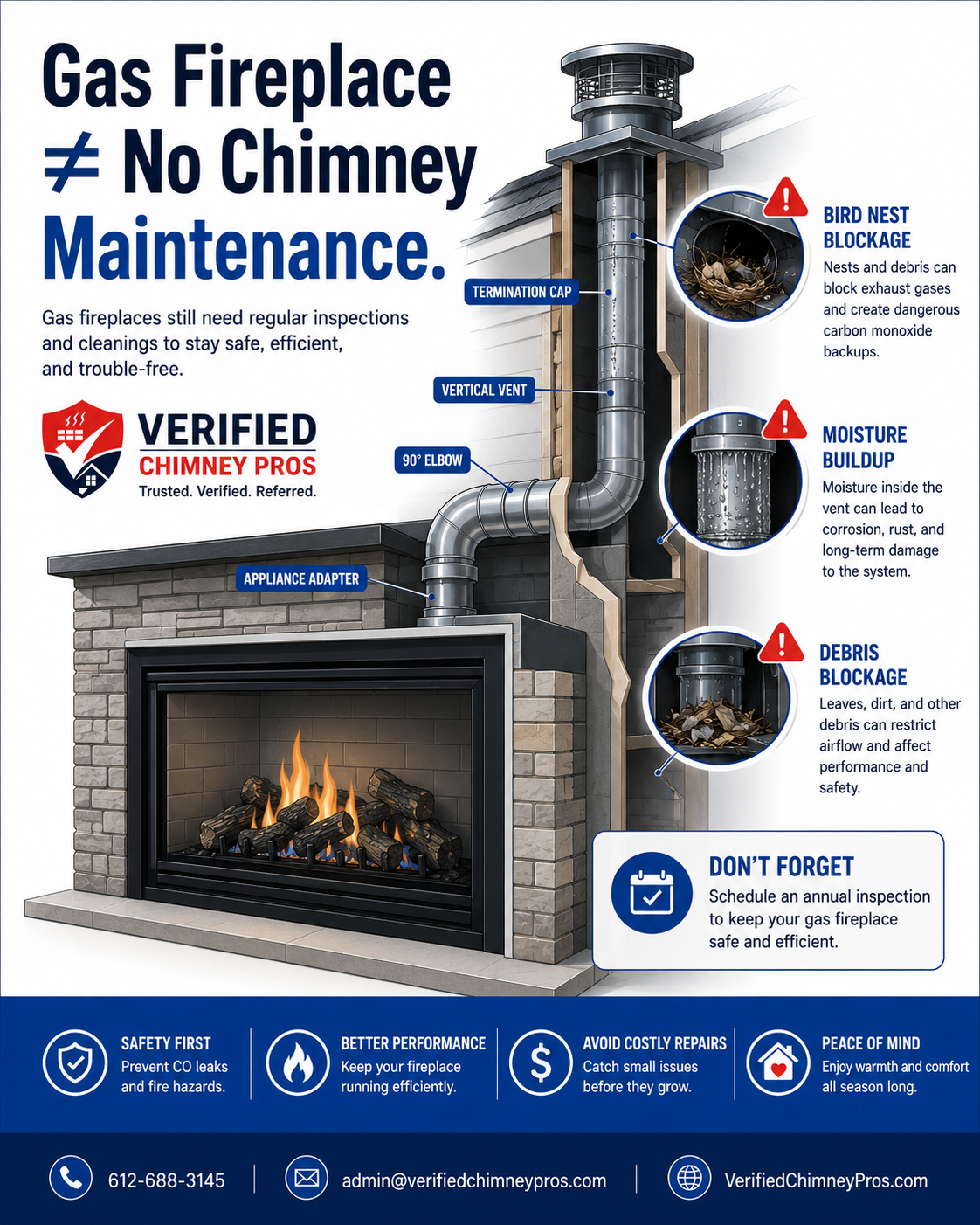
Gas fireplaces burn cleaner than wood. They don’t produce visible creosote. They don’t generate heavy smoke. So it’s easy to assume the chimney needs zero attention. But your gas appliance’s venting system still accumulates moisture, debris, rust, animal nests, and dangerous blockages that annual gas fireplace chimney maintenance catches before they become hazardous.
According to the National Fire Protection Association (NFPA), gas fireplaces and venting systems must be inspected annually—just like wood-burning chimneys. The NFPA 54 National Fuel Gas Code specifically requires professional inspection of all gas appliance venting systems to ensure safe operation and prevent carbon monoxide poisoning.
Skipping gas fireplace chimney maintenance doesn’t save money. It delays inevitable problems until they become expensive emergencies—or worse, safety hazards that put your family at risk.
This guide explains exactly why gas fireplaces need regular chimney inspections, what problems develop when you skip them, and how to find verified chimney professionals qualified to service gas appliances properly.
The Gas Fireplace Maintenance Myth
Gas appliances are safer than wood-burning systems in many ways. They produce fewer airborne particles, generate less visible pollution, and eliminate creosote fire risks. But “safer” doesn’t mean “safe without maintenance.”
According to the Centers for Disease Control (CDC), over 400 Americans die annually from unintentional carbon monoxide poisoning, and more than 100,000 visit emergency rooms. Malfunctioning gas appliances with blocked or damaged venting systems are leading causes.
The Chimney Safety Institute of America (CSIA) emphasizes that all venting systems—regardless of fuel type—require annual professional inspection. This inspection identifies moisture damage, blockages, improper installations, and component failures before they cause carbon monoxide infiltration or appliance malfunction.
Gas fireplace chimney maintenance isn’t optional. It’s life-saving preventive care that protects your family from invisible dangers and prevents expensive emergency repairs.
Hidden Dangers of Neglected Gas Chimney Systems
Water destroys chimneys from the top down. Rain, snow, and ice attack your chimney’s most vulnerable point — the very top where masonry meets open sky. Both your crown and cap defend this critical zone, but in completely different ways.
According to the National Fire Protection Association (NFPA), annual chimney inspections should always include examination of all top-mounted components. When either your crown or cap fails, moisture enters your chimney system and begins its destructive work.
The financial stakes are significant. HomeAdvisor reports that masonry chimney rebuilds cost between $1,000 and $5,000 — and full rebuilds can exceed $10,000. Most of that damage starts with neglected crown or cap failures that cost just a few hundred dollars to fix early.
Understanding chimney crown vs chimney cap maintenance is your first step toward avoiding these expensive disasters entirely.
7 Critical Reasons Gas Fireplace Chimney Maintenance Is Non-Negotiable
Here’s exactly why your gas fireplace needs professional chimney inspection and maintenance annually—even though it burns cleaner than wood.
Reason 1: Moisture Accumulation Causes Hidden Rust and Deterioration
Gas combustion produces water vapor. In properly vented systems, this moisture exits through the chimney. But some condensation inevitably occurs on metal vent pipes, especially during cold weather when temperature differentials are extreme.
Over time, this moisture causes rust from the inside out. You can’t see it without professional inspection tools. The vent pipe looks fine externally while corroding internally—until it develops holes that leak carbon monoxide into your walls and living spaces.
Professional gas fireplace chimney maintenance includes video camera inspection of vent interiors, moisture testing, and rust evaluation. Catching deterioration early means simple vent liner replacement costing a few hundred dollars. Ignoring it until carbon monoxide infiltrates your home means emergency repairs costing thousands—plus potential family health consequences.
According to HomeAdvisor, replacing damaged gas fireplace venting systems averages $800-2,500 depending on accessibility and vent length. Annual inspections costing $100-200 prevent these expensive emergency replacements.
Reason 2: Animal Nests Block Venting and Create Carbon Monoxide Hazards
Your chimney’s exterior opening is exposed year-round. Birds, squirrels, and other animals don’t care whether you burn wood or gas—they see a sheltered nesting location.
When animals build nests in your gas fireplace venting system, they create complete blockages. The next time you operate your fireplace, combustion gases can’t exit properly. Carbon monoxide backs up into your home instead.
This is especially dangerous because you won’t see visible smoke signaling a problem. Carbon monoxide is colorless and odorless. You might notice headaches, dizziness, or nausea—symptoms easily mistaken for flu—before losing consciousness.
Annual gas fireplace chimney maintenance removes nests, installs or repairs chimney caps preventing future animal entry, and ensures your venting system remains clear for safe operation. This simple preventive service literally saves lives.
Related reading: Annual Chimney Inspection: 7 Critical Reasons
Reason 3: Vent Pipe Separations Allow Deadly Gases Into Your Home
Gas fireplace venting systems consist of multiple connected sections of metal pipe. These connections use clamps, screws, or mechanical fittings to create sealed joints. Over time, thermal expansion and contraction, building settling, and normal vibration can loosen these connections.
When vent pipe sections separate—even slightly—carbon monoxide leaks into the spaces between your walls rather than venting outside. You breathe these toxic gases without knowing they’re present until symptoms appear.
Professional gas fireplace chimney maintenance includes physical inspection of all vent pipe connections, tightening loose joints, replacing failed gaskets, and using specialized tools to test draft and ensure proper venting. DIY homeowners cannot safely perform these tests without proper equipment and training.
The Consumer Product Safety Commission (CPSC) reports that improper venting causes the majority of residential carbon monoxide incidents. Professional inspection is the only reliable prevention method.
Reason 4: Improper Installation Goes Undetected Without Professional Inspection
Many gas fireplaces are installed by general contractors, HVAC technicians, or handymen who lack specialized chimney training. They might meet minimum code requirements while still creating long-term problems.
Common installation mistakes include improper vent sizing (too small causes backdrafting), incorrect clearances to combustibles (fire hazard), missing or inadequate termination caps (allows rain entry), and use of incorrect vent pipe materials (accelerates deterioration).
These mistakes might not cause immediate problems. Your fireplace operates for months or years before the inevitable failure occurs. By then, the installer is long gone and you’re facing expensive corrections.
Professional gas fireplace chimney maintenance catches installation errors before they cause damage. Certified chimney professionals know manufacturer specifications, NFPA codes, and local building requirements. They identify substandard installations and recommend corrections before failures occur.
Reason 5: Manufacturer Warranties Often Require Annual Professional Service
Most gas fireplace manufacturers include warranty language requiring annual professional service. If you skip gas fireplace chimney maintenance and your appliance fails, the manufacturer can deny warranty coverage—leaving you paying for expensive repairs that should have been covered.
Warranty language typically states: “This warranty is void if the appliance is not inspected and serviced annually by a qualified professional.” Homeowners who ignore this requirement lose thousands in warranty protection.
Additionally, maintaining service records proves you fulfilled maintenance requirements. Professional chimney sweeps provide written inspection reports documenting the date of service, findings, and recommendations. These reports become invaluable if warranty disputes arise.
Skipping a $150 annual inspection to save money can cost you a $3,000 warranty claim denial. Professional gas fireplace chimney maintenance protects both your safety and your financial investment.
Reason 6: Carbon Monoxide Detectors Don’t Prevent Problems—Just Alert You After
Many homeowners install carbon monoxide detectors and assume they’re fully protected. While detectors are essential safety devices, they only alert you after carbon monoxide reaches dangerous levels—they don’t prevent the problem from occurring.
Relying solely on detectors means your family is exposed to carbon monoxide before the alarm sounds. While modern detectors are sensitive, chronic low-level exposure can still cause health problems: persistent headaches, fatigue, difficulty concentrating, and respiratory issues.
Gas fireplace chimney maintenance prevents carbon monoxide infiltration rather than just detecting it after it happens. Professional inspection identifies blocked vents, separated connections, and deteriorated components before they allow toxic gases into your living spaces.
Think of it this way: smoke detectors alert you to fires, but they don’t prevent fires. Similarly, CO detectors alert you to carbon monoxide, but only professional gas fireplace chimney maintenance prevents dangerous buildup.
Related reading: Faulty Chimney Damper: 7 Dangerous Signs
Reason 7: Small Issues Become Expensive Emergencies When Ignored
Annual gas fireplace chimney maintenance catches small problems when they’re still inexpensive to fix. A loose vent connection takes 10 minutes to tighten. A small rust spot might require replacing one vent section. These repairs cost $100-300.
Skip annual inspections and those small problems grow. The loose connection fully separates, requiring emergency service and extensive vent replacement. The small rust spot expands, compromising the entire system and necessitating complete vent liner installation.
Emergency repairs always cost more than preventive maintenance. You’re paying premium rates for immediate service, often outside normal business hours. You’re replacing entire systems that could have been saved with timely attention to minor issues.
According to the National Association of Home Builders (NAHB), homeowners who perform regular preventive maintenance spend 30-40% less on home repairs over time than those who wait for failures. This principle applies directly to gas fireplace chimney maintenance.
The Verified Chimney Pros Solution: Gas Appliance Expertise You Can Trust
Not all chimney professionals understand gas appliance venting systems. Wood-burning chimney expertise doesn’t automatically translate to gas appliance competency. Proper gas fireplace chimney maintenance requires specialized knowledge of venting codes, manufacturer specifications, and gas combustion principles.
Verified Chimney Pros connects you exclusively with certified professionals qualified to service gas appliances safely. Every verified pro maintains current NFI (National Fireplace Institute) certifications specifically for gas appliances—proving they’ve been trained and tested on proper venting, installation, and maintenance procedures.
Additionally, every verified professional carries current general liability insurance protecting your property during service, maintains active state licensing proving legal operation, and passes background checks ensuring your family’s safety when technicians enter your home.
When you hire through our platform, you know the technician inspecting your gas fireplace has verifiable expertise—not just general chimney knowledge. This specialized competency is critical for proper gas fireplace chimney maintenance.
What Proper Gas Fireplace Chimney Maintenance Protects
Annual professional gas fireplace chimney maintenance delivers benefits that far exceed the modest service cost:
Family safety from carbon monoxide poisoning is the primary benefit. Professional inspection ensures your venting system removes toxic gases safely—protecting everyone in your home from invisible dangers.
Appliance longevity increases when components receive proper maintenance. Addressing minor rust, cleaning debris, and ensuring proper operation prevents premature appliance failure and extends your gas fireplace’s useful life.
Warranty protection remains intact when you maintain required service schedules. Professional inspection reports prove you fulfilled manufacturer maintenance requirements, protecting your warranty coverage.
Energy efficiency improves when venting systems operate optimally. Properly functioning gas appliances consume less fuel, operate more reliably, and heat your home more effectively than neglected systems.
Avoided emergency expenses are perhaps the most tangible benefit. The $150-200 you spend on annual gas fireplace chimney maintenance prevents the $2,000-5,000 emergency repairs that result from neglected systems.
Every verified professional performing your inspection provides a written report documenting findings, completed services, and future recommendations—creating valuable maintenance records that protect your investment.
FAQ
Do gas fireplaces really need chimney maintenance?
Yes. Despite burning cleaner than wood, gas fireplaces produce moisture and combustion byproducts that damage venting systems. Annual gas fireplace chimney maintenance prevents rust, blockages, and carbon monoxide hazards.
How often should I have my gas fireplace chimney inspected?
The NFPA recommends annual professional inspection for all fuel-burning appliances, including gas fireplaces. Schedule your gas fireplace chimney maintenance before each heating season—typically late summer or early fall.
What does gas fireplace chimney maintenance include?
Professional gas fireplace chimney maintenance includes video inspection of vent interiors, connection tightness verification, moisture and rust assessment, blockage removal, draft testing, carbon monoxide testing, and safety system evaluation.
Can I inspect my gas fireplace chimney myself?
No. Safe gas fireplace chimney maintenance requires specialized tools (video cameras, draft gauges, carbon monoxide analyzers) and technical knowledge that homeowners typically don’t possess. Professional inspection is essential.
How much does gas fireplace chimney maintenance cost?
Annual gas fireplace chimney maintenance typically costs $100-250 depending on your location and system complexity. This preventive service is far less expensive than emergency repairs averaging $800-2,500.
What problems develop when I skip gas fireplace chimney maintenance?
Skipping gas fireplace chimney maintenance allows moisture damage, rust deterioration, animal nest blockages, vent separations, and carbon monoxide infiltration to develop undetected—creating safety hazards and expensive repairs.
Do direct vent gas fireplaces need chimney maintenance?
Yes. While direct vent systems don’t use traditional chimneys, their horizontal or vertical vent pipes still require annual professional inspection for blockages, separations, and deterioration.
Will my carbon monoxide detector protect me if I skip inspections?
CO detectors alert you after dangerous levels develop—they don’t prevent problems. Professional gas fireplace chimney maintenance identifies issues before carbon monoxide enters your home.
Can birds nest in gas fireplace chimneys?
Yes. Animals don’t distinguish between wood and gas chimneys. Annual gas fireplace chimney maintenance removes nests and installs caps preventing future animal entry.
Does homeowners insurance cover gas fireplace chimney damage?
Insurance typically excludes damage from neglected maintenance. Maintaining regular gas fireplace chimney maintenance with documented service records protects claims if covered perils cause damage.
What certifications should gas fireplace chimney technicians have?
Look for NFI (National Fireplace Institute) certification specifically for gas appliances, plus CSIA certification, active state licensing, and current insurance. Verified Chimney Pros pre-screens all listed professionals.
Can I use the same professional who services my wood-burning chimney?
Only if they hold specific gas appliance certifications. Wood chimney expertise doesn’t automatically qualify technicians for gas fireplace chimney maintenance. Verify NFI credentials before hiring.
How long does gas fireplace chimney maintenance take?
Professional gas fireplace chimney maintenance typically takes 45-90 minutes depending on system accessibility and findings. Complex repairs identified during inspection may extend service time.
What’s the difference between gas fireplace service and chimney maintenance?
Gas fireplace service addresses the appliance itself (burner cleaning, ignition system, controls). Gas fireplace chimney maintenance addresses the venting system (vent pipes, connections, terminations, blockages).
H3: Where can I find qualified gas fireplace chimney professionals?
Verified Chimney Pros exclusively lists certified professionals with verified NFI gas appliance credentials, current insurance, and background checks. Contact 612-688-3145 or admin@verifiedchimneypros.com for assistance.
Schedule Your Gas Chimney Inspection Today
“I have a gas fireplace, so I don’t need chimney maintenance.” You now know this assumption is dangerous, expensive, and completely false.
Your gas appliance produces moisture that corrodes venting systems. Your chimney opening attracts animals that build nests blocking exhaust. Your vent connections can separate, allowing carbon monoxide into your home. And all of this happens invisibly—until professional gas fireplace chimney maintenance identifies problems before they become hazards.
The $150-200 you invest in annual inspection prevents the $2,000-5,000 emergency repairs that result from neglected systems. More importantly, it prevents the carbon monoxide poisoning that sends thousands to emergency rooms and kills hundreds annually.
Don’t assume your gas fireplace is maintenance-free. Don’t rely solely on carbon monoxide detectors to protect your family. And don’t wait for symptoms, failures, or emergencies to force action.
Schedule professional gas fireplace chimney maintenance today with a verified chimney professional who holds specific gas appliance certifications. Protect your family. Protect your investment. Prevent problems before they start.
Find a Verified Professional for Gas Fireplace Chimney Maintenance
Don’t trust your family’s safety to unverified contractors. Find certified gas appliance experts today.
📞 612-688-3145 | 📧 admin@verifiedchimneypros.com