Your Annual Chimney Maintenance Checklist: 7 Essential Safety Steps Before Fireplace Season
Using an annual chimney maintenance checklist is the single most effective way to prepare your home for safe, cozy fireplace burning. When the crisp autumn air arrives, there is nothing better than lighting the first fire of the season. However, sparking a fire inside a chimney that has sat uninspected all summer is a dangerous gamble. Birds may have nested in the flue, freeze-thaw cycles may have cracked your mortar, and flammable creosote from last winter could still be clinging to your liner.
Many homeowners feel intimidated by fireplace maintenance because they do not know what to inspect. Our free chimney maintenance checklist simplifies the entire process into manageable, systematic steps. By checking your firebox, damper, cap, and exterior masonry before freezing temperatures arrive, you catch minor wear and tear before it turns into an emergency structural hazard.
According to residential fire statistics from the National Fire Protection Association (NFPA), uncleaned chimneys and defective heating systems remain the leading cause of home structure fires every autumn and winter. Following a structured maintenance checklist is the smartest way to protect your family and property.
This comprehensive guide breaks down your annual chimney maintenance checklist into 7 essential safety steps. You will learn what you can inspect safely yourself, when to call a professional, and how Verified Chimney Pros shields you from contractor scams.
Why Every Homeowner Needs an Annual Chimney Maintenance Checklist
An annual chimney maintenance checklist removes the guesswork from caring for your fireplace venting system. Most homeowners assume that if smoke goes up the chimney without spilling into the room, their fireplace is safe. In reality, dangerous chimney fires and carbon monoxide leaks often develop silently behind brick walls without showing any obvious interior warnings.
When you use a structured chimney maintenance checklist, you take a proactive approach to home ownership. Instead of waiting for a ceiling leak or a smoke backdraft to interrupt your winter holiday, you inspect the critical components of your chimney during the warm autumn months.
Furthermore, following a chimney maintenance checklist makes you an educated consumer. When you know what a healthy damper, crown, and firebox should look like, you can easily spot deceptive contractors who try to sell you unnecessary, overpriced repairs.
How Neglecting Autumn Maintenance Causes Hidden Fire Hazards
The biggest problem homeowners face is treating fireplace maintenance as an afterthought. When chimneys sit unused from April to September, animals build nests, rainwater erodes mortar joints, and humidity interacts with creosote to create corrosive flue acids. Lighting a fire without completing a chimney maintenance checklist puts your home at immediate risk.
Unverified handymen love to take advantage of homeowners who neglect autumn maintenance. When freezing weather arrives and uninspected chimneys begin to draft poorly, desperate homeowners hire the first contractor available online. Shady operators often use scare tactics, claiming the chimney is “condemned” to demand immediate cash payments.
Neglecting your chimney maintenance checklist also leads to severe structural water damage. A cracked chimney crown or rusted flashing allows autumn rain to pour into your chimney chase. This moisture rots roof framing, ruins drywall, and destroys the firebox lining from the inside out.
Without a systematic chimney maintenance checklist, minor repairs are overlooked until they become $15,000 structural disasters. You need an organized, step-by-step inspection routine to keep your chimney safe, dry, and efficient year after year.
Related reading: 7 Warning Signs You’re About to Hire a Chimney Scam
How a Chimney Maintenance Checklist Saves Thousands in Repairs
Completing your annual chimney maintenance checklist matters because preventative maintenance is drastically cheaper than emergency reconstruction. Grinding out a crumbling mortar joint or replacing a rusted chimney cap costs a few hundred dollars. Rebuilding a collapsed chimney stack after a freeze-thaw winter costs tens of thousands of dollars.
According to consumer safety research from the Consumer Product Safety Commission (CPSC), regular maintenance of residential heating equipment prevents carbon monoxide poisoning and property destruction. A chimney maintenance checklist ensures that toxic combustion gases exhaust safely outside your home.
Financial protection extends to your homeowner’s insurance policy. Many insurance providers deny claims for chimney damage if they discover the fire or collapse resulted from chronic neglect. Documented completion of your chimney maintenance checklist proves that you are a responsible property owner.
Finally, a well-maintained chimney preserves your home’s resale value. When you sell your home, real estate appraisers look for proof of regular fireplace care. A completed chimney maintenance checklist shows buyers that your heating system is structurally sound and ready for winter.
Related reading: Chimney Maintenance Cost: 7 Devastating Ways Neglect Destroys Your Wallet
Your Complete Annual Chimney Maintenance Checklist: 7 Essential Autumn Steps
Grab your flashlight and binoculars! Follow these 7 essential steps on your chimney maintenance checklist to inspect your fireplace system safely before autumn burning begins.
Step 1: Inspect and Clean the Firebox for Spalling Bricks and Debris
The first step on your chimney maintenance checklist is inspecting the firebox—the brick chamber where you build your fires. Clear out all leftover summer ash, dust, and unburned wood using a hearth shovel and a metal container.
Once clean, shine a bright flashlight onto the refractory bricks and mortar joints inside the firebox. Look for hairline cracks, crumbling mortar, or spalling bricks where the brick face has chipped off from extreme heat.
Cracked firebox bricks allow 1,000-degree heat to transfer directly into the wooden framing studs behind your fireplace. If you find gaps wider than an eighth of an inch, note it on your chimney maintenance checklist for immediate professional repair.
Step 2: Test the Fireplace Damper for Proper Airflow and Sealing
Your fireplace damper is the metal valve that opens to let smoke out and closes to keep cold winter drafts from entering your living room. Testing its mechanics is a vital step on your chimney maintenance checklist.
Reach into the fireplace and open and close the damper handle several times. The damper should move smoothly without sticking, scraping, or grinding against creosote buildup.
When closed, shine your flashlight up toward the damper blade. If you see daylight leaking through or feel a strong cold draft, the damper is warped or rusted. Replacing a faulty damper saves hundreds of dollars on heating bills every winter.
Step 3: Examine the Chimney Cap and Spark Arrester From the Ground
Never climb onto a steep roof without safety gear. For step three of your chimney maintenance checklist, stand in your yard with binoculars and inspect the top of your chimney stack.
Look for a stainless steel or copper chimney cap covering the flue opening. The cap must sit level and securely attached. Check the wire mesh sides—known as the spark arrester—to ensure no leaves, twigs, or animal nests are blocking the airflow.
An intact chimney cap stops autumn rain from pouring down your flue and prevents raccoons, squirrels, and birds from building flammable nests inside your chimney.
Step 4: Check Exterior Masonry for Crumbling Mortar and Efflorescence
While standing in your yard, use your binoculars to inspect the exterior brickwork on your chimney maintenance checklist. Scan the horizontal and vertical mortar joints from the roofline to the very top crown.
Look for crumbling mortar, gaps between bricks, or white, chalky salt staining known as efflorescence. White staining proves that rainwater is penetrating your masonry and dissolving internal mineral salts.
If you see eroded joints, your chimney requires tuckpointing before freezing winter weather arrives. Tuckpointing seals open seams, preventing freeze-thaw cycles from cracking your bricks.
Related reading: What Is Tuckpointing? 7 Critical Warning Signs Mortar Is Failing
Step 5: Verify Metal Roof Flashing Is Sealed and Free of Rust
Chimney flashing is the layered metal sheeting that waterproofs the gap where your chimney brick meets your roof shingles. Checking this seal is a critical waterproofing step on your chimney maintenance checklist.
Use your binoculars to inspect the flashing at the base of the chimney stack. Look for rusted metal, lifted shingles, or dried out, cracking caulking around the edges.
Rusted or separated flashing is the number one cause of roof leaks near fireplaces. Water dripping behind flashing rots attic sheathing and stains ceiling drywall long before it ever reaches your firebox.
Related reading: Winter Chimney Damage: 7 Critical Signs Cold Weather Destroys Your Chimney
Step 6: Clear Flue Obstructions and Measure for Creosote Glaze
Step six on your chimney maintenance checklist requires looking directly up inside your chimney flue. Put on safety goggles and a dust mask, open the damper completely, and shine a powerful spotlight up the flue tile.
Look for cobwebs, leaves, or bird nests blocking the light. More importantly, inspect the internal flue walls for black, shiny, or tar-like deposits known as creosote glaze.
According to safety guidelines from the Chimney Safety Institute of America (CSIA), any creosote buildup thicker than one-eighth of an inch creates a severe chimney fire hazard. If you see sticky black glaze, stop using the fireplace until it is swept.
Step 7: Schedule a Certified Level 2 Camera Inspection With a Verified Pro
The most important step on your chimney maintenance checklist is scheduling an annual Level 2 video camera inspection with a certified professional. Homeowners can only see the bottom five feet and the very top of a chimney; the middle twenty feet remain hidden.
During a Level 2 scan, an inspector lowers a 360-degree digital camera down your entire flue. This technology reveals hairline clay tile cracks, missing mortar joints, and carbon monoxide leaks that no flashlight can detect.
Always hire an independently verified professional to complete your chimney maintenance checklist. An objective video report gives you total confidence that your fireplace is structurally sound and safe for autumn fires.
The Verified Chimney Pros Solution: Scam-Free Maintenance Backed by Vetted Trust
Completing your chimney maintenance checklist should bring you peace of mind, not stress over finding an honest contractor. Verified Chimney Pros simplifies your autumn maintenance by connecting you exclusively with pre-screened, insured professionals.
We built our vetting process to shield homeowners from deceptive call-center operators. Every professional in our directory must pass strict third-party screening before earning our official trust badge.
Our vetting team confirms active commercial general liability and workers’ compensation insurance. We validate technical certifications from organizations like CSIA and NFI, conduct criminal background screenings, and monitor real customer reviews.
When you use Verified Chimney Pros to complete your chimney maintenance checklist, you hire with absolute confidence. You gain instant access to local specialists who provide itemized written estimates and live video camera proof of their work.
Related reading: Why Homeowners Choose a Verified Contractor Over Unverified Handymen
7 Compounding Benefits of Using Your Chimney Maintenance Checklist
Following a systematic chimney maintenance checklist every autumn delivers compounding benefits that protect your entire home:
1. Total fire prevention. Early creosote detection removes the primary fuel source for devastating 2,000-degree chimney structure fires.
2. Zero carbon monoxide leaks. Identifying flue cracks and blockages ensures toxic combustion gases exhaust safely outside your living space.
3. Waterproof structural integrity. Checking crowns, caps, and flashing stops autumn rain from rotting roof framing and destroying interior drywall.
4. Pest and animal exclusion. Verifying cap spark arresters keeps raccoons, squirrels, and birds from nesting in your venting system.
5. Massive financial savings. Catching minor mortar decay early prevents $15,000+ structural masonry rebuild bills after winter freezes.
6. Maximum heating efficiency. Clean flues and tight dampers improve airflow, burning firewood cleaner and lowering winter heating bills.
7. Total scam protection. Using your checklist knowledge alongside a Verified Chimney Pro ensures you only pay for legitimate, itemized repairs.
Every homeowner who uses a chimney maintenance checklist reports the same result: stress-free autumn prep, safe fireplace burning, and complete confidence in their home’s safety.
FAQ
1. Why do I need an annual chimney maintenance checklist?
A chimney maintenance checklist helps you inspect your fireplace systematically before autumn, catching hidden fire hazards, creosote buildup, and water leaks before they cause expensive structural damage.
2. When is the best time of year to complete my chimney maintenance checklist?
The best time is late summer or early autumn (August through October), allowing you ample time to schedule professional sweepings or repairs before cold winter weather arrives.
3. Can I complete a chimney maintenance checklist myself?
You can safely perform visual checks of your firebox, damper, and exterior masonry from the ground, but internal Level 2 camera inspections and sweepings require a certified professional.
4. How often should I schedule a professional chimney inspection?
The NFPA recommends an annual inspection of all chimneys, fireplaces, and venting systems, making a professional evaluation a mandatory step on your chimney maintenance checklist.
5. What is the most dangerous hazard on a chimney maintenance checklist?
Creosote glaze buildup is the most dangerous hazard because it is highly flammable and can ignite a 2,000-degree chimney fire that spreads into your home’s wooden framing.
6. How can I tell if my chimney damper is failing?
If you feel cold winter drafts, see daylight leaking up the flue when closed, or hear metallic scraping when opening the handle, note a damper replacement on your chimney maintenance checklist.
7. What should I do if I see white salt stains on my chimney bricks?
White staining, called efflorescence, proves water is penetrating your mortar joints. Include masonry tuckpointing and waterproofing on your chimney maintenance checklist immediately.
8. Why is a chimney cap included on a maintenance checklist?
A chimney cap keeps rain, snow, debris, and nesting animals out of your flue. Without a cap, moisture ruins your firebox and animals block toxic carbon monoxide from venting.
9. How much does a professional inspection on my checklist cost?
A standard visual inspection and sweeping costs between $150 and $300, while a comprehensive Level 2 video camera scan typically costs between $200 and $400.
10. Does my gas fireplace need a chimney maintenance checklist?
Yes. Gas fireplaces produce acidic condensation that corrodes flues and require proper venting checks to prevent invisible carbon monoxide leaks into your home.
11. How do I protect myself from chimney cleaning scams?
Use your chimney maintenance checklist knowledge to ask technical questions, demand itemized written estimates, and hire only pre-screened contractors from Verified Chimney Pros.
12. Can a chimney maintenance checklist help with homeowners insurance?
Yes. Documented completion of your annual chimney maintenance checklist proves you are a responsible homeowner, helping satisfy insurance requirements if weather damage occurs.
13. What should I do if I smell a musty odor coming from my fireplace?
A musty campfire odor indicates water has mixed with creosote inside your flue. Add a cap inspection and exterior masonry check to your chimney maintenance checklist.
14. Why is flashing inspection critical on my chimney checklist?
Rusted or separated metal roof flashing is the leading cause of roof leaks near fireplaces, rotting attic sheathing long before water ever drips into your firebox.
15. Where can I find a verified pro to complete my chimney checklist?
Visit Verified Chimney Pros to browse our nationwide directory of pre-screened, insured, and CSIA-certified chimney specialists in your local neighborhood.
Download Your Checklist and Protect Your Home Today
You do not have to wonder whether your fireplace is safe to burn this winter. When you follow a structured chimney maintenance checklist, you take complete control of your home’s heating safety and structural integrity.
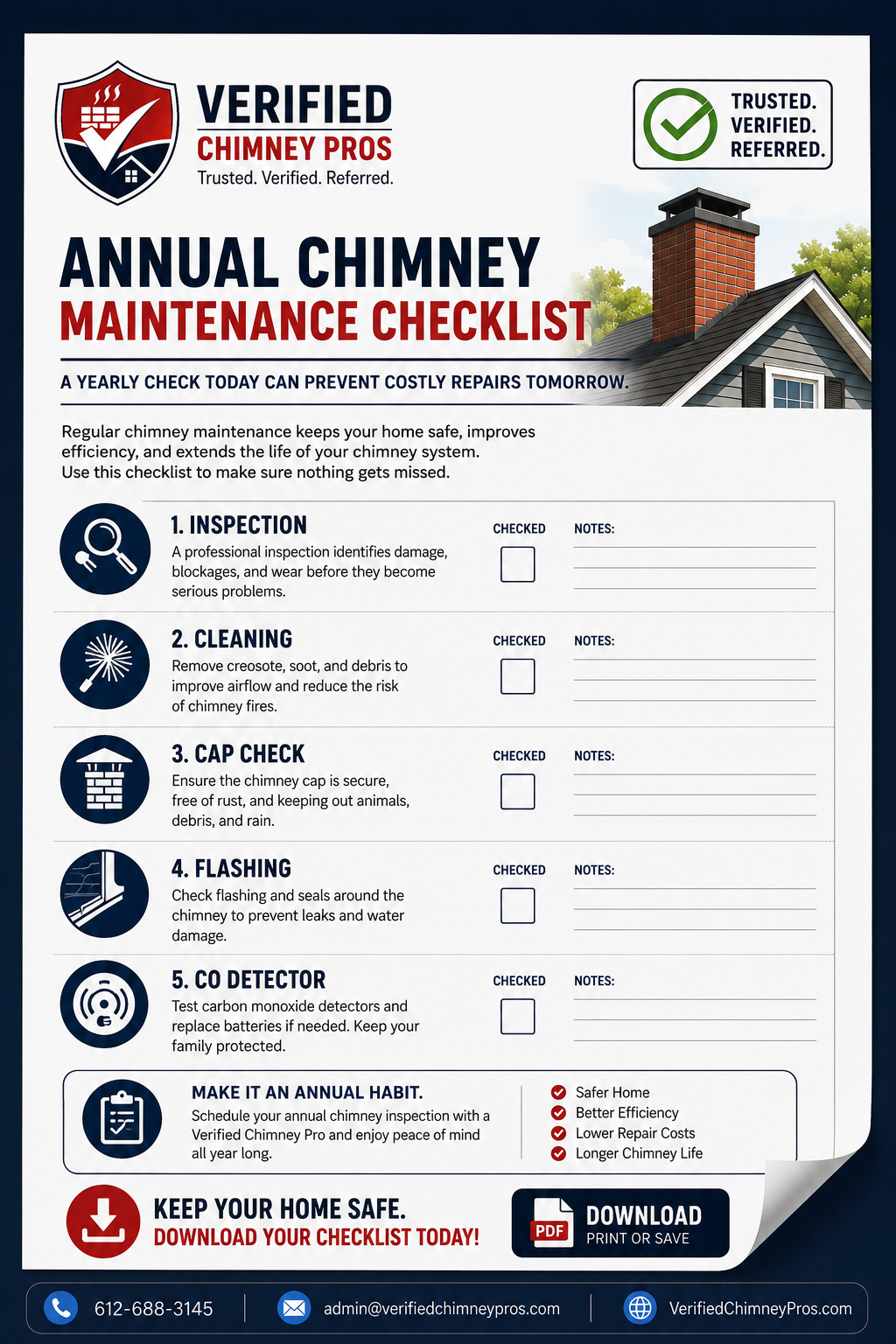
Inspecting your firebox, testing your damper, checking your cap, scanning your masonry, verifying your flashing, clearing flue obstructions, and scheduling a Level 2 camera scan are simple steps that prevent catastrophic disasters.
Download your free chimney maintenance checklist today. Save it to your phone or print it out and hang it on your refrigerator so you can review it every single autumn.
Stop guessing about your chimney’s safety. Complete your chimney maintenance checklist, connect with a pre-screened specialist from Verified Chimney Pros, and enjoy a warm, worry-free fireplace season all winter long.
Ready to Complete Your Autumn Maintenance With Total Confidence?
Connect with a pre-screened, background-checked chimney professional in your area today.
📞 612-688-3145 | 📧 admin@verifiedchimneypros.com