What Is Tuckpointing? 7 Critical Warning Signs Your Chimney Mortar Is Failing
Tuckpointing is the single most important masonry repair homeowners overlook until it is too late. While a brick chimney looks like a solid, indestructible stone monument, it is actually held together by mortar joints that have a much shorter lifespan than the surrounding bricks. Mortar is naturally porous and absorbs moisture over time. When rain, snow, and freezing weather attack your chimney, those mortar joints slowly break down, crumble, and wash away.
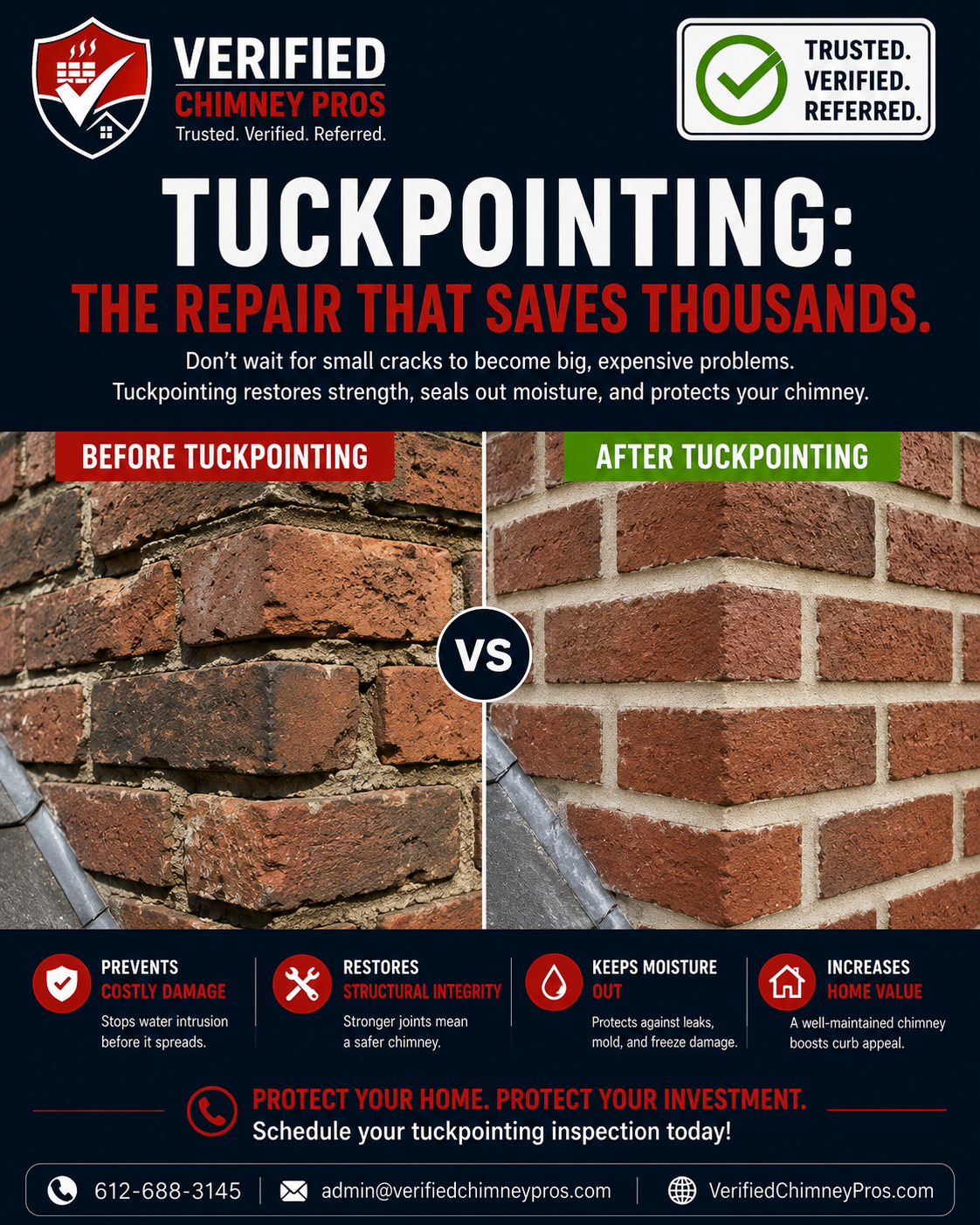
Many homeowners do not understand what tuckpointing involves or why ignoring it can cost them thousands of dollars. When mortar deteriorates, gaps open up between your bricks. Moisture pours into those open seams, rotting your interior roof framing and causing the brickwork to tilt or collapse. Tuckpointing—the skilled process of grinding out decayed mortar and refilling the joints with fresh, matching mortar—restores structural integrity and weatherproofs your chimney for decades.
According to structural research from the Brick Industry Association (BIA), routine repointing and masonry maintenance prevent up to 90% of premature brick wall failures in residential construction. The math is simple: investing in an affordable mortar repair today saves you from a massive chimney rebuild tomorrow.
This guide explains what tuckpointing does, why mortar fails faster than brick, and the 7 critical signs your chimney needs immediate attention. You will also learn how to avoid contractor scams by hiring an independently verified masonry specialist through Verified Chimney Pros.
What Is Tuckpointing and Why Does Your Brick Chimney Need It?
Tuckpointing is a specialized masonry restoration technique where a skilled craftsman removes old, damaged mortar from between brick joints and replaces it with fresh mortar. Originally developed in the eighteenth century to create clean, precise aesthetic lines on brick facades, modern tuckpointing serves a critical structural purpose: sealing your chimney against destructive water intrusion.
To understand why tuckpointing is necessary, you must understand the difference between brick and mortar. High-quality clay bricks can last well over 100 years, but standard masonry mortar typically lasts only 25 to 30 years. Mortar is designed to be softer and more permeable than brick so it can absorb normal building settlement without cracking the bricks themselves.
Over time, seasonal weather exposure erodes this sacrificial mortar. When mortar washes away, your chimney loses its structural bond. Proper tuckpointing replaces that sacrificial layer, locking the bricks back together and keeping your fireplace venting system safe and stable.
How Crumbling Mortar Leads to Hidden Water Leaks and Collapses
The biggest problem with failing chimney mortar is that the destruction happens silently above your roofline. A homeowner can look up at their chimney from the driveway and assume everything is fine. Closer inspection often reveals that the mortar between the bricks has eroded an inch deep into the wall.
When mortar breaks down, winter freeze-thaw cycles turn minor gaps into catastrophic damage. Rain water fills the open mortar joints during the autumn. When temperatures drop below freezing, that trapped water expands by nine percent, acting like an hydraulic wedge that forces bricks apart—a destructive process known as spalling.
Unverified handymen often exploit failing mortar by selling homeowners shoddy patch jobs. They smear cheap cement over crumbling joints without grinding out the decayed mortar first. Even worse, using modern Portland cement that is harder than historic brick causes the bricks to shatter during freezing weather.
Without proper tuckpointing executed by a trained mason, moisture eventually penetrates the chimney flue liner. Water dripping down the flue corrodes metal dampers, ruins firebox walls, and introduces carbon monoxide hazards into your home.
Related reading: Winter Chimney Damage: 7 Critical Signs Cold Weather Destroys Your Chimney
Why Timely Tuckpointing Repairs Save Thousands of Dollars
Investing in timely tuckpointing matters because proactive maintenance is dramatically cheaper than emergency structural reconstruction. Grinding out and repointing mortar joints before bricks shift costs a fraction of tearing down and rebuilding a collapsed chimney stack.
According to home safety guidelines from the National Fire Protection Association (NFPA), structural masonry integrity is mandatory for safe heating appliance venting. A chimney weakened by crumbling mortar cannot safely contain the intense heat of a wood fire or the corrosive exhaust of a gas furnace.
Financial protection extends to your home’s interior. When mortar joints open, water travels down the outside of your chimney chase, rotting roof sheathing, staining bedroom ceilings, and growing mold inside drywall cavities. Tuckpointing stops that water at the exterior surface before it enters your home.
Finally, clean masonry work protects your property equity. When you sell your home, real estate appraisers flag crumbling chimney mortar immediately. Documented tuckpointing completed by a Verified Chimney Pro proves your home is structurally sound, accelerating closing timelines and preserving your resale value.
Related reading: Chimney Maintenance Cost: 7 Devastating Ways Neglect Destroys Your Wallet
7 Critical Warning Signs Your Chimney Mortar Needs Tuckpointing
How can you tell if your chimney needs tuckpointing before bricks start falling? Watch for these 7 critical warning signs around your property and fireplace.
Sign 1: Crumbling Mortar Debris on Your Roof or Patio
The most obvious sign that you need tuckpointing is finding gray, sandy mortar dust or chunks of concrete on your roof shingles, gutters, or patio deck. This debris means weather erosion is actively stripping the binder out of your masonry joints.
When mortar loses its adhesive strength, wind and rain easily wash it out of the seams. If you rub a chimney mortar joint with your finger and it flakes away like sand, the mortar has officially reached the end of its functional lifespan.
Never ignore sandy mortar washouts. Call a Verified Chimney Pro to inspect the depth of the erosion. Professional tuckpointing will remove the failing sand and pack the joints with durable, weather-resistant mortar.
Sign 2: Chipped, Flaking, or Spalling Brick Faces
When you notice brick faces popping off or chipping onto your roof, your chimney is suffering from spalling. While spalling affects the brick itself, it is almost always caused by failing mortar joints that allowed moisture into the wall.
Once water penetrates an open mortar joint, it soaks into the surrounding clay bricks. When winter freeze-thaw cycles occur, the freezing water expands inside the brick, blowing the front face off and exposing the softer inner clay to rapid decay.
Replacing spalled bricks requires immediate tuckpointing. A skilled mason will remove the shattered bricks, install matching replacements, and repoint the surrounding mortar to permanently seal out moisture.
Sign 3: Visible Cracks and Gaps Between Chimney Bricks
Stand in your yard with binoculars and inspect the horizontal and vertical lines between your chimney bricks. If you see hairline cracks, jagged gaps, or holes where mortar used to be, your chimney requires urgent tuckpointing.
Open gaps are direct funnels for rainwater. Every storm forces gallons of water into the interior chimney chase, accelerating structural decay and rusting any metal venting pipes inside.
A professional mason will use a diamond-blade grinder to clear out the cracked seams to a depth of three-quarters of an inch before applying fresh mortar. This depth ensures the new tuckpointing forms a strong, permanent mechanical bond.
Sign 4: White Salt Staining (Efflorescence) Across Brickwork
White, chalky staining across your exterior chimney bricks is called efflorescence. Many homeowners mistake this for pollen or dirt, but it actually proves that moisture is moving freely through your mortar joints.
Efflorescence occurs when water soaks into masonry, dissolves internal mineral salts, and drags them to the surface as the water evaporates. Where there is white staining, there is active water intrusion.
Washing efflorescence off with water only feeds the problem. You must stop the leak at its source. Tuckpointing open joints and applying a breathable masonry waterproofing treatment eliminates efflorescence permanently.
Sign 5: Damp Smells and Water Leaks Inside Your Fireplace
If your living room smells like a musty basement or you notice water pooling on your hearth after a rainstorm, your exterior mortar has likely failed. Water entering open chimney joints travels down the inside of the chase directly into your firebox.
Interior water leaks rust metal fireplace dampers, destroy firebrick mortar, and mix with creosote to create toxic, smelly odors. This moisture also threatens your electrical wiring if cables pass near the chimney chase.
Do not just seal your fireplace doors to block the smell. Hire a Verified Chimney Pro to perform exterior tuckpointing and inspect your chimney crown to shut off the water intrusion completely.
Sign 6: Leaning or Tilting Chimney Stack Structure
A chimney that appears to lean, tilt, or pull away from the side of your house is a severe structural emergency. This movement happens when years of ignored mortar decay cause one side of the chimney to collapse under its own weight.
When mortar washes out completely, bricks sit directly on top of one another without support. The stack shifts out of plumb, creating a massive falling hazard that can crush roofs or injure people below.
If your chimney leans, basic tuckpointing may no longer be enough. Contact an independently verified masonry specialist immediately to determine whether the stack can be braced and repointed or if a partial rebuild is required.
Sign 7: Rusted Flashing and Rotting Roof Framing Near Chimney
Check the attic space directly beneath your chimney or inspect the metal flashing where your chimney meets the roofline. Rusted flashing, water-stained rafters, or rotting roof decking often trace back to open mortar joints just above the roof.
Water entering eroded mortar joints drips down behind metal roof flashing, bypassing your shingles entirely. Homeowners often spend thousands replacing roof shingles when the real leak is crumbling brick mortar.
A comprehensive tuckpointing repair seals the masonry above the roofline and integrates fresh mortar with your metal flashing, ensuring your roof and chimney shed water together perfectly.
The Verified Chimney Pros Solution: Certified, Scam-Free Tuckpointing Restorations
Executing a quality tuckpointing restoration requires an experienced mason who understands brick hardness, mortar chemistry, and joint tooling. Hiring an unverified contractor who smears improper cement over dirty joints can ruin your chimney forever.
Verified Chimney Pros connects you with pre-screened, certified masonry specialists who follow strict architectural restoration standards. Every contractor in our nationwide directory undergoes rigorous third-party vetting before claiming their verified badge.
We confirm active general liability and workers’ compensation insurance so you are never liable for rooftop accidents. We validate certifications from organizations like the Chimney Safety Institute of America (CSIA). We run criminal background checks and continuously monitor real customer reviews for transparent pricing.
When a Verified Pro performs your tuckpointing project, they grind out old mortar to the proper depth, formulate mortar that matches your brick’s compressive strength, and tool the joints to shed water cleanly. You receive lasting craftsmanship backed by written warranties and complete accountability.
Related reading: 7 Warning Signs You’re About to Hire a Chimney Scam
7 Compounding Benefits of Professional Tuckpointing Repair
Investing in professional tuckpointing from a Verified Chimney Pro delivers compounding benefits that protect your entire property:
1. Halts structural decay. Replacing eroded mortar restores wall strength, preventing chimneys from leaning, shifting, or collapsing.
2. Total waterproofing protection. Sealed mortar joints stop rainwater from penetrating brickwork and rotting interior roof framing.
3. Prevents brick spalling. Stopping water entry eliminates internal freeze-thaw expansion, saving expensive bricks from cracking.
4. Restores historic beauty. Fresh, professionally tooled mortar joints transform a weathered, neglected chimney into a clean architectural focal point.
5. Saves massive repair bills. Paying for routine tuckpointing today prevents $15,000+ structural chimney rebuilds down the road.
6. Enhances property resale value. Documented masonry maintenance satisfies real estate inspection standards and protects equity.
7. Total scam protection. Verified contractors provide itemized written estimates, proper insurance, and certified masonry craftsmanship.
Every homeowner who proactively invests in tuckpointing reports the same outcome: dry interiors, beautiful brickwork, and total confidence during winter storms.
FAQ
1. What is tuckpointing and why is it needed?
Tuckpointing is the process of removing deteriorated mortar from between chimney bricks and replacing it with fresh mortar to restore structural strength and prevent water leaks.
2. How much does chimney tuckpointing cost?
The cost of tuckpointing typically ranges from $800 to $2,500, depending on chimney height, accessibility, and the square footage of damaged mortar joints requiring repointing.
3. What is the difference between repointing and tuckpointing?
Repointing means replacing decaying mortar with fresh mortar. Tuckpointing technically involves using two contrasting colors of mortar to create fine aesthetic lines, but homeowners use the terms interchangeably for mortar repair.
4. How often does a brick chimney need tuckpointing?
Most brick chimneys require tuckpointing every 25 to 30 years, though harsh winter climates and frequent freeze-thaw cycles can accelerate mortar decay.
5. Can I perform chimney tuckpointing myself?
DIY tuckpointing is not recommended. Improper grinding damages brick faces, and using incorrect mortar formulas causes bricks to shatter during freezing winter weather.
6. Why is my chimney mortar crumbling?
Mortar crumbles due to natural weather erosion, acidic rain exposure, and freeze-thaw cycles where trapped moisture expands inside porous joints over many years.
7. How long does a tuckpointing repair project take?
A qualified masonry team can usually complete a standard residential chimney tuckpointing project in one to three days, depending on weather conditions.
8. Can tuckpointing be done during the winter?
Standard tuckpointing requires temperatures above 40 degrees Fahrenheit for mortar to cure properly, though masons can use heated enclosures for emergency winter repairs.
9. Will tuckpointing stop water leaks inside my fireplace?
Yes. If your leak is caused by eroded mortar joints, tuckpointing seals the exterior brickwork and permanently stops rain from entering your fireplace.
10. How do masons match new mortar to old chimney bricks?
Skilled masons analyze the color, sand texture, and hardness of your existing mortar to mix a custom batch that blends seamlessly with your chimney.
11. Does homeowners insurance cover tuckpointing repairs?
Insurance rarely covers routine tuckpointing caused by gradual wear and tear, but it may cover masonry repairs if damage resulted from a sudden storm or strike.
12. Should I apply waterproofing after tuckpointing?
Yes. Applying a breathable, vapor-permeable waterproofing sealant after tuckpointing cures adds decades of protection against rain and freeze-thaw decay.
13. What happens if I ignore crumbling chimney mortar?
Ignoring mortar decay allows water to rot roof framing and causes bricks to spall, eventually leading to a leaning chimney stack or complete structural collapse.
14. Why do unverified contractors mess up tuckpointing?
Unverified handymen often smear hard Portland cement over dirty joints without grinding, trapping moisture inside and causing bricks to crack when freezing occurs.
15. How do I find an insured, certified mason for tuckpointing?
Use Verified Chimney Pros to connect with pre-screened, insured, and certified masonry specialists in your area who follow strict restoration standards.
Stop Weather Decay: Schedule Your Verified Tuckpointing Inspection Today
Your brick chimney is constantly battling the elements. Every rainstorm, snowdrift, and freeze-thaw cycle wears away the sacrificial mortar joints holding your masonry together. When that mortar crumbles, your home is left vulnerable to structural collapses, interior water leaks, and expensive reconstruction bills.
The 7 warning signs are clear. Sandy mortar debris, chipped brick faces, open joint gaps, white salt staining, damp fireplace odors, leaning stacks, and rusted roof flashing all demand immediate professional intervention.
Do not wait for bricks to start falling onto your patio. Do not let unverified handymen ruin your historic brickwork with improper cement patch jobs. Take control of your home’s structural safety today.
Visit Verified Chimney Pros to find an independently verified masonry specialist near you. Let an insured, certified craftsman inspect your mortar, perform precision tuckpointing, and protect your chimney for decades to come.
Ready to Restore Your Chimney’s Structural Integrity?
Connect with a vetted, background-checked masonry restoration specialist today.
📞 612-688-3145 | 📧 admin@verifiedchimneypros.com