What Is a Chimney Liner? 7 Powerful Signs You Need an Immediate Chimney Liner Replacement
Investing in a chimney liner replacement is the single most critical structural upgrade you can make to protect your home from devastating heating fires. Many homeowners admire their brick fireplaces without realizing that the exterior masonry is simply a decorative chimney stack. Inside that brick tower sits your chimney liner—a protective inner conduit designed to contain 2,000-degree flames, acidic water vapor, and lethal carbon monoxide gases. When that liner cracks or crumbles, your entire home is placed in immediate physical danger.
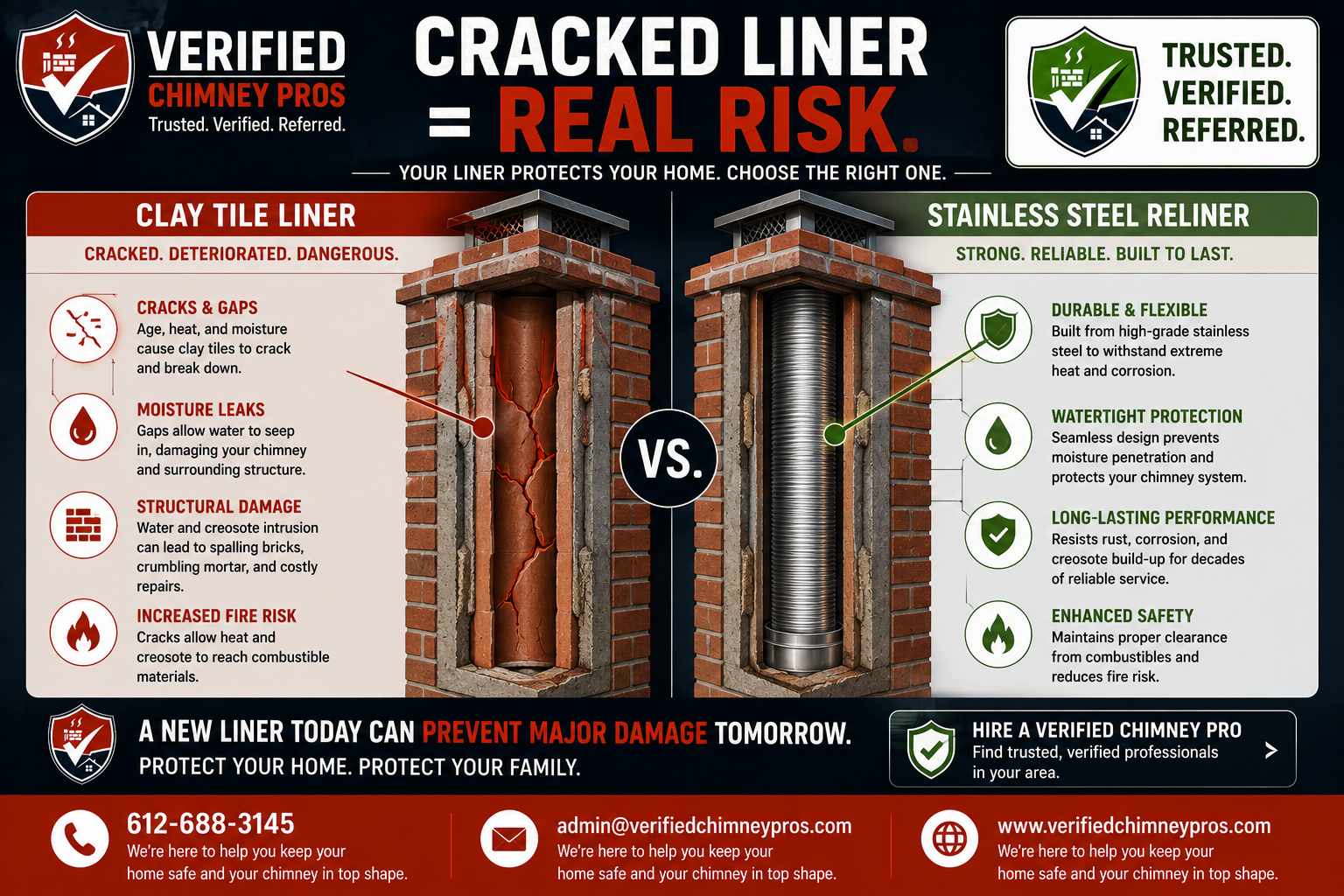
In older American homes built before the 1980s, fireplaces were constructed using clay tile liners. While clay tiles perform well initially, they break down over time from freeze-thaw weather cycles, corrosive moisture, and thermal shock. A chimney liner replacement becomes mandatory the moment those clay tiles crack, creating gaps that allow extreme heat to ignite combustible wooden framing inside your walls.
According to fire safety statistics from the National Fire Protection Association (NFPA), unlined chimneys and damaged flue liners remain a primary cause of residential heating equipment fires every winter. Upgrading a failing clay flue to a modern stainless steel liner is the smartest way to safeguard your family and property.
This comprehensive guide reveals 7 powerful warning signs that your fireplace requires a chimney liner replacement. You will learn what a liner does, discover how stainless steel liners prevent carbon monoxide leaks, and see how Verified Chimney Pros protects you from contractor scams.
Why Your Home's Last Line of Defense Is Your Chimney Liner
Understanding the purpose of your venting system makes the need for a chimney liner replacement immediately clear. According to the Chimney Safety Institute of America (CSIA), a chimney liner serves three mandatory safety functions. First, it protects adjacent woodwork from catching fire through heat transfer. Second, it stops acidic flue gases from corroding brick mortar from the inside out. Third, it provides an correctly sized flue that maximizes draft efficiency.
When you invest in a chimney liner replacement, you replace fragile clay tiles with seamless, heavy-duty stainless steel. Stainless steel liners resist extreme temperatures, withstand corrosive gas exhaust, and seal your venting column from top to bottom.
Furthermore, a modern chimney liner replacement includes UL-listed ceramic insulation wrapped around the metal sleeve. This insulation keeps flue gases hot all the way to the top of the stack, which dramatically reduces sticky, flammable creosote accumulation.
The Clay Tile Trap: Why Older Chimney Liners Crack and Threaten Homes
The biggest problem facing older American homes is the clay tile trap. Millions of houses were constructed with rigid terra-cotta clay liners. When a fireplace burns, the rapid temperature rise creates thermal shock, causing those brittle clay tiles to crack. Once a tile fractures, a chimney liner replacement is the only safe engineering solution.
Unverified handymen love to exploit homeowners who do not understand flue mechanics. Shady operators often advertise cheap cleaning coupons online. Once inside your home, they use scare tactics, claiming your liner is “shattered” to demand thousands of dollars in cash—without ever showing you camera proof.
Conversely, some property owners ignore cracked tiles because their fireplace still draws smoke adequately. That delay is dangerous. When hot gases pass through open tile seams, they dry out interior wood framing studs over many years—a process called pyrolysis—until the wood ignites at low temperatures.
To protect your home from both structural house fires and bait-and-switch scams, you must base your chimney liner replacement decision on objective visual evidence. A certified Level 2 camera scan removes the guesswork completely.
Related reading: 7 Warning Signs You’re About to Hire a Chimney Scam
Why It Matters: How a Chimney Liner Replacement Protects Home Equity
Investing in a timely chimney liner replacement matters because your fireplace is an active combustion system burning inside your living room. An unlined or cracked chimney allows acidic moisture to penetrate your brickwork. That acid dissolves mortar joints from the inside out, forcing a $15,000 structural chimney rebuild.
According to indoor air quality warnings from the Consumer Product Safety Commission (CPSC), damaged heating flues cause thousands of carbon monoxide poisonings every winter. A stainless steel chimney liner replacement ensures toxic combustion gases exhaust safely outside instead of leaking into bedrooms.
Building code compliance makes this upgrade mandatory. According to national safety standards from the National Fire Protection Association (NFPA), NFPA 211 codes require all solid-fuel and gas appliances to vent through an intact, listed liner. Selling a home with a cracked clay liner will fail buyer inspections immediately.
Finally, a stainless steel chimney liner replacement adds permanent equity to your property. Premium liners installed by Verified Chimney Pros carry transferable lifetime warranties, proving to home buyers that your heating system is safe and modern.
Related reading: Chimney Maintenance Cost: 7 Devastating Ways Neglect Destroys Your Wallet
7 Powerful Signs You Need an Immediate Chimney Liner Replacement
How can you tell if your clay tiles are failing before a fire occurs? Watch for these 7 powerful warning signs that your home requires a chimney liner replacement.
1. You Find Crumbling Clay Tile Pieces Falling Into Your Firebox
The most obvious sign that you need a chimney liner replacement is finding thin, orange, or reddish clay shards lying on your hearth floor. This flaking process, known as spalling, occurs when moisture freezes inside porous clay tiles.
Spalled tile pieces mean your liner has lost its structural thickness. The protective clay barrier is peeling away, leaving thin, fragile walls that cannot withstand the 1,000-degree heat of a wood-burning fire.
Never ignore clay debris in your fireplace. Sweep up the fragments and call a Verified Chimney Pro immediately. They will evaluate the damage and schedule a stainless steel chimney liner replacement.
2. You Experience Unexplained Carbon Monoxide Detector Alarms
Your carbon monoxide detectors are your last line of defense against venting failure. If your alarms chirp when your fireplace or furnace runs, you likely need a chimney liner replacement to seal toxic leaks.
When clay tiles crack or mortar joints erode between liner sections, odorless carbon monoxide gas escapes through the gaps. The gas migrates through brick walls directly into upstairs living areas.
If your CO alarm sounds, evacuate your home immediately and call emergency services. Afterward, schedule an emergency Level 2 video inspection to determine whether a chimney liner replacement is required.
Related reading: Notice a Smoke Smell in Your House? 7 Powerful Reasons Your Chimney Is Leaking
3. Your Fireplace Suffers From Excessive Smoky Backdrafts
A healthy flue creates a powerful upward draft that pulls smoke rapidly out of your firebox. If smoke billows into your living room whenever you burn wood, a chimney liner replacement can restore proper airflow.
Backdrafting occurs when clay tiles crack, shift out of alignment, or collapse inside the flue column. Jagged tile offsets create airflow turbulence that chokes the draft and forces smoke back indoors.
A certified technician can calculate proper flue dimensions. A stainless steel chimney liner replacement sized mathematically for your fireplace eliminates draft turbulence and stops smoky backdrafts permanently.
4. Interior Drywall Walls Adjacent to the Chimney Feel Overheated
Next time you have a hot fire burning, place your hand against the drywall surrounding your chimney chase upstairs. If those interior walls feel unusually hot, you need an insulated chimney liner replacement immediately.
Hot interior walls prove that heat is escaping your inner flue and transferring through the brick structure. This heat transfer dries out surrounding wooden framing studs until they ignite inside your walls.
An insulated stainless steel chimney liner replacement creates a thermal barrier. It keeps high temperatures confined inside the metal liner, protecting your home’s framing from ignition.
5. Your Flue Exposes White Efflorescence and Internal Water Leaks
White salt staining across your exterior brickwork—called efflorescence—proves that moisture is penetrating your masonry. Chronic water leaks accelerate clay tile decay, eventually requiring a chimney liner replacement.
When a liner cracks, acidic rainwater vapor leaks out of the flue column and saturates the surrounding brickwork. That moisture dissolves mortar minerals and leaves chalky white stains on your chimney.
Stopping efflorescence requires sealing the flue from the inside out. A waterproof chimney liner replacement contains flue moisture and prevents freeze-thaw masonry damage.
6. Your Chimney Recently Experienced an Uncontrolled Grease Fire
If you ever experience a chimney fire—marked by a loud roaring sound like a freight train—you must assume you need a chimney liner replacement. Creosote fires burn at temperatures exceeding 2,000 degrees Fahrenheit.
Thermal shock from a 2,000-degree chimney fire splits clay tile liners instantly. Even if the fire was extinguished quickly, the clay tiles are almost certainly fractured from top to bottom.
Never light another fire after a chimney fire until a professional inspects your flue. Upgrading to a heavy-duty chimney liner replacement restores the safety integrity of your fireplace.
7. A Level 2 Video Camera Scan Reveals Fractured Flue Tiles
The most definitive proof that you need a chimney liner replacement comes from a Level 2 video camera scan. Flashlight inspections from the hearth cannot see cracks twenty feet up inside a dark flue.
During a Level 2 scan, an inspector lowers a 360-degree digital camera down your flue. This technology reveals hairline fractures, spalled clay, and missing mortar seams that violate NFPA 211 codes.
Always demand live video footage before authorizing a chimney liner replacement. A Verified Chimney Pro will show you the exact camera recording, proving why the upgrade is necessary.
Related reading: How to Explain Chimney Inspection Levels: 7 Powerful Ways Pros Upsell
The Verified Chimney Pros Solution: Scam-Free Liner Installations
Executing a chimney liner replacement is a precision engineering trade that requires specialized tools, mathematical sizing, and strict safety adherence. Hiring an unverified handyman to drop a cheap metal tube down your chimney can cause severe house fires.
Verified Chimney Pros connects you exclusively with pre-screened, certified chimney contractors who follow industry-standard lining protocols. Every contractor in our directory must pass strict third-party vetting before earning our badge.
We confirm active commercial general liability and workers’ compensation insurance. We validate technical certifications from organizations like the Chimney Safety Institute of America (CSIA), conduct criminal background screenings, and monitor real customer reviews.
When a Verified Pro performs your chimney liner replacement, they size the liner correctly, wrap it in UL-listed ceramic insulation, and secure the crown plate. You receive lasting craftsmanship backed by transferable lifetime warranties.
Related reading: Why Homeowners Choose a Verified Contractor Over Unverified Handymen
7 Compounding Rewards of a Stainless Steel Chimney Liner Replacement
Upgrading your fireplace with a stainless steel chimney liner replacement delivers compounding benefits that protect your entire property:
1. Complete fire prevention. Containing 2,000-degree chimney fires inside a sealed steel liner stops adjacent wood framing from igniting.
2. Zero carbon monoxide leaks. Airtight stainless steel seams prevent toxic combustion gases from leaking into bedrooms and living rooms.
3. Maximum draft performance. Correctly sized round liners maintain warm flue temperatures, creating a powerful upward thermal draft.
4. Reduced creosote accumulation. Insulated liners keep flue gases hot, which drastically reduces sticky, combustible creosote glaze buildup.
5. Protected brick masonry. Containing acidic moisture inside the steel liner stops mortar joints from eroding from the inside out.
6. Higher heating efficiency. Wood stoves, furnaces, and open fireplaces burn cleaner and generate more room heat with proper lining.
7. Transferable lifetime warranty. Premium stainless steel chimney liner replacement systems carry lifetime warranties that add resale equity.
Every homeowner who invests in a modern chimney liner replacement reports the same result: stress-free fireplace operation, warm fires, and complete confidence in their home’s safety.
FAQ
1. What is a chimney liner replacement and why is it needed?
A chimney liner replacement is the process of removing or relining a damaged clay flue with a sealed stainless steel conduit to contain heat, smoke, and carbon monoxide safely.
2. How much does a stainless steel chimney liner replacement cost?
A professional stainless steel chimney liner replacement typically costs between $2,500 and $5,500, depending on chimney height, flue diameter, and insulation requirements.
3. How long does a stainless steel chimney liner replacement last?
A professional-grade 316 or 321 stainless steel chimney liner replacement lasts 15 to 25 years, and premium UL-listed systems come with transferable lifetime warranties.
4. Can I use my fireplace if I need a chimney liner replacement?
No. Using a fireplace with cracked clay tiles is extremely dangerous. Heat escaping open tile seams can ignite interior wood framing and cause severe house fires.
5. Why do contractors recommend insulating a chimney liner replacement?
Insulating a chimney liner replacement keeps flue gases hot all the way to the top of the stack, improving draft speed and preventing flammable creosote condensation.
6. How do I know what size chimney liner replacement I need?
A certified technician calculates your chimney liner replacement diameter based on fireplace opening dimensions or the specific exhaust collar size of your heating appliance.
7. Does homeowners insurance cover a chimney liner replacement?
Insurance typically covers a chimney liner replacement if the damage resulted from a sudden, documented event like a chimney fire or lightning strike, but not general wear.
8. How long does a contractor take to install a chimney liner replacement?
A certified team can usually complete a standard residential stainless steel chimney liner replacement in one to two days, including clean-up and crown plate sealing.
9. Can clay tile liners be repaired without a full chimney liner replacement?
Minor mortar seams can sometimes be resurfaced with ceramic sealants, but cracked or spalled clay tiles almost always require a full stainless steel chimney liner replacement.
10. How do I protect myself from chimney liner replacement scams?
Always demand a Level 2 video camera inspection showing real tile cracks, and hire only pre-screened contractors from Verified Chimney Pros who provide itemized written estimates.
11. Can I install a stainless steel chimney liner replacement myself?
DIY installation is not recommended. Improper sizing, incorrect insulation, and faulty crown sealing violate building codes and can void your homeowners insurance policy.
12. Do gas fireplaces need a chimney liner replacement too?
Yes. Gas appliances produce acidic condensation that corrodes flues. A proper aluminum or stainless steel chimney liner replacement prevents acid from destroying brick mortar.
13. What is the difference between 304 and 316 stainless steel liners?
Grade 304 stainless steel is used for wood-burning appliances, while grade 316 or 321 stainless steel resists corrosion from coal, oil, and gas heating appliances.
14. Will a chimney liner replacement stop smoky fireplace backdrafts?
Yes. Replacing a turbulent, damaged clay flue with a properly sized, round stainless steel chimney liner replacement creates a smooth upward draft that eliminates smoky backdrafts.
15. Where can I find a verified pro for my chimney liner replacement?
Visit Verified Chimney Pros to browse our nationwide directory of pre-screened, insured, and certified chimney specialists in your local neighborhood.
Stop Gambling With Fire: Schedule Your Flue Inspection Today
You do not have to wonder whether your fireplace is safe to burn this winter, and you do not need to fear deceptive contractor scams. When you understand the warning signs of clay tile failure, investing in a chimney liner replacement is a clear, logical decision.
Crumbling clay tile debris, carbon monoxide alarms, smoky backdrafts, hot interior drywall, efflorescence staining, past chimney fires, and video camera proof are 7 undeniable reasons to act now.
Stop letting a cracked clay liner put your family and home equity at risk. Procrastination only increases your chance of experiencing a devastating heating equipment fire this season.
Visit Verified Chimney Pros today to connect with an independently screened, certified technician near you. Schedule a Level 2 camera scan, complete your stainless steel chimney liner replacement, and enjoy warm, safe fires all winter long.
Ready to Verify Your Flue Liner Safety With Complete Confidence?
Connect with a pre-screened, background-checked chimney professional in your area today.
📞 612-688-3145 | 📧 admin@verifiedchimneypros.com