Notice a Smoke Smell in Your House? 7 Powerful Reasons Your Chimney Is Leaking Odors
Noticing a strong smoke smell in house living rooms or bedrooms can ruin the comfort of your home instantly. Whether your house smells like an old campfire during a summer rainstorm or smoke billows out of your fireplace when you strike a match in autumn, an intrusive odor is more than just a nuisance. That lingering smell is an urgent warning sign that your fireplace venting system is failing to exhaust air properly.
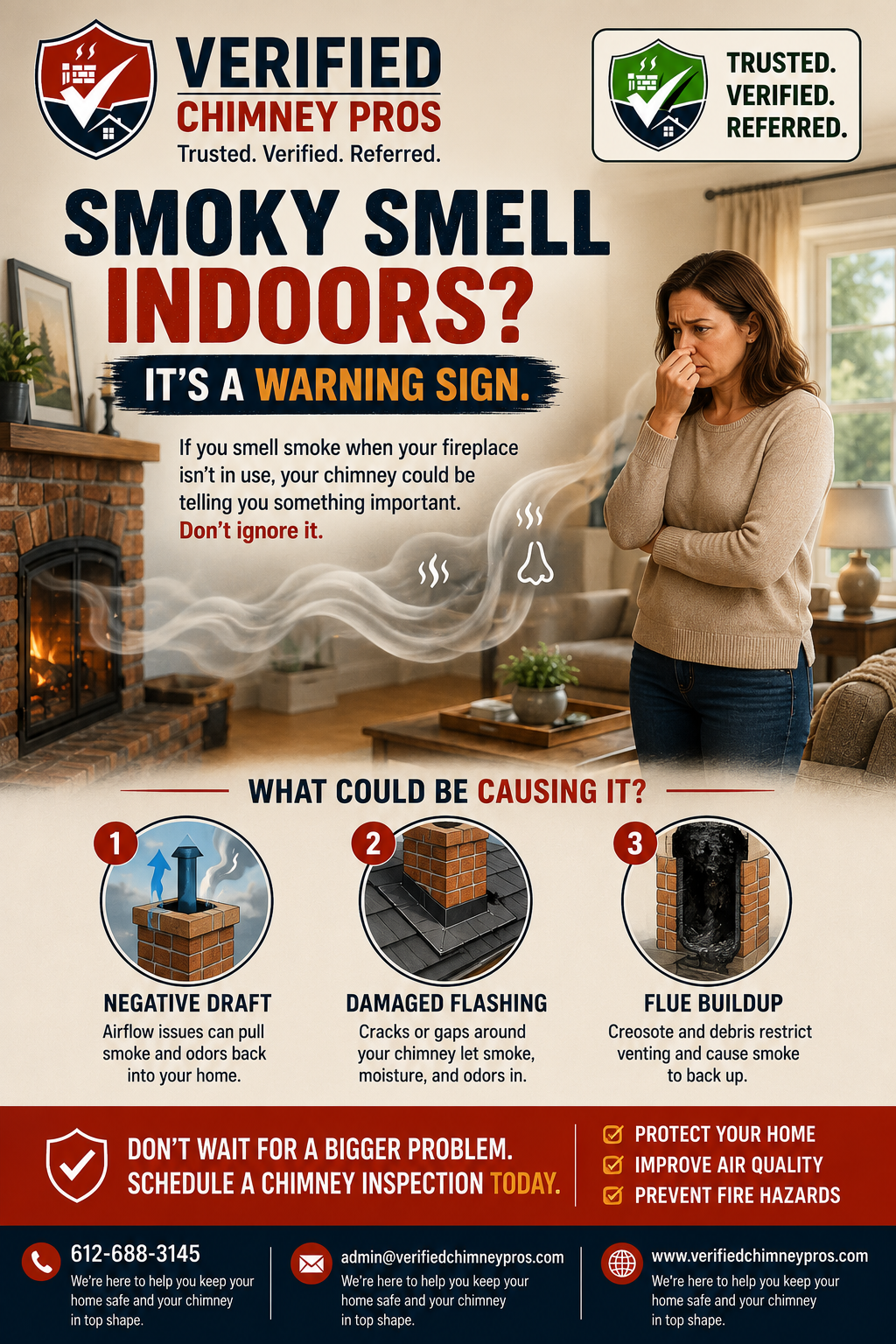
When your chimney operates correctly, warm smoke and combustion vapors rise up the flue and exit your roofline. However, when negative air pressure, heavy creosote deposits, or exterior moisture leaks disrupt that airflow, the draft reverses. Instead of pulling air out, your chimney acts like a vacuum hose, sucking smoky odors directly down into your home. A persistent smoke smell in house environments means you are breathing contaminated, unhealthy air.
According to indoor air quality research from the Environmental Protection Agency (EPA), breathing fine particulate matter and creosote fumes from wood smoke can trigger asthma, eye irritation, and chronic respiratory problems. Resolving a fireplace odor immediately is essential for your family’s physical health and property safety.
This comprehensive guide reveals 7 powerful reasons why you have a smoke smell in house living rooms. You will learn how negative pressure works, discover why rainstorms make campfire odors worse, and see how Verified Chimney Pros shields you from contractor scams.
Why a Smoke Smell in House Living Rooms Is an Urgent Safety Warning
When you detect an unexplained smoke smell in house living areas, your heating system is crying out for professional diagnostics. Many homeowners assume that fireplace smells are normal, especially in older houses built with traditional masonry hearths. In reality, a sealed, properly drafting fireplace should never leave a stale campfire odor hanging in your furniture, drapes, or carpets.
A persistent smoke smell in house environments indicates that the thermal draft inside your chimney has broken down. Your flue is designed to act as a one-way exhaust pipe. When external weather or structural decay forces air backward down the chimney, it carries toxic combustion byproducts into your living space.
Furthermore, where smoke can travel, lethal carbon monoxide gas can follow. An intrusive smoke smell in house bedrooms during winter burning can be an early precursor to invisible carbon monoxide leaks, making prompt professional inspection mandatory.
The Odor Trap: Why Masking a Smoke Smell in House Rooms Invites Danger
The biggest mistake homeowners make when dealing with a smoke smell in house rooms is falling into the odor masking trap. Many property owners try to solve musty campfire smells by burning scented candles, spraying air fresheners, or taping plastic sheets over their fireplace doors. These superficial fixes mask the symptom while allowing the underlying structural problem to worsen silently.
Unverified handymen love to exploit homeowners who complain about a smoke smell in house living rooms. Unlicensed operators often advertise cheap $49 cleaning specials online, promising to eliminate fireplace odors. Once inside your home, they perform a quick, superficial brushing that leaves hardened creosote behind, or they use scare tactics to claim your chimney is condemned.
Ignoring the root cause of a smoke smell in house environments also leads to severe structural decay. Summer campfire odors are almost always triggered by rainwater mixing with acidic soot inside an unsealed flue. Left unrepaired, that moisture rots roof sheathing, destroys firebox mortar, and rusts expensive metal damper assemblies.
Without a certified diagnostic evaluation, you cannot permanently eliminate a smoke smell in house living rooms. You need an independently verified professional who understands building envelope airflow and masonry waterproofing to fix the problem correctly.
Related reading: 7 Warning Signs You’re About to Hire a Chimney Scam
Why It Matters: How Fixing a Smoke Smell in House Rooms Protects Your Family
Eliminating an intrusive smoke smell in house living spaces matters because your family’s respiratory health depends on clean indoor air. According to health warnings from the Consumer Product Safety Commission (CPSC), inhalation of wood smoke particulate matter can cause severe lung irritation and headaches. Resolving chimney backdrafts ensures your living environment remains safe and comfortable.
According to national fire safety codes from the National Fire Protection Association (NFPA), NFPA 211 standards require residential fireplaces and chimneys to maintain a positive, upward draft. A smoke smell in house rooms proves that your system violates these draft standards, creating a severe fire hazard whenever you light wood.
Financial protection elevates this urgency even further. The water intrusion that causes musty summer odors erodes brick mortar from the inside out. Fixing the draft and sealing the masonry today prevents an expensive $15,000 structural chimney rebuild next spring.
Finally, resolving a smoke smell in house areas protects your home’s resale equity. Real estate appraisers and home buyers will immediately flag musty campfire odors during open houses. A clean, odor-free fireplace proves your home is well-maintained and ready for closing.
Related reading: Chimney Maintenance Cost: 7 Devastating Ways Neglect Destroys Your Wallet
7 Powerful Reasons You Notice a Smoke Smell in House Living Areas
Why does your living room smell like an old campfire? Explore these 7 powerful reasons why you notice a smoke smell in house environments and how to fix them permanently.
1. Negative Air Pressure Pulls Chimney Odors Down Into Your Home
The number one cause of a smoke smell in house living rooms is negative air pressure. Modern homes are built tightly sealed for energy efficiency, with powerful exhaust fans running in kitchens, bathrooms, and laundry rooms.
When these exhaust fans operate, they push air out of your house, creating a vacuum inside. Because air must be replaced, the house sucks outdoor air down through the easiest opening available: your open chimney flue.
As outdoor air travels down the flue, it carries the smell of soot into your living room. A certified technician can diagnose negative air pressure and install a fresh air intake to balance your home’s airflow.
2. Summer Humidity and Rain Condensation Activate Creosote Glaze
Many homeowners are puzzled when a strong smoke smell in house rooms appears during humid summer weather when no fires are burning. This odor is caused by moisture interacting with dormant creosote glaze.
When summer rain or high humidity enters an uncleaned chimney, the water soaks into porous creosote deposits. This chemical reaction creates a pungent, asphalt-like campfire smell that drops down into your living areas.
A professional chimney sweep removes the hardened creosote glaze and applies breathable masonry waterproofing. Sealing out summer humidity eliminates off-season campfire odors permanently.
3. Your Fireplace Damper Is Rusted, Warped, or Improperly Sealed
Your fireplace damper is the metal valve designed to seal your flue when the fireplace is not in use. A faulty damper is a primary trigger for a persistent smoke smell in house environments.
Over years of exposure to soot and moisture, cast-iron throat dampers rust, warp, or jump off their tracks. A gap as small as an eighth of an inch allows smelly flue air to drift into your home continuously.
Your technician can clean and lubricate a sticky damper track. If the metal is warped beyond repair, they can install a top-sealing damper at the top of your chimney stack that seals your flue airtight.
4. An Uncapped Chimney Allows Rain and Nesting Wildlife to Rot
An open, uncapped chimney stack is an open funnel for rain, snow, and nesting animals. Debris accumulation is a disgusting trigger for a musty smoke smell in house bedrooms and hearths.
When birds, raccoons, or squirrels build nests in an uncapped flue, rain soaks the leaves, twigs, and animal droppings. This decomposing debris creates a terrible, swampy odor that fills your home.
Installing a heavy-duty stainless steel chimney cap with a wire mesh spark arrester keeps rain and wildlife out of your flue, keeping your indoor air fresh and clean.
Related reading: Your Annual Chimney Maintenance Checklist: 7 Essential Safety Steps
5. Your Flue Liner Is Severely Obstructed by Soot and Debris
If smoke billows out of your fireplace immediately after you strike a match, your smoke smell in house rooms is caused by a physical flue obstruction. Smoke cannot rise if the passage is blocked.
Heavy soot accumulation, collapsed clay tile fragments, or fallen tree branches can completely choke off your chimney liner. Without clear upward airflow, smoke is forced backward into your living space.
Never attempt to burn a fire if your chimney backdrafts. A certified technician will perform a Level 2 video camera inspection to locate and clear the obstruction safely.
Related reading: What Is a Chimney Liner and Do You Need One?
6. Your Chimney Stack Is Too Short to Overcome Roof Wind Turbulences
Sometimes a smoke smell in house rooms occurs only on windy days. This symptom often indicates that your exterior chimney stack is too short to draft properly over your roofline.
According to NFPA 211 building codes, a chimney must extend at least three feet above the highest point where it passes through the roof, and two feet higher than any portion of the building within ten feet.
If your chimney is too short, wind swirling over your roofline blows directly down the flue, pushing smoke into your house. A mason can extend your chimney stack to restore proper upward draft.
7. Rusted Metal Roof Flashing Is Leaking Water Into Your Chase
A musty smoke smell in house living areas after a rainstorm can also trace back to damaged metal roof flashing. Flashing seals the gap where your brick chimney meets your shingles.
When flashing rusts or pulls away from the masonry, rain pours down the outside of your brick chimney chase. This moisture soaks firebox mortar and drywall, creating a moldy, campfire-like stench.
A qualified chimney specialist will inspect your roof flashing, repair rusted seams, and seal the masonry to keep your chimney chase completely dry.
Related reading: Winter Chimney Damage: 7 Critical Signs Cold Weather Destroys Your Chimney
The Verified Chimney Pros Solution: Scam-Free Odor Diagnostics Backed by Trust
Solving a smoke smell in house living rooms should bring you comfort, not anxiety over finding an honest contractor. Verified Chimney Pros simplifies your search by connecting you exclusively with pre-screened, insured professionals.
We built our vetting process to shield homeowners from deceptive call-center operators. Every technician who diagnoses your smoke smell in house rooms must pass strict third-party screening before earning our official trust badge.
Our vetting team confirms active commercial general liability and workers’ compensation insurance. We validate technical certifications from organizations like the Chimney Safety Institute of America (CSIA), conduct criminal background screenings, and monitor real customer reviews.
When you use Verified Chimney Pros to fix your fireplace odor, you hire with absolute confidence. You gain instant access to local specialists who provide itemized written estimates and live video camera proof of their work.
Related reading: Why Homeowners Choose a Verified Contractor Over Unverified Handymen
7 Compounding Benefits of Eliminating Fireplace Odors Permanently
Hiring a Verified Pro to diagnose and fix your smoke smell in house living areas delivers compounding benefits that protect your entire property:
1. Clean, healthy indoor air. Eliminating negative drafts stops toxic particulates and creosote fumes from entering your family’s lungs.
2. Zero carbon monoxide leaks. Sealing liners and restoring upward drafts ensures lethal combustion gases exhaust safely outdoors.
3. Waterproof structural safety. Sealing caps, crowns, and flashing stops rain from rotting attic framing and destroying interior drywall.
4. Reduced winter heating bills. Installing an airtight top-sealing damper stops warm indoor air from escaping up your flue.
5. Total fire prevention. Professional creosote removal removes the primary fuel source for devastating 2,000-degree chimney fires.
6. Protected property resale value. Eliminating musty campfire odors proves your home is well-maintained to buyers and appraisers.
7. Total scam protection. Hiring a pre-screened Verified Pro guarantees itemized estimates, insured technicians, and honest diagnostics.
Every homeowner who fixes a smoke smell in house living rooms reports the same result: fresh indoor air, safe fireplace burning, and complete confidence in their home’s safety.
FAQ
1. Why do I notice a smoke smell in house rooms when no fire is burning?
A smoke smell in house rooms during off-season months is usually caused by summer humidity or rain condensation mixing with creosote deposits inside an unsealed flue.
2. How does negative air pressure cause a smoke smell in house living areas?
Kitchen and bathroom exhaust fans pull air out of tightly sealed homes, forcing the house to suck outdoor air down your open chimney flue, dragging soot odors indoors.
3. Will a chimney cap stop a smoke smell in house bedrooms?
Yes! A stainless steel chimney cap prevents rainwater from soaking creosote inside your flue, which is a primary cause of musty campfire odors after summer storms.
4. How much does it cost to fix a smoke smell in house living rooms?
A standard sweeping and inspection to remove creosote odors costs $150 to $300. Installing a top-sealing damper or chimney cap costs $200 to $500.
5. Can a top-sealing damper eliminate a smoke smell in house areas?
Absolutely. A top-sealing damper seals the top of your chimney stack with a rubber gasket, keeping humid summer air and campfire odors outside where they belong.
6. Why does my fireplace blow smoke into the room when I light a fire?
Smoke billowing indoors indicates a physical flue blockage, a closed damper, or a cold flue column that requires priming before lighting your firewood.
7. Can burning scented candles get rid of a smoke smell in house rooms?
No. Scented candles only mask the odor temporarily. To eliminate a smoke smell in house living areas permanently, you must clean the creosote and fix the negative draft.
8. Why do unverified contractors offer cheap $49 odor inspection specials?
Unverified handymen use $49 coupons as bait-and-switch scams. Once inside your home, they use scare tactics to claim your chimney is condemned, demanding thousands in cash.
9. Can musty chimney odors indicate a carbon monoxide hazard?
Yes. A draft failure that pushes campfire odors into your home can also push invisible, lethal carbon monoxide gases indoors during winter wood burning.
10. Does a gas fireplace ever cause a smoke smell in house rooms?
While gas fireplaces do not produce wood creosote, they can emit musty odors if birds nest in the flue or if acidic condensation corrodes the metal liner.
11. How do I know if my chimney stack is too short to draft properly?
If your chimney fails to extend three feet above your roofline, wind swirling over your roof can blow smoke back down your flue into your living room.
12. Can opening a window help stop a smoke smell in house living rooms?
Opening a window near your fireplace relieves negative air pressure temporarily, allowing your chimney to establish an upward draft when lighting a fire.
13. How does a Level 2 video camera scan help diagnose fireplace odors?
A Level 2 360-degree camera scan inspects the entire internal flue liner, locating hidden creosote glaze, cracked tiles, and bird nests that cause persistent odors.
14. Why is general liability insurance critical when fixing chimney drafts?
If an uninsured technician falls off your roof while inspecting your cap or flashing, you could be held liable. Contractors on Verified Chimney Pros carry full coverage.
15. Where can I find a verified pro to fix a smoke smell in house rooms?
Visit Verified Chimney Pros to browse our nationwide directory of pre-screened, insured, and certified chimney specialists in your local neighborhood.
Stop Breathing Stale Smoke: Fix Your Chimney Draft Today
You do not have to live with a musty smoke smell in house living rooms or worry whether your fireplace is safe to burn this autumn. When you understand the structural and environmental causes of chimney backdrafts, eliminating fireplace odors is a straightforward process.
Negative air pressure, summer humidity condensation, rusted throat dampers, uncapped flues, creosote blockages, short chimney stacks, and leaking roof flashing are 7 solvable problems. You do not need to mask odors with air fresheners any longer.
Stop letting stale campfire smells ruin the comfort of your home. Procrastination only increases your risk of experiencing severe moisture decay and seasonal contractor scams.
Visit Verified Chimney Pros today to connect with an independently screened, certified technician near you. Diagnose your draft problem, eliminate your smoke smell in house rooms permanently, and enjoy clean, fresh indoor air all year long.
Ready to Eliminate Fireplace Odors With Absolute Confidence?
Connect with a pre-screened, background-checked chimney professional in your area today.
📞 612-688-3145 | 📧 admin@verifiedchimneypros.com