Chimney Liner Guide: 7 Critical Warning Signs You Need an Urgent Flue Replacement
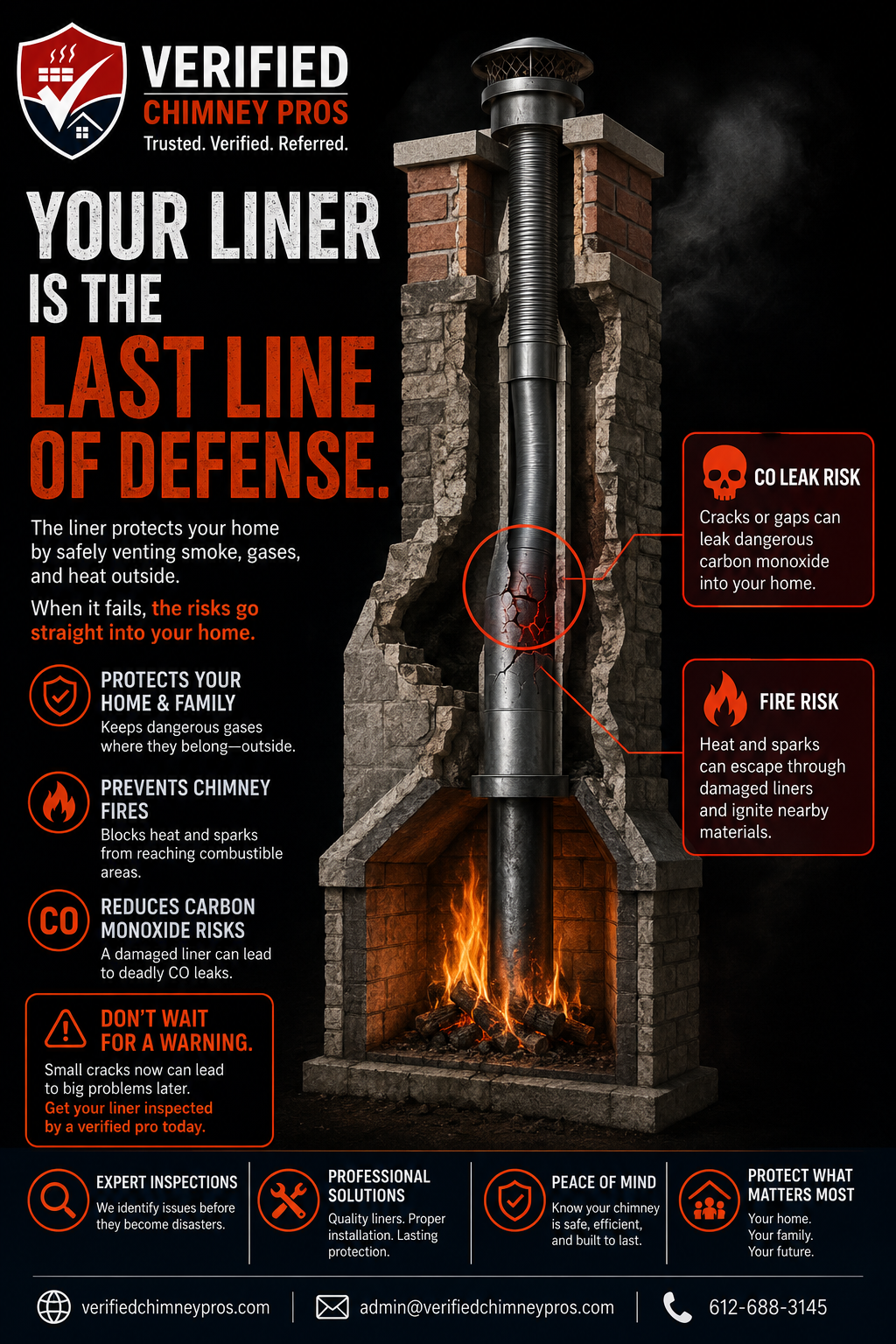
A chimney liner is the single most important safety barrier inside your fireplace venting system. Every time you burn wood, gas, or oil, intense heat, acidic moisture, and toxic carbon monoxide rush up your flue. Without a sealed chimney liner, those hazardous combustion byproducts attack your home’s brickwork and leak into your living space.
Many homeowners do not even know what a chimney liner looks like because it sits hidden inside the masonry structure. Most older homes were built with clay tile liners, while modern upgrades use durable stainless steel. Regardless of the material, if your chimney liner cracks, crumbles, or gaps, your entire fireplace becomes a dangerous fire hazard.
According to the National Fire Protection Association (NFPA), unlined chimneys and damaged flue liners account for thousands of residential structure fires every single year. The math is simple: when heat escapes a cracked chimney liner, combustible wood framing inside your walls can ignite in minutes.
This guide explains what a chimney liner does, why modern building codes require one, and the 7 critical signs your flue needs immediate professional attention. You will also learn how to protect yourself from contractor scams by hiring a Verified Chimney Pro for an honest Level 2 video inspection.
What Is a Chimney Liner and Why Does Your Flue Need One Today?
A chimney liner is a protective inner sleeve installed inside your brick or stone chimney. Its primary job is to contain the combustible products of fire—smoke, creosote, water vapor, and extreme heat—and direct them safely out of your home. Without a working chimney liner, a brick chimney is simply an empty masonry tower that cannot safely withstand high temperatures.
There are three primary types of liners used in residential construction today. Clay tile liners are standard in older homes, but they crack easily under thermal shock. Cast-in-place masonry liners provide structural reinforcement. Stainless steel liners represent the industry gold standard for durability, efficiency, and complete carbon monoxide containment.
The Chimney Safety Institute of America (CSIA) confirms that a chimney liner serves three mandatory safety functions. First, it protects adjacent woodwork from catching fire. Second, it stops acidic flue gases from corroding brick mortar from the inside out. Third, it provides a correctly sized flue that maximizes draft efficiency for modern heating appliances.
How a Cracked Chimney Liner Hides Toxic CO Leaks and Fire Risks
The biggest problem with a cracked chimney liner is that the deterioration happens completely out of sight. A homeowner can light a fireplace, watch the flames burn normally, and assume the venting system works fine. Behind the masonry walls, however, a cracked chimney liner allows superheated gases to escape the flue.
When clay tile liners crack from chimney fires or freeze-thaw weather cycles, gaps open between the sections. Intense heat blasts through those gaps directly onto the interior brickwork. Over time, that heat transfers through the mortar to the wooden framing studs of your house, causing a process called pyrolysis—where wood dries out and catches fire at much lower temperatures.
A compromised chimney liner also fails to exhaust carbon monoxide safely. When mortar joints between clay tiles erode, toxic gases escape into attic spaces, wall cavities, and second-story bedrooms. Because carbon monoxide is odorless and invisible, a leaking chimney liner can poison a family while they sleep without triggering any visual warning.
Unverified contractors often exploit this hidden danger. Scam artists love to tell homeowners that their chimney liner is “shattered” to force an overpriced, immediate replacement. Without proof, homeowners feel helpless. You need a verified professional who can demonstrate real damage with an objective video camera inspection.
Why Ignoring a Damaged Chimney Liner Threatens Your Home and Wallet
Ignoring a damaged chimney liner is one of the most expensive financial gambles a homeowner can make. When hot flue gases penetrate cracked tiles, they mix with moisture to form sulfur and nitrogen acids. These acids literally eat away the mortar holding your brick chimney together, forcing a full structural rebuild that costs tens of thousands of dollars.
Fire safety elevates this urgency. According to the Consumer Product Safety Commission (CPSC), defective heating equipment and compromised chimney liners cause severe property losses and civilian injuries every year. A single chimney fire escaping through a broken liner can destroy an entire house in under thirty minutes.
There is also a strict regulatory reality. Modern building codes across the United States mandate that all solid-fuel and gas appliances must vent through a listed, intact chimney liner. If you attempt to sell a home with an unlined or cracked flue, home inspectors will fail the venting system immediately, delaying your sale or forcing massive escrow credits.
Paying for routine chimney maintenance and addressing liner issues early saves you from catastrophic emergency costs. When you understand the true chimney maintenance cost, investing in a durable stainless steel chimney liner becomes the most logical decision for your family’s financial security.
7 Critical Signs Your Chimney Liner Is Damaged and Needs Immediate Replacement
How can you tell if your chimney liner is failing before a disaster happens? Watch for these 7 critical warning signs inside your home and around your fireplace.
Sign 1: Crumbling Clay Tile Pieces Falling Into Your Firebox
If you find thin, orange, or reddish clay shards lying on your hearth or firebox floor, your clay tile chimney liner is actively disintegrating. This flaking process, known as spalling, occurs when moisture gets trapped inside the porous clay and freezes during cold winter weather.
Spalled tile pieces mean your chimney liner has lost its structural thickness. The protective barrier is peeling away, leaving thin, fragile walls that cannot withstand the 1,000-degree heat of a wood-burning fire. Continued use under these conditions risks immediate flue tile collapse.
Never ignore clay debris in your fireplace. Sweep up the fragments and call a Verified Chimney Pro immediately. They will assess how much of your chimney liner has spalled and recommend a seamless stainless steel liner upgrade.
Sign 2: White Salt Stains and Moisture Leaks Inside Your Fireplace
White, chalky staining on your interior fireplace bricks is called efflorescence. While many homeowners treat this as a cosmetic cleaning issue, it actually proves that moisture is penetrating your chimney liner and migrating through the masonry walls.
An intact chimney liner keeps moisture, rain condensation, and acidic vapor contained inside the flue until it exhausts out the chimney cap. When a liner cracks or mortar joints fail, water leaks out of the flue and saturates the brickwork, dragging mineral salts to the surface.
Where water leaks through a chimney liner, carbon monoxide and creosote can follow. Addressing efflorescence requires more than a scrub brush—it demands a professional inspection to determine where the chimney liner has breached.
Sign 3: Unexplained Carbon Monoxide Detector Alarms
Your home’s carbon monoxide detectors are your last line of defense against venting failure. If your alarms chirp or trigger when your fireplace, furnace, or boiler runs, your chimney liner is likely leaking toxic combustion gases into your home.
The Environmental Protection Agency (EPA) warns that carbon monoxide poisoning often mimics flu symptoms, causing headaches, dizziness, and nausea. A cracked chimney liner allows these lethal gases to bypass the roof vent and pool inside living areas.
If your CO alarm sounds, evacuate your home, call emergency services, and do not use your heating appliance again. Schedule an emergency venting inspection with a Verified Chimney Pro to test your chimney liner for dangerous gas leaks.
Sign 4: Excessive Smoke Backdrafting When You Build a Fire
A healthy chimney liner creates a strong, upward thermal draft that pulls smoke rapidly out of the firebox. If smoke billows out of your fireplace and into your living room every time you burn wood, your chimney liner is failing to draft properly.
Backdrafting occurs when a chimney liner is cracked, obstructed by debris, or incorrectly sized for your heating appliance. When clay tiles collapse inside the flue, they create physical blockages that choke airflow and force smoke back into your home.
Breathing wood smoke introduces toxic particulate matter into your lungs. A certified technician can determine whether your draft failure stems from creosote buildup, structural collapse, or an uninsulated chimney liner that is cooling flue gases too quickly.
Sign 5: Overheating Interior Walls Adjacent to Your Fireplace
Next time you have a hot fire burning, place your hand against the drywall or plaster walls surrounding your chimney upstairs or in adjacent rooms. If those interior walls feel unusually hot to the touch, your chimney liner is failing to insulate your home’s framing.
A functional chimney liner keeps high temperatures inside the flue. When tiles crack or shift out of alignment, heat blasts directly against the surrounding chimney chase. That heat transfer is the primary trigger for hidden residential framing fires.
Hot walls indicate an immediate emergency. Extinguish your fire safely and do not light another one until a professional evaluates your chimney liner. Installing an insulated stainless steel liner eliminates this heat transfer hazard permanently.
Sign 6: Foul, Rotten Smells Emitting From the Flue
A musty, damp, or asphalt-like odor coming from your fireplace during humid weather or after rain points to chimney liner decay. This smell is caused by acidic creosote mixing with trapped water inside a porous, damaged flue.
In a sealed chimney liner, creosote residue remains dry and relatively odorless until sweeping occurs. When a liner cracks, rain condensation combines with soot to create a toxic, smelly sludge that soaks deep into the surrounding masonry walls.
Masking the smell with room deodorizers does nothing to fix the structural decay. Replacing the damaged chimney liner and sealing the flue system removes the moisture source and eliminates the foul chimney odors for good.
Sign 7: Failed Level 2 Video Flue Inspection Report
The most definitive sign of a damaged chimney liner comes from a Level 2 video inspection. During this test, a certified technician lowers a specialized 360-degree camera down the entire length of your flue to record the internal walls.
A Level 2 camera inspection reveals hairline cracks, missing mortar joints, spalled clay, and improper offsets that no flashlight inspection can ever detect from the fireplace opening. If the video report shows fractured tiles, your chimney liner has officially failed code standards.
Always demand video proof before authorizing expensive masonry work. A Verified Chimney Pro will show you the exact live camera footage of your chimney liner, protecting you from high-pressure sales tactics and unverified scare stories.
Related reading: 7 Warning Signs You’re About to Hire a Chimney Scam
The Verified Chimney Pros Solution: Safe, Honest Chimney Liner Replacement
Replacing a chimney liner is a precision trade skill that requires rigorous training, specialized tools, and strict adherence to fire safety codes. Hiring an unverified handyman to drop a cheap metal tube down your chimney can cause more harm than good.
Verified Chimney Pros connects homeowners with pre-screened, certified chimney contractors who follow industry-standard lining protocols. Every pro in our directory undergoes comprehensive insurance verification, criminal background checks, license validation, and reputation reviews.
When a Verified Pro installs your new stainless steel chimney liner, they perform the work correctly from start to finish. They size the liner precisely for your appliance, insulate the sleeve to prevent creosote condensation, and secure the crown connection to block water entry.
You never have to guess whether your contractor is telling the truth. Our verified contractors provide documented before-and-after video proof of your chimney liner installation, backing their craftsmanship with transparent guarantees and genuine accountability.
7 Life-Saving Benefits of a Structurally Sound Chimney Liner
Upgrading to a modern, sealed chimney liner delivers compounding advantages that protect your home, your health, and your property value:
1. Complete fire prevention. An intact chimney liner contains 2,100-degree chimney fires inside the flue, preventing adjacent wooden framing from igniting.
2. Zero carbon monoxide leaks. Sealed stainless steel joints stop odorless, toxic combustion gases from leaking into your living rooms and bedrooms.
3. Maximum draft performance. Properly sized liners maintain warm flue temperatures, creating a powerful draft that eliminates smoky backdrafts.
4. Reduced creosote accumulation. Insulated liners prevent flue gases from cooling too rapidly, dramatically reducing sticky, combustible creosote buildup.
5. Long-term masonry protection. Containing acidic flue moisture stops internal mortar erosion, saving you from $15,000+ structural rebuild bills.
6. Appliance efficiency gains. Furnaces, wood stoves, and fireplaces burn cleaner and consume less fuel when connected to a modern chimney liner.
7. Lifetime warranty security. Quality stainless steel chimney liner installations from Verified Pros often carry lifetime warranties that transfer to new buyers.
Every homeowner who upgrades a deteriorating clay flue to a stainless steel chimney liner gains immediate peace of mind, knowing their fireplace operates under peak safety standards.
FAQ
1. What is a chimney liner and why is it necessary?
A chimney liner is an internal protective conduit made of clay, masonry, or stainless steel that contains heat, smoke, and carbon monoxide, safely directing them out of your house while protecting surrounding combustible structures.
2. How much does a chimney liner replacement cost?
A typical stainless steel chimney liner replacement costs between $1,800 and $3,500, depending on chimney height, flue diameter, insulation requirements, and the type of heating appliance connected to the flue.
3. Can I use my fireplace if my chimney liner is cracked?
No. Using a fireplace with a cracked chimney liner is extremely dangerous. Intense heat can ignite wooden framing inside your walls, and carbon monoxide can leak into your living space.
4. How long does a stainless steel chimney liner last?
A high-quality, professional-grade stainless steel chimney liner typically lasts 15 to 25 years, and many premium UL-listed liners come with a lifetime warranty when maintained with annual sweepings.
5. What is the difference between a clay tile liner and a stainless steel liner?
Clay tile liners are heavy, rigid, and prone to cracking under rapid temperature changes. Stainless steel liners are seamless, flexible, corrosion-resistant, and provide superior carbon monoxide and fire containment.
6. Do gas fireplaces and furnaces need a chimney liner?
Yes. Gas appliances produce high amounts of water vapor and corrosive acidic condensates. An correctly sized aluminum or stainless steel chimney liner prevents those acids from eroding your brick masonry.
7. How do I know if my chimney has a liner installed?
You can look up the flue with a flashlight from the firebox or look down from the chimney crown, but the only way to inspect a chimney liner thoroughly is with a professional Level 2 camera scan.
8. Why do chimney pros recommend insulating a new chimney liner?
Insulating a chimney liner keeps flue gases hot all the way to the top of the chimney. This improves draft speed, stops moisture condensation, and drastically reduces flammable creosote formation.
9. Does homeowners insurance cover chimney liner replacement?
Insurance typically covers chimney liner replacement if the damage was caused by a sudden, documented event like a chimney fire or lightning strike, but it rarely covers gradual wear and tear or neglect.
10. How long does it take a contractor to install a chimney liner?
A certified professional team can usually complete a standard residential stainless steel chimney liner installation in one day, including removing old debris and securing the top plate and cap.
11. Can a chimney liner be repaired without full replacement?
Minor mortar gaps in clay tile liners can sometimes be resurfaced with specialized ceramic sealants, but cracked or spalled tiles almost always require a full stainless steel chimney liner upgrade for safety.
12. What size chimney liner do I need for my wood stove?
The chimney liner diameter must match the exhaust collar size of your specific wood stove or appliance. Oversized or undersized liners cause severe draft failures and creosote hazards.
13. How do I protect myself from chimney liner scams?
Always demand a live Level 2 video camera inspection that shows the actual cracks in your chimney liner, and never hire a contractor who refuses to provide video proof or written estimates.
14. Can I install a stainless steel chimney liner myself?
DIY liner installation is not recommended. Improper sizing, incorrect insulation, and faulty top-plate sealing violate building codes and can void your homeowners insurance policy if a fire occurs.
15. How do I find a qualified pro to inspect my chimney liner?
Use Verified Chimney Pros to locate pre-screened, certified, and insured chimney professionals in your local area who follow strict verification and ethical pricing standards.
Stop Gambling With Fire: Protect Your Home With a Verified Chimney Liner Inspection Today
Your fireplace should be a source of warmth, comfort, and family gatherings—not a silent hazard threatening your home. Yet every time you burn wood in a chimney with a cracked chimney liner, you risk structural house fires and carbon monoxide poisoning.
The 7 warning signs are clear. Crumbling clay debris, white salt staining, CO detector alarms, smoky backdrafts, hot interior walls, foul chimney odors, and failed video inspections all demand immediate professional intervention.
Do not wait for a chimney fire to show you the true cost of neglect. Do not let unverified scare-tactics rush you into expensive, unproven repairs. Take control of your home’s safety with an objective, technology-driven inspection.
Schedule a Level 2 camera scan with a Verified Chimney Pro today. Let a screened, insured specialist evaluate your chimney liner, show you the real video evidence, and provide a lasting stainless steel solution that keeps your family safe for decades to come.
Ready to Verify Your Flue’s Safety and Peace of Mind?
Connect with a certified, background-checked chimney professional in your area today.
📞 612-688-3145 | 📧 admin@verifiedchimneypros.com