Chimney Crown vs Chimney Cap: 7 Critical Differences Every Homeowner Must Know to Prevent Water Damage
Ask most homeowners to explain chimney crown vs chimney cap, and you’ll get a blank stare. Most people use these terms interchangeably — and that confusion costs them thousands of dollars in preventable water damage repairs every single year.
Here’s the truth: your chimney crown and chimney cap are two completely different components. They sit in different locations. They perform different functions. And they fail in different ways. Understanding the chimney crown vs chimney cap difference helps you spot problems early — before minor damage becomes a major expense.
According to the Chimney Safety Institute of America (CSIA), water is the single greatest enemy of masonry chimney systems. Both your crown and cap work together as your chimney’s first line of defense against moisture infiltration.
This guide breaks down everything you need to know about chimney crown vs chimney cap — what each component does, how each one fails, and how to keep both protecting your home for decades.
Why Homeowners Confuse These Two Critical Components
The chimney crown vs chimney cap confusion is completely understandable. Both components sit at the top of your chimney. Both protect against water. And most homeowners never get a close-up view of either one.
Unfortunately, this confusion creates real problems. When a contractor tells you “your crown is cracked,” you might picture the metal cover. When they recommend “a new cap,” you might imagine concrete work. This miscommunication leads to misunderstanding repair estimates, approving wrong services, and missing critical maintenance needs.
Even worse, some dishonest contractors exploit this confusion. They quote crown repairs but deliver cheap cap installations. They charge cap prices for crown sealant applications. Knowing the chimney crown vs chimney cap difference protects you from overpaying — and ensures you get the right repair.
Water Damage Starts Where Confusion Ends
Water destroys chimneys from the top down. Rain, snow, and ice attack your chimney’s most vulnerable point — the very top where masonry meets open sky. Both your crown and cap defend this critical zone, but in completely different ways.
According to the National Fire Protection Association (NFPA), annual chimney inspections should always include examination of all top-mounted components. When either your crown or cap fails, moisture enters your chimney system and begins its destructive work.
The financial stakes are significant. HomeAdvisor reports that masonry chimney rebuilds cost between $1,000 and $5,000 — and full rebuilds can exceed $10,000. Most of that damage starts with neglected crown or cap failures that cost just a few hundred dollars to fix early.
Understanding chimney crown vs chimney cap maintenance is your first step toward avoiding these expensive disasters entirely.
7 Critical Chimney Crown vs Chimney Cap Differences
Let’s eliminate the confusion permanently. Here are the seven essential differences in the chimney crown vs chimney cap comparison every homeowner should understand.
Difference 1: Location on Your Chimney Structure
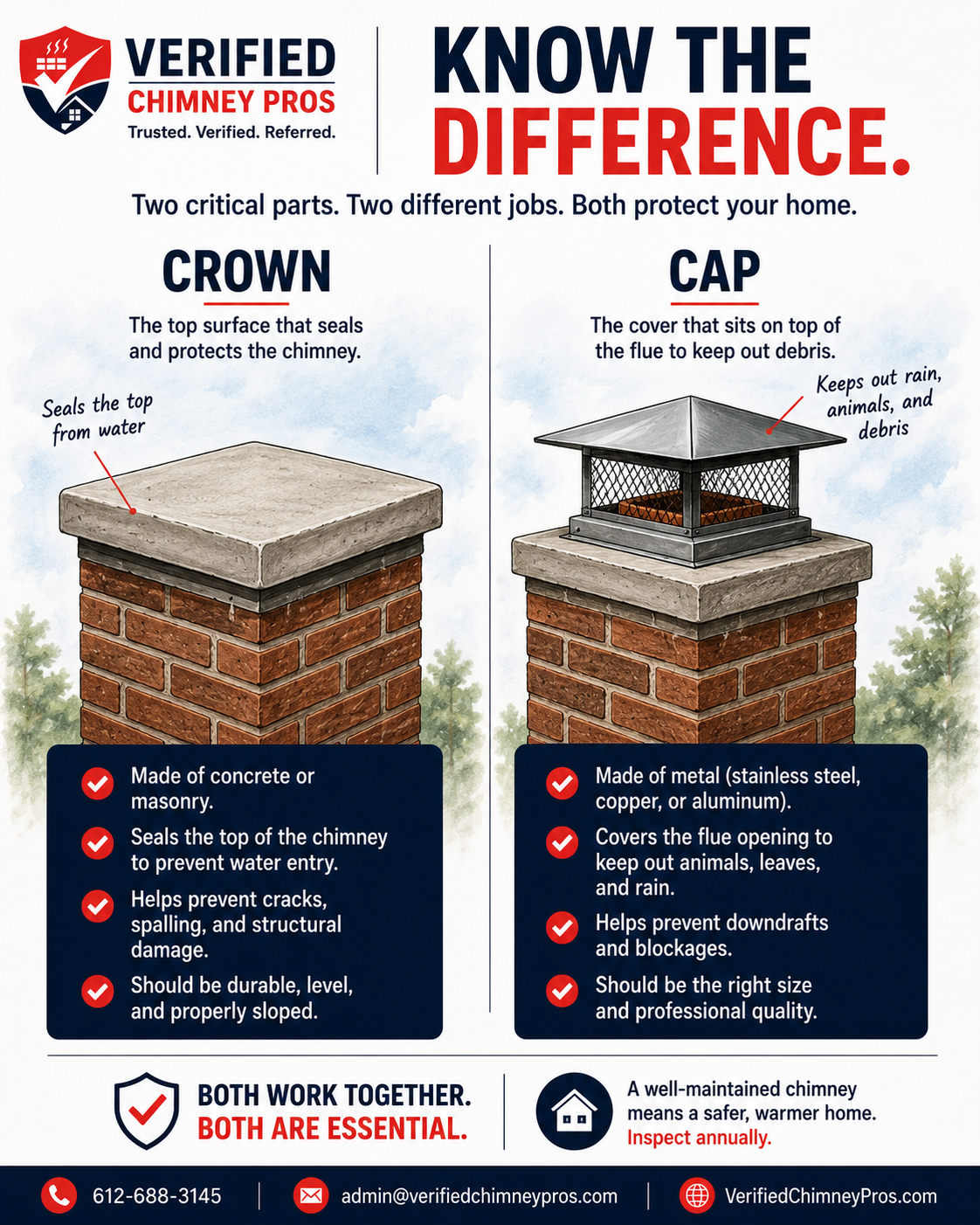
The chimney crown is the concrete or mortar slab that covers the entire top surface of your chimney. It sits directly on top of the brick or stonework, sealing everything except the flue opening. Think of it as your chimney’s roof.
The chimney cap sits above the crown, covering only the flue opening itself. It’s the metal cover — usually with mesh sides — that mounts directly over the flue tile where smoke exits.
Simple way to remember: The crown covers the chimney. The cap covers the flue. In the chimney crown vs chimney cap layout, the cap always sits on top of or above the crown.
Difference 2: Primary Protective Function
Your crown’s job is shedding water away from the chimney’s top surface. A properly built crown slopes downward and outward, directing rain away from the bricks below. It also features an overhanging drip edge that prevents water from running down the chimney’s exterior face.
Your cap’s job is different — it blocks direct entry into the flue opening. It stops rain from falling straight down your chimney while still allowing smoke to escape freely.
In the chimney crown vs chimney cap function comparison: the crown protects the chimney structure. The cap protects the flue interior. Both jobs matter equally.
Difference 3: Construction Materials
Chimney crowns should be built from Portland cement-based concrete mixtures. Quality crowns are typically 3-4 inches thick at their highest point and reinforced for durability. Unfortunately, many builders cut corners using simple mortar — which cracks within years.
Chimney caps are made from metal. Common options include galvanized steel (least expensive, shortest lifespan), stainless steel (excellent durability), and copper (premium, longest-lasting).
The chimney crown vs chimney cap material difference matters for repairs. Crown repairs involve masonry work. Cap replacements involve metalwork. Different skills, different costs, different contractors in some cases.
Difference 4: What Each Component Blocks
Your crown blocks surface water. It prevents rain from soaking into the top of your masonry structure, where freeze-thaw cycles would crack bricks and crumble mortar joints.
Your cap blocks much more. It stops direct rainfall from entering the flue. It prevents animals — birds, squirrels, raccoons — from nesting inside your chimney. The mesh screening also contains sparks and embers, preventing roof fires.
In the chimney crown vs chimney cap protection comparison, the cap handles more diverse threats. But neither component can do the other’s job. You need both working properly for complete protection.
Difference 5: Common Failure Warning Signs
Crown failure signs are often visible from the ground with binoculars. Look for visible cracks across the concrete surface, crumbling edges, pieces of concrete on your roof or ground, and moss growth indicating trapped moisture.
Cap failure signs include rust stains running down your chimney exterior, a tilted or missing cap visible from below, animal sounds coming from your fireplace, and debris falling into your firebox.
According to the CSIA, both components should be examined during every annual inspection. Catching chimney crown vs chimney cap failures early typically means repairs costing hundreds — not rebuilds costing thousands.
Related reading: Faulty Chimney Damper: 7 Dangerous Signs
Difference 6: Typical Repair and Replacement Costs
Crown repairs vary by damage severity. Crown sealing with professional waterproofing products costs $150-$400. Partial crown rebuilding runs $400-$900. Complete crown replacement typically costs $900-$2,500 depending on chimney size.
Cap replacement is generally less expensive. Standard galvanized caps cost $100-$300 installed. Stainless steel caps run $200-$500. Premium copper caps cost $300-$700 but can last 50+ years.
The chimney crown vs chimney cap cost comparison reveals why prevention matters. Spending $200-$500 today on either component prevents masonry damage costing ten times more later.
Difference 7: Expected Lifespan and Maintenance Needs
A properly constructed concrete crown should last 50-75 years. However, poorly built mortar crowns may crack within 5-10 years. Professional waterproof sealing every 5-10 years dramatically extends crown lifespan.
Cap lifespan depends entirely on material. Galvanized steel lasts 5-15 years before rust destroys it. Stainless steel lasts 20-40 years. Copper can protect your flue for 50 years or more.
In the chimney crown vs chimney cap longevity comparison, both deserve annual professional inspection. Small maintenance investments on either component prevent the catastrophic water damage that destroys entire chimney structures.
Related reading: Chimney Flashing Leak: 7 Dangerous Signs
The Verified Chimney Pros Solution: Expert Inspection You Can Trust
Now that you understand chimney crown vs chimney cap differences, the next step is professional evaluation. Ground-level visual checks help, but proper assessment requires roof access, safety equipment, and trained eyes.
Verified Chimney Pros connects you with certified professionals who inspect both components thoroughly during every service visit. Our verified pros examine crown integrity, test cap security, check flashing condition, and document everything with photos.
Every professional in our network carries verified CSIA certification, current liability insurance, and authentic customer reviews. When you hire through our platform, you know exactly who’s climbing on your roof — and you know they’re qualified to be there.
Learn more: Annual Chimney Inspection: 7 Critical Reasons
What Proper Crown and Cap Maintenance Saves You
Understanding chimney crown vs chimney cap maintenance delivers immediate financial benefits. Annual inspections costing $150-$300 catch small problems before they become structural emergencies.
A $200 cap replacement prevents animal infestations requiring $500-$1,500 removal services. A $300 crown sealing prevents water damage requiring $3,000-$10,000 masonry rebuilds. The math is simple — prevention always wins.
Beyond money, properly maintained crowns and caps protect your family’s safety. They prevent carbon monoxide blockages, reduce chimney fire risks, and keep your home’s air quality clean. That’s protection no price tag captures.
FAQ
What is the main chimney crown vs chimney cap difference?
The crown is the concrete slab covering your chimney’s top surface. The cap is the metal cover over the flue opening. The crown protects the structure; the cap protects the flue. Understanding this chimney crown vs chimney cap distinction helps you identify repair needs accurately.
Can I have a chimney cap without a crown?
No — every masonry chimney has some form of crown (even poorly built ones). But many chimneys lack caps entirely. In the chimney crown vs chimney cap question of necessity, caps are the most commonly missing component.
Which is more important — chimney crown vs chimney cap?
Both are essential. The crown protects your masonry from surface water. The cap blocks rain, animals, and debris from entering your flue. In the chimney crown vs chimney cap priority debate, professionals agree: you need both functioning properly.
How much does chimney crown vs chimney cap replacement cost?
Crown replacement costs $900-$2,500. Cap replacement costs $100-$700 depending on material. The chimney crown vs chimney cap cost difference reflects the masonry labor involved in crown work versus simpler metal cap installation.
How do I know if my chimney crown is cracked?
Look for visible cracks, crumbling edges, or concrete pieces on your roof using binoculars. Water stains on interior ceilings near the chimney also suggest crown failure. Annual professional inspections catch crown cracks early.
What happens if my chimney cap falls off?
Without a cap, rain falls directly into your flue, animals nest inside, and debris blocks airflow. In the chimney crown vs chimney cap failure comparison, missing caps create faster, more obvious problems than crown cracks.
Can I replace a chimney cap myself?
Handy homeowners sometimes install caps themselves, but roof work is dangerous. Improper installation causes draft problems and cap detachment. Professional installation costs little and guarantees correct fit and function.
How long does a chimney crown last compared to a cap?
Quality concrete crowns last 50-75 years. Galvanized caps last 5-15 years; stainless steel lasts 20-40 years; copper lasts 50+ years. In chimney crown vs chimney cap longevity, crowns generally outlast cheaper caps.
Does homeowners insurance cover chimney crown vs chimney cap damage?
Insurance typically covers sudden storm damage but not gradual deterioration. Documented annual inspections strengthen claims. Most chimney crown vs chimney cap failures result from neglected maintenance — which insurers won’t cover.
Should my chimney crown be sealed or waterproofed?
Yes. Professional waterproof sealing every 5-10 years prevents water absorption and freeze-thaw cracking. Use vapor-permeable sealants specifically designed for masonry — never standard paint or hardware store sealers.
What material chimney cap should I buy?
Stainless steel offers the best value — excellent durability at moderate cost. Copper provides premium longevity and attractive patina. Avoid galvanized steel in wet climates; it rusts quickly.
Can a damaged crown cause a chimney fire?
Indirectly, yes. Crown damage allows water entry, which deteriorates flue liners over time. Damaged liners expose combustible framing to extreme heat. In the chimney crown vs chimney cap safety comparison, crown neglect creates slower but equally serious risks.
Why does my chimney leak even with a cap installed?
Caps only block rain entering the flue directly. Leaks may come from crown cracks, failed flashing, or porous masonry absorbing water. Professional inspection identifies the true source — often involving multiple components.
Do prefab or metal chimneys have crowns?
No — factory-built chimneys use chase covers (metal tops) instead of masonry crowns. They still use caps, though. The chimney crown vs chimney cap distinction applies primarily to masonry chimney systems.
How do I schedule a chimney crown and cap inspection?
Visit Verified Chimney Pros to find certified professionals near you. Every verified pro inspects both components during standard annual inspections. Call 📞 612-688-3145 or email 📧 admin@verifiedchimneypros.com for assistance.
Protect Both Components Today
You now understand chimney crown vs chimney cap better than 95% of homeowners. You know the crown is the concrete slab sealing your chimney’s top. You know the cap is the metal cover protecting your flue. And you know both need regular professional attention.
This knowledge protects you twice over. First, you’ll spot warning signs before water damage escalates into expensive rebuilds. Second, you’ll communicate clearly with contractors — approving the right repairs at fair prices without confusion.
Don’t wait for ceiling stains or animal invasions to force action. Schedule your annual inspection today. Have a verified professional examine your crown, cap, flashing, and entire chimney system together.
The chimney crown vs chimney cap question is settled. The only question left is whether your components are still doing their jobs. Find out now — before the next rainstorm answers for you.
Get Your Crown and Cap Inspected by a Verified Professional
Stop guessing about your chimney’s condition. Get expert answers from certified professionals you can trust.
📞 612-688-3145 | 📧 admin@verifiedchimneypros.com