Seasonal Chimney Prep: 9 Critical Steps Every Homeowner Must Complete Before Lighting the First Fire of Fall
Seasonal chimney prep is the preventive maintenance every homeowner must complete before lighting the first fire of fall to prevent chimney fires caused by creosote buildup, carbon monoxide poisoning from blocked flues, structural damage from deteriorated chimney components, and emergency repairs that cost thousands when preventable problems go undetected during months of non-use. Most homeowners approach the first cold night of autumn with excitement — imagining cozy evenings by the fireplace, warm family gatherings around crackling wood fires, and the nostalgic comfort that only fireplace ambiance creates. What they do not imagine is the chimney fire that ignites because they skipped seasonal chimney prep, the carbon monoxide leak that poisons their family because they did not test for blockages, or the $5,000 emergency repair bill that results from lighting fires in chimneys that were not inspected after eight months of sitting unused.
According to the National Fire Protection Association (NFPA), heating equipment — including fireplaces, wood stoves, and chimneys — is the second leading cause of home fires in the United States, responsible for more than 48,000 residential fires annually causing billions in property damage, hundreds of deaths, and thousands of injuries. The Chimney Safety Institute of America (CSIA) reports that the majority of chimney-related fires occur during the first month of heating season when homeowners light fires in chimneys that were not properly inspected, cleaned, or maintained during summer — making seasonal chimney prep the single most important fire prevention activity homeowners perform each year.
Seasonal chimney prep takes 1–2 hours to complete using this checklist — and those hours prevent catastrophic consequences that occur when homeowners skip preparation and discover problems only after fires start, carbon monoxide alarms sound, or emergency responders arrive. This guide provides exactly what homeowners must inspect, test, and verify before lighting the first fire of fall — from scheduling professional chimney inspections to checking for animal nests, testing dampers, confirming carbon monoxide detectors work, and inspecting chimney caps, flashing, and crowns for damage that developed during months when chimneys sat dormant.
If you value your family’s safety, your home’s structural integrity, and your financial protection — completing seasonal chimney prep before the first fire is non-negotiable.
Why Skipping Seasonal Chimney Prep Creates Fire Hazards Homeowners Never See Coming
Homeowners who skip seasonal chimney prep and light fires immediately when cold weather arrives create fire hazards they cannot see, smell, or detect until disasters occur. Chimneys accumulate dangerous creosote deposits during previous heating seasons — tar-like flammable residue that coats flue liners and ignites at temperatures as low as 451°F, creating explosive chimney fires that spread to roofs, attics, and structural framing within minutes. Creosote that accumulated last winter remains inside flues throughout spring and summer — hardening into Stage 3 glazed creosote that resists brushing and requires professional removal before it is safe to use chimneys again.
Animal nests built during spring and summer block flues completely — preventing combustion gases from venting properly and forcing carbon monoxide back into homes through fireboxes. Birds, squirrels, raccoons, and bats build nests inside chimneys during warm months when flues are not in use, creating blockages that homeowners cannot see from firebox openings but that cause immediate carbon monoxide hazards the moment fires are lit. Carbon monoxide is colorless, odorless, and lethal — and homeowners who skip seasonal chimney prep and light fires in blocked chimneys create life-threatening poisoning risks that carbon monoxide detectors may not alert to until dangerous concentrations build.
Chimney components deteriorate during months of non-use. Chimney crowns crack from freeze-thaw cycles, flashing separates from rooflines allowing water infiltration, dampers rust shut or fail to seal properly, and mortar joints deteriorate from weather exposure. Homeowners who skip seasonal chimney prep and light fires without inspecting these components discover problems only after water damage appears, drafts fail, or structural issues require emergency repairs costing thousands of dollars to fix damage that preventive inspection would have caught before it worsened.
Seasonal chimney prep eliminates these hidden hazards before they cause fires, carbon monoxide poisoning, or expensive emergency repairs.
Why Seasonal Chimney Prep Matters More Than Any Other Annual Home Maintenance Task
Chimney Fires Cause Catastrophic Damage That Preventive Seasonal Chimney Prep Prevents Completely
Chimney fires burn at temperatures exceeding 2,000°F — hot enough to crack masonry, destroy flue liners, ignite wooden framing, and spread flames to roofs and attics within minutes. According to the U.S. Consumer Product Safety Commission (CPSC), chimney fires cause more than $125 million in property damage annually — and the majority of chimney fires occur during the first month of heating season when homeowners light fires in chimneys containing creosote buildup that was never removed during seasonal chimney prep.
Professional chimney cleaning removes creosote before it ignites. Seasonal chimney prep includes scheduling inspections and cleanings with CSIA-certified chimney sweeps who use specialized brushes, rotary tools, and inspection cameras to remove all creosote stages safely — eliminating the fuel source that chimney fires require to ignite. Homeowners who complete seasonal chimney prep prevent chimney fires entirely rather than fighting them after ignition.
H3: Carbon Monoxide Poisoning Kills Silently — Seasonal Chimney Prep Detects Blockages Before Exposure
Carbon monoxide poisoning kills approximately 430 Americans annually and sends thousands more to emergency rooms with symptoms ranging from headaches and dizziness to unconsciousness and death. Blocked chimneys prevent combustion gases from venting properly — forcing carbon monoxide back into homes where it accumulates to lethal concentrations before homeowners realize danger exists.
Seasonal chimney prep includes inspecting flues for blockages caused by animal nests, debris accumulation, collapsed flue tiles, or creosote buildup thick enough to restrict airflow. Professional chimney sweeps use cameras to inspect entire flue lengths, identifying blockages homeowners cannot see from fireboxes and removing obstructions before homeowners light first fires. Seasonal chimney prep prevents carbon monoxide poisoning by ensuring that chimneys vent properly before families are exposed.
9 Critical Seasonal Chimney Prep Steps You Must Complete Before the First Fire of Fall
These nine seasonal chimney prep steps form a complete safety checklist that homeowners must complete before lighting fires after summer ends.
Seasonal Chimney Prep Step #1: Schedule Professional Chimney Inspection With CSIA-Certified Sweep
The most important seasonal chimney prep step is scheduling a comprehensive Level 1 chimney inspection with a CSIA-certified chimney sweep before heating season begins. Professional inspections identify creosote buildup stages, detect animal nests and blockages, inspect flue liner integrity, evaluate chimney crown condition, check flashing and cap security, and test draft function — comprehensive safety verification that DIY inspections never achieve.
Schedule inspections in August or early September before peak demand arrives and certified sweeps’ calendars fill completely. Early scheduling ensures appointments occur before cold weather forces homeowners to light fires without completing seasonal chimney prep — and it avoids the price premiums professionals charge during peak October and November demand.
Seasonal Chimney Prep Step #2: Check Chimney Exterior for Visible Damage Before Lighting Fires
Complete visual seasonal chimney prep inspections from the ground and roof level, looking for:
- Chimney crown cracks — horizontal cracks indicating freeze-thaw damage requiring repair
- Missing or damaged chimney caps — allowing rain, snow, and animals to enter flues
- Separated flashing — gaps between chimneys and rooflines allowing water infiltration
- Deteriorating mortar joints — white powdery efflorescence indicating moisture damage
- Leaning or damaged chimney structures — structural issues requiring immediate professional evaluation
Visible exterior damage indicates that seasonal chimney prep must include professional repairs before chimneys are safe to use. Do not light fires in chimneys showing structural damage — contact verified professionals immediately for safety evaluations.
Seasonal Chimney Prep Step #3: Inspect Fireboxes and Dampers for Proper Operation
Essential seasonal chimney prep includes testing dampers to confirm they open and close completely, seal tightly when closed, and operate smoothly without sticking or binding. Dampers that fail to open fully restrict airflow and create drafting problems. Dampers that fail to seal completely when closed allow heated air to escape continuously during winter — wasting energy and increasing heating costs.
Inspect fireboxes for cracked firebrick, deteriorated refractory panels, or damaged hearth extensions. Cracks allow heat to transfer to combustible materials behind fireboxes, creating fire hazards. Replace damaged firebrick and refractory panels before lighting fires as part of comprehensive seasonal chimney prep.
Seasonal Chimney Prep Step #4: Test Carbon Monoxide Detectors on Every Level of Your Home
Critical seasonal chimney prep includes testing carbon monoxide detectors on every level of your home, replacing batteries if necessary, and installing new detectors if units are older than 5–7 years. Carbon monoxide detectors save lives by alerting families to dangerous gas concentrations before lethal exposure occurs — but only if detectors work properly.
Test detectors by pressing test buttons and confirming alarms sound loudly. Replace batteries annually during seasonal chimney prep even if detectors appear functional. Install detectors near sleeping areas where alarms can wake families if carbon monoxide accumulates overnight. Never skip this seasonal chimney prep step — carbon monoxide poisoning kills silently without detector warnings.
Seasonal Chimney Prep Step #5: Remove Debris, Ash, and Obstructions From Fireboxes
Complete seasonal chimney prep by removing all ash, debris, and obstructions from fireboxes before lighting first fires. Excessive ash buildup restricts airflow, reduces combustion efficiency, and creates dust clouds when fires are lit. Debris left in fireboxes from previous seasons can ignite unexpectedly, creating uncontrolled fires.
Vacuum fireboxes thoroughly using HEPA-filtered vacuums designed for ash removal — standard household vacuums spread fine ash particles throughout homes. Dispose of ash in metal containers stored outdoors away from combustible materials — ash can contain live embers that remain hot for days after fires appear extinguished.
Seasonal Chimney Prep Step #6: Inspect Chimney Caps and Screens for Damage or Animal Entry
Essential seasonal chimney prep includes inspecting chimney caps and screens for rust damage, missing screws, bent screening, or animal entry points that developed during months of non-use. Chimney caps prevent rain, snow, animals, and debris from entering flues — but caps deteriorate from weather exposure and require replacement every 10–15 years.
Replace damaged caps before completing seasonal chimney prep to ensure that chimneys remain protected throughout heating season. Missing or damaged caps allow animals to build nests inside flues during brief warm periods between cold snaps — creating recurring blockage problems all winter.
Seasonal Chimney Prep Step #7: Check for Animal Nests and Blockages Inside Flues
Critical seasonal chimney prep includes inspecting flues for animal nests built during spring and summer when chimneys were not in use. Birds, squirrels, raccoons, and bats build nests inside chimneys during warm months — creating complete blockages that prevent combustion gases from venting and force carbon monoxide back into homes.
Professional chimney sweeps use cameras to inspect entire flue lengths, identifying nests homeowners cannot see from fireboxes. They remove nests safely using specialized tools and install chimney caps with properly sized screening to prevent future animal entry. Never attempt to burn out animal nests by lighting fires — burning nests create uncontrolled chimney fires and toxic fumes.
Seasonal Chimney Prep Step #8: Verify Adequate Firewood Seasoning and Storage
Complete seasonal chimney prep includes verifying that firewood is properly seasoned — dried for minimum 6–12 months to moisture content below 20% — before burning. Wet or green firewood produces excessive creosote, burns inefficiently, and creates smoking problems that indicate incomplete combustion and dangerous creosote accumulation.
Test firewood moisture using inexpensive moisture meters available at hardware stores. Wood reading above 20% moisture requires additional seasoning before burning. Store firewood outdoors in covered, ventilated areas elevated off ground — never store firewood indoors where insects and moisture create problems.
Seasonal Chimney Prep Step #9: Schedule Professional Chimney Cleaning If Inspection Identifies Creosote
Final seasonal chimney prep includes scheduling professional chimney cleaning if inspections identify creosote buildup exceeding 1/8-inch thickness — the threshold where the NFPA recommends immediate cleaning before continued use. Professional chimney sweeps use calibrated brushes, rotary tools, and industrial vacuums to remove all creosote stages safely — eliminating fire hazards before heating season begins.
Do not attempt DIY chimney cleaning as seasonal chimney prep — professional equipment, training, and safety protocols are required to remove creosote completely without damaging flue liners or creating hazardous dust exposure. Hire CSIA-certified chimney sweeps exclusively to ensure that cleaning meets professional standards.
What Professional Chimney Inspections Catch During Seasonal Chimney Prep That DIY Inspections Miss
Professional seasonal chimney prep inspections identify hazards homeowners cannot detect without specialized equipment and training:
| Hidden Hazard | Why DIY Seasonal Chimney Prep Misses It | How Professional Inspections Detect It |
|---|---|---|
| Stage 3 Glazed Creosote | Appears as shiny coating homeowners mistake for normal flue surfaces | Inspection cameras with lighting reveal glaze that resists brushing |
| Cracked Flue Tiles | Hidden inside flues above smoke shelves where homeowners cannot see | Cameras inspect entire flue lengths identifying cracks allowing gas escape |
| Animal Nests Above Smoke Shelves | Located in upper flue sections inaccessible from fireboxes | Cameras locate nests and professionals remove them safely |
| Deteriorated Chimney Crowns | Damage occurs on flat crown surfaces not visible from ground level | Roof-level inspections identify cracks requiring immediate repair |
| Separated Flashing | Gaps develop between chimneys and rooflines hidden under shingles | Professionals lift shingles to inspect flashing integrity |
| Carbon Monoxide Draft Failures | Blockages prevent proper venting without visible symptoms | Draft testing equipment confirms chimneys vent properly |
Professional seasonal chimney prep inspections provide comprehensive safety verification that DIY efforts never achieve — making professional inspections non-negotiable before lighting first fires.
5 Dangerous Consequences of Skipping Seasonal Chimney Prep This Fall
Homeowners who skip seasonal chimney prep and light fires without professional inspections face these five preventable consequences:
❌ Consequence #1: Chimney Fires That Destroy Homes Within Minutes
Creosote buildup ignites at 451°F, creating chimney fires burning at 2,000°F+ that crack masonry, destroy flue liners, and spread to roofs and attics. Seasonal chimney prep removes creosote before ignition.
❌ Consequence #2: Carbon Monoxide Poisoning From Blocked Flues
Animal nests and debris block flues, forcing carbon monoxide back into homes where it accumulates to lethal concentrations. Seasonal chimney prep identifies and removes blockages before exposure.
❌ Consequence #3: Emergency Repairs Costing $3,000–$15,000 After Preventable Damage
Deteriorated crowns, separated flashing, and cracked flue tiles worsen when undetected, requiring emergency repairs costing thousands. Seasonal chimney prep catches damage early when repairs cost hundreds instead of thousands.
❌ Consequence #4: Voided Homeowner Insurance Claims After Fires
Insurance policies require annual chimney maintenance. Homeowners who skip seasonal chimney prep and experience chimney fires may have claims denied because maintenance was neglected.
❌ Consequence #5: Family Injuries or Deaths From Preventable Hazards
Chimney fires and carbon monoxide poisoning cause preventable injuries and deaths annually. Seasonal chimney prep eliminates hazards before families are exposed.
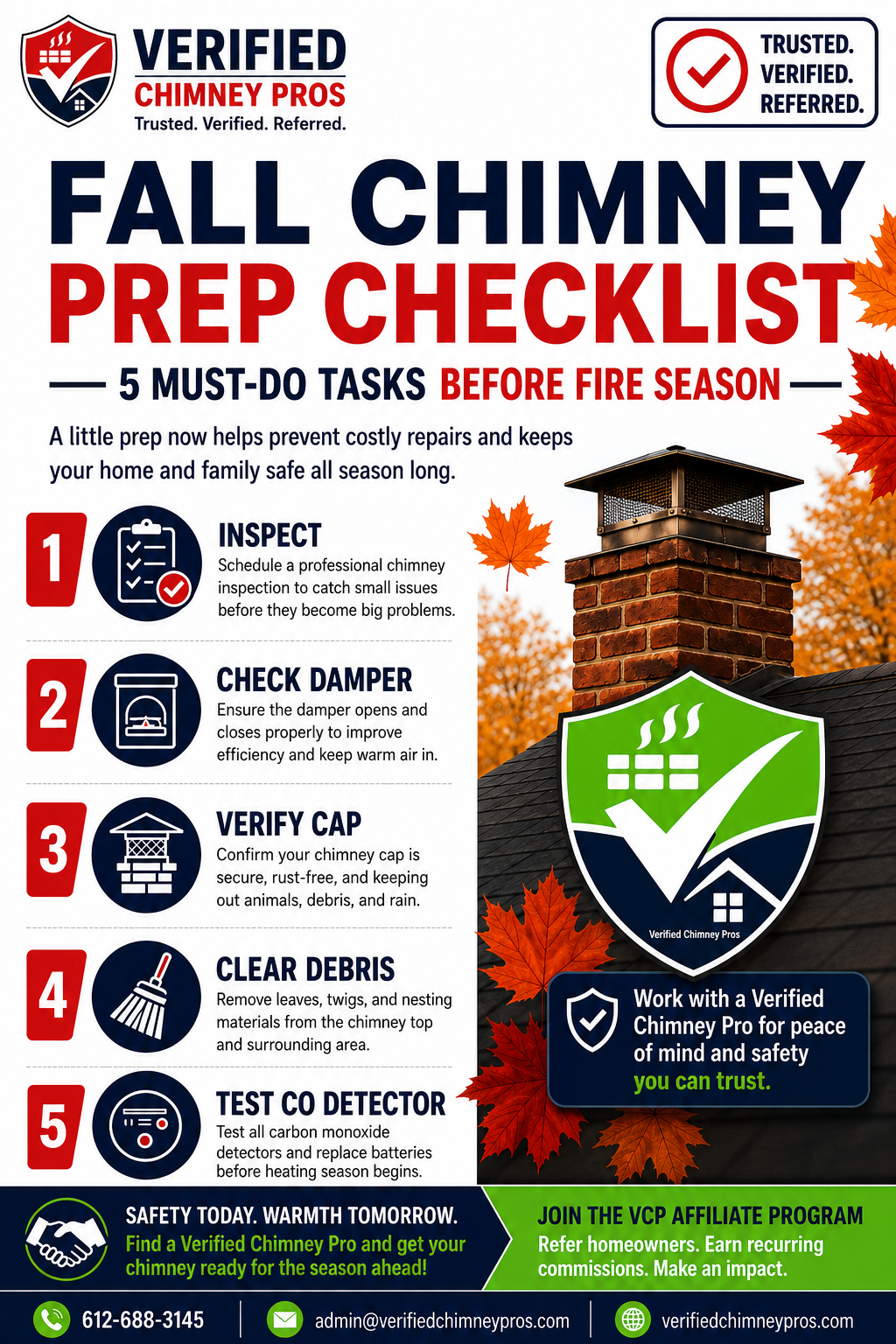
Your Quick-Reference Seasonal Chimney Prep Checklist
Print this seasonal chimney prep checklist and complete every item before lighting your first fire:
| ✅ Seasonal Chimney Prep Task | Completed? | Notes |
|---|---|---|
| Schedule CSIA-certified chimney inspection | ☐ Yes ☐ No | Book in August/September before peak demand |
| Inspect chimney exterior for visible damage | ☐ Yes ☐ No | Check crown, cap, flashing, mortar joints |
| Test damper operation | ☐ Yes ☐ No | Confirm opens/closes completely and seals tightly |
| Test carbon monoxide detectors | ☐ Yes ☐ No | Replace batteries and install new detectors if needed |
| Remove ash and debris from firebox | ☐ Yes ☐ No | Vacuum thoroughly with HEPA-filtered ash vacuum |
| Inspect chimney cap and screening | ☐ Yes ☐ No | Replace if damaged or missing |
| Check for animal nests inside flues | ☐ Yes ☐ No | Hire professionals to remove nests safely |
| Verify firewood is properly seasoned | ☐ Yes ☐ No | Test moisture content — should be below 20% |
| Schedule professional cleaning if needed | ☐ Yes ☐ No | Required if creosote exceeds 1/8-inch thickness |
Complete every item before lighting fires — incomplete seasonal chimney prep creates preventable hazards.
Your Quick-Reference VCP Verification Badge Checklist
Use this checklist to confirm that contractors you are considering display the VCP verification badge and understand what it guarantees:
| ✅ Verification Element | Does the Contractor Display It? | What It Guarantees |
|---|---|---|
| VCP Verification Badge Visible on Website | ☐ Yes ☐ No | Third-party credential verification completed |
| Active Licensing Confirmed | ☐ Yes ☐ No | Contractor operates legally with valid state license |
| Current Insurance Verified | ☐ Yes ☐ No | General liability coverage protects your property |
| CSIA/NFI Certification Validated | ☐ Yes ☐ No | Professional training and competency confirmed |
| Background Screening Completed | ☐ Yes ☐ No | Criminal history reviewed for disqualifying issues |
| Verified Reviews Displayed | ☐ Yes ☐ No | Real homeowner feedback from authenticated sources |
| VCP Profile Link Provided | ☐ Yes ☐ No | Full verification details accessible for review |
If contractors you are considering do not display the VCP verification badge or cannot provide profile links confirming verification, they have not submitted to independent credential review — meaning you must verify licensing, insurance, certifications, and backgrounds independently or hire without confirmation.
FAQ
1: When should I complete seasonal chimney prep before lighting the first fire?
Complete seasonal chimney prep in August or early September — before cold weather forces you to light fires without completing inspections and before certified chimney sweeps’ calendars fill during peak October/November demand. Early seasonal chimney prep ensures appointments occur when you need them rather than when professionals have availability.
2: Can I skip seasonal chimney prep if I only burned a few fires last winter?
No. Seasonal chimney prep is required annually regardless of how frequently you used your chimney last season because creosote accumulates even from occasional fires, animal nests are built during any warm months when chimneys are unused, and chimney components deteriorate from weather exposure whether chimneys are used or not.
3: What happens if I skip seasonal chimney prep and light fires immediately?
Skipping seasonal chimney prep creates fire hazards from unremoved creosote, carbon monoxide poisoning risks from blocked flues, structural damage from deteriorated components, and voided insurance coverage if fires occur. The consequences range from expensive emergency repairs to catastrophic property damage, injuries, and deaths.
4: How much does professional seasonal chimney prep cost?
Professional seasonal chimney prep inspections cost $100–$300 depending on location and chimney complexity. Cleaning services cost $150–$350 if creosote removal is required. These costs are exponentially less than the $3,000–$15,000+ emergency repairs required when homeowners skip seasonal chimney prep and discover problems only after damage occurs.
5: Can I complete seasonal chimney prep myself or must I hire professionals?
You can complete visual exterior inspections, damper testing, carbon monoxide detector testing, and firebox cleaning yourself — but professional chimney inspections and cleaning require specialized equipment, training, and safety protocols that DIY seasonal chimney prep never achieves. Hire CSIA-certified professionals for comprehensive safety verification.
6: What is the most important seasonal chimney prep step?
The most critical seasonal chimney prep step is scheduling professional chimney inspections with CSIA-certified sweeps who use cameras, draft testing equipment, and specialized tools to identify hazards homeowners cannot detect — including creosote buildup stages, animal nests, flue tile cracks, and carbon monoxide draft failures.
7: How do I know if my chimney has dangerous creosote buildup?
Professional chimney sweeps measure creosote thickness using gauges and inspection cameras during seasonal chimney prep inspections. The NFPA recommends professional cleaning when creosote exceeds 1/8-inch thickness. Homeowners cannot measure creosote accurately without professional equipment — making inspections essential.
8: What should I do if seasonal chimney prep inspections identify animal nests?
Never attempt to burn out animal nests by lighting fires — burning nests create uncontrolled chimney fires and toxic fumes. Professional chimney sweeps remove nests safely during seasonal chimney prep using specialized tools, then install chimney caps with properly sized screening to prevent future animal entry.
9: Does seasonal chimney prep include testing carbon monoxide detectors?
Yes — absolutely. Testing carbon monoxide detectors on every level of your home is essential seasonal chimney prep because detectors save lives by alerting families to dangerous gas concentrations before lethal exposure. Replace batteries annually and install new detectors if units exceed 5–7 years old.
10: Can I use my fireplace if I haven’t completed seasonal chimney prep yet?
No — never light fires in chimneys that have not undergone seasonal chimney prep inspections and cleaning. Unremoved creosote ignites at 451°F creating chimney fires. Blocked flues force carbon monoxide into homes. Deteriorated components fail catastrophically when exposed to fire heat. Complete seasonal chimney prep before lighting any fires.
11: What is the difference between Level 1, Level 2, and Level 3 chimney inspections?
Level 1 inspections are standard seasonal chimney prep inspections covering readily accessible chimney portions. Level 2 inspections include video camera scans of entire flue lengths and are required after events like chimney fires, earthquakes, or property transfers. Level 3 inspections involve removing chimney components to access hidden areas and are required only when serious hazards are suspected.
12: How do I find CSIA-certified chimney sweeps for seasonal chimney prep?
Visit Verified Chimney Pros and search by your ZIP code or city. Every professional listed holds active CSIA or NFI certifications, current insurance, and verified backgrounds. You receive comprehensive seasonal chimney prep from professionals who meet the highest industry standards.
13: Should I complete seasonal chimney prep for gas fireplaces too?
Yes — gas fireplaces require annual seasonal chimney prep inspections to check for carbon monoxide leaks, burner deterioration, pilot light function, and venting integrity. Gas appliances create carbon monoxide just like wood-burning fireplaces — making inspections equally critical for safety.
14: What documentation should I receive after professional seasonal chimney prep?
Professional chimney sweeps provide written reports documenting inspection findings, cleaning services performed, identified hazards, recommended repairs, and safety confirmations. Keep seasonal chimney prep documentation for insurance purposes — insurers may require proof of annual maintenance if chimney-related fires occur.
15: How can I schedule seasonal chimney prep with verified professionals immediately?
Visit Verified Chimney Pros, search by your location, review verified professional profiles, and contact certified sweeps directly to schedule seasonal chimney prep inspections and cleaning before heating season begins. For assistance, contact 📞 612-688-3145 or 📧 admin@verifiedchimneypros.com.
Don’t Risk Your Family’s Safety — Complete Seasonal Chimney Prep Before Lighting That First Fire
You have read exactly what seasonal chimney prep requires, why skipping preparation creates fire hazards and carbon monoxide risks, and how verified chimney professionals provide comprehensive safety verification that DIY efforts never achieve. You understand that the time investment required to complete seasonal chimney prep — 1–2 hours plus professional inspection scheduling — prevents catastrophic consequences that occur when homeowners light fires in chimneys that were not inspected after eight months of non-use.
The question is no longer whether seasonal chimney prep is necessary — it demonstrably is according to the NFPA, CSIA, and every fire safety organization. The question is whether you will complete the checklist before cold weather forces you to light fires without preparation — or whether you will gamble your family’s safety on the hope that nothing went wrong during the months your chimney sat unused.
Verified Chimney Pros connects you with CSIA-certified chimney sweeps who perform comprehensive seasonal chimney prep inspections, identify hazards homeowners cannot detect, remove creosote safely, and provide written documentation that your chimney is safe to use. Do not wait until the first cold night forces you to light fires without completing preparation. Schedule seasonal chimney prep today.
👉 Find a Verified Chimney Pro Near You and schedule seasonal chimney prep before heating season begins.
📞 Questions? Call us at 612-688-3145
📧 Email: admin@verifiedchimneypros.com
Your family’s safety, your home’s structural integrity, and your financial protection depend on completing seasonal chimney prep before you light that first fire. Do not skip it. Do not delay it. Complete it today.
.