Chimney Cap: 6 Critical Reasons Every Smart Homeowner Needs One Installed Right Now
A chimney cap is one of the smallest, least expensive, and most critically important components of your entire chimney system — and a shocking number of American homeowners don’t have one. Your chimney flue is an open column that runs from your firebox all the way to the top of your roof. Without a chimney cap covering that opening, your home is exposed to rain, snow, birds, squirrels, raccoons, leaves, downdrafts, and a range of other hazards that enter silently and cause damage that compounds quietly over time.
The good news is that installing a chimney cap is one of the simplest, most cost-effective home maintenance upgrades available to any homeowner with a chimney. A quality cap installed by a verified chimney professional costs a fraction of what it would cost to repair the water damage, animal intrusion, or structural deterioration that an uncapped chimney eventually produces. The math is simple. The protection is real. And the installation is straightforward for any certified chimney professional.
This guide explains exactly what a chimney cap is, why your home needs one immediately if you don’t already have one, the six most critical dangers of going without one, and how to find a verified chimney professional through Verified Chimney Pros to get yours installed correctly before another season passes.
What Is a Chimney Cap and What Does It Actually Protect Against?
A chimney cap is a protective covering installed at the very top of your chimney flue — the open column that vents combustion gases, smoke, and moisture out of your home. It typically consists of a solid flat or arched cover positioned above the flue opening, supported by mesh or solid sidewalls that allow gases to escape while blocking everything else from entering. Most chimney caps are constructed from galvanized steel, stainless steel, aluminum, or copper — each with different durability profiles and aesthetic qualities.
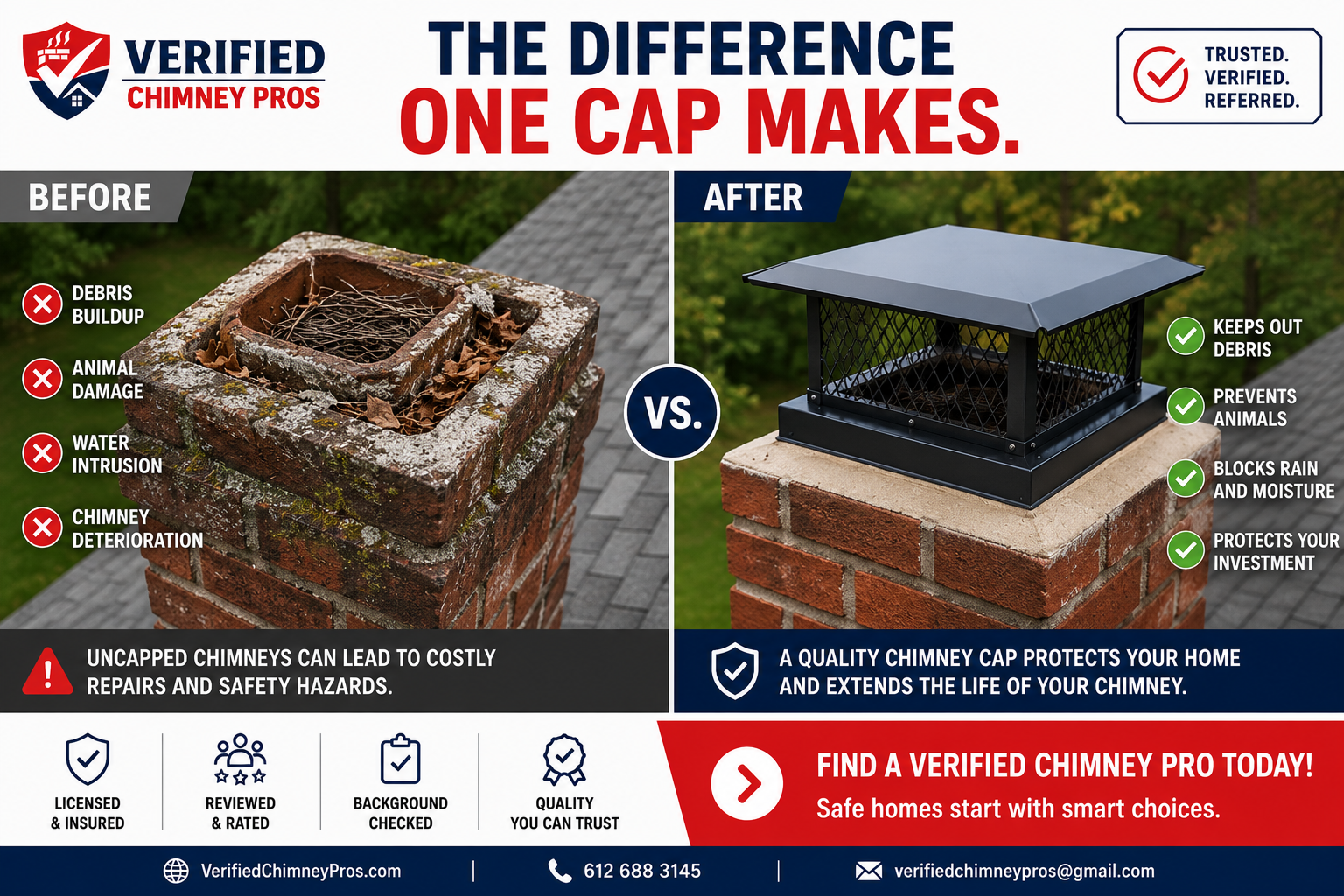
The primary function of a chimney cap is to act as the first and most critical barrier between the interior of your chimney system and the outside world. It prevents rain and snow from entering the flue directly. It blocks birds, squirrels, raccoons, and other animals from nesting inside the chimney. It stops leaves, twigs, branches, and other windblown debris from accumulating in the flue. And it acts as a spark arrestor — preventing burning embers from escaping the chimney and landing on your roof or nearby combustible materials.
Despite being a relatively small and inexpensive component, the chimney cap performs a disproportionately large protective function. The Chimney Safety Institute of America (CSIA) identifies chimney caps as one of the most important chimney components for preventing water damage, animal intrusion, and fire risk. A home without a chimney cap is a home with an unprotected opening — and that opening invites a long list of expensive, preventable problems.
The Dangerous and Expensive Reality of Living With an Uncapped Chimney
Many homeowners discover they don’t have a chimney cap — or that their existing one is damaged — only after a problem has already developed. A homeowner hears scratching inside the walls near the fireplace and discovers a bird’s nest blocking the flue. Another notices water stains on the ceiling near the chimney after a heavy rain. Another lights their first fire of the season and gets a living room full of smoke because a debris blockage is restricting airflow. All three scenarios have one common root cause: an uncapped or improperly capped chimney.
The consequences of going without a chimney cap aren’t just inconvenient — they’re genuinely expensive. Water intrusion causes rust on the damper, deterioration of the flue liner, spalling of interior masonry, and structural damage to surrounding wood framing. Animal intrusion introduces nesting materials — which are highly flammable — directly into your chimney flue. Debris accumulation restricts airflow and increases carbon monoxide backdraft risk. Each of these problems has a repair cost that dwarfs the cost of installing a chimney cap before the damage occurred.
According to HomeAdvisor’s cost data for chimney repairs, chimney water damage repairs can range from $150 for minor masonry patching to $10,000 or more for significant liner and structural restoration. A quality chimney cap installation by a verified professional typically costs between $150 and $600 depending on flue size, material, and configuration. The cost comparison makes the decision straightforward — and the sooner you act, the less you risk.
Why Your Chimney Cap Matters Far More to Your Home's Safety Than Most Homeowners Know
A chimney cap sits at the intersection of fire safety, water protection, structural integrity, and air quality — making it one of the few single-component upgrades that simultaneously addresses multiple categories of home risk. Most homeowners think of their chimney as a passive structure — something that simply exists as part of the house. In reality, your chimney is a dynamic, active system that experiences significant weather exposure, thermal cycling, and biological activity throughout the year.
Without a chimney cap, that dynamic system has an unprotected opening at its highest, most exposed point. Rain enters directly into the flue during every storm. Animals explore that opening every time temperatures drop and they’re looking for warmth. Windblown embers from a neighbor’s fire — or from your own — can land directly in an uncapped flue if downdraft pushes them back in. Every one of these scenarios creates a risk that a properly installed chimney cap eliminates entirely.
The National Fire Protection Association (NFPA) recommends annual chimney inspections that specifically include evaluation of the chimney cap and crown condition. That recommendation exists precisely because these components are the first line of defense against the most common chimney hazards — and because their condition deteriorates over time in ways that aren’t always visible from the ground. A missing, damaged, or improperly sized chimney cap is a finding that should be addressed before the chimney is used again.
6 Critical Reasons Every Smart Homeowner Needs a Chimney Cap Installed Right Now
If you don’t currently have a chimney cap — or if yours is damaged, rusted, or improperly fitted — here are the six most critical reasons to address that today. Each one represents a category of real, measurable risk that a properly installed chimney cap eliminates.
Water is the single most destructive force acting on your chimney system — and an uncapped flue delivers rainwater directly into the heart of that system with every storm. When water enters an uncapped chimney, it saturates the mortar joints, accelerates freeze-thaw deterioration of the masonry, rusts the damper and firebox components, and degrades the flue liner. Over time, this moisture damage compromises the structural integrity of the entire chimney system.
A properly installed chimney cap covers the flue opening completely — directing rain and snow away from the flue while still allowing combustion gases to vent freely. This single component dramatically reduces the moisture exposure that causes the majority of expensive chimney repairs. The CSIA identifies water intrusion as the most common cause of chimney deterioration in the United States — and a chimney cap is the most effective single intervention for preventing it.
Your uncapped chimney flue looks like an ideal home to a wide variety of wildlife. It’s warm, dark, sheltered from predators, and perfectly sized for nesting. Chimney swifts — migratory birds protected under the Migratory Bird Treaty Act — are the most common chimney nesting bird in the United States. Once they nest in your flue, you cannot legally disturb the nest until the birds have migrated — meaning your chimney may be unusable for an entire season if nesting occurs before you install a chimney cap.
Beyond birds, squirrels and raccoons frequently enter uncapped chimneys, become trapped, and either die inside the flue — creating a decomposition and odor issue — or push through the damper into your living space. Animal nesting materials — dry leaves, twigs, feathers, and fur — are highly flammable and create a serious fire hazard directly inside your chimney. A mesh-sided chimney cap blocks all wildlife access while maintaining proper flue ventilation.
Wind carries leaves, twigs, branches, seed pods, and other debris — and without a chimney cap, all of it can enter and accumulate in your flue. Over time, this debris restricts the effective diameter of the flue, reducing draft performance and creating blockages that cause smoke — and carbon monoxide — to back up into your living space rather than venting safely outside.
Carbon monoxide is colorless, odorless, and lethal. The U.S. Centers for Disease Control and Prevention (CDC) identifies carbon monoxide poisoning as one of the leading causes of accidental poisoning deaths in the United States. A debris blockage in an uncapped chimney that causes CO backdraft is a life-safety hazard that is entirely prevented by a properly installed chimney cap with adequate mesh coverage.
When you burn wood in your fireplace, combustion produces sparks — small, burning particles that travel up the flue with the rising draft. In a chimney without a chimney cap, these sparks exit the flue opening freely and can land on your roof, your deck, nearby trees, or neighboring structures. Wood shake roofs and dry outdoor vegetation are particularly vulnerable to spark-initiated fires.
A chimney cap with a mesh screen around its sides functions as a spark arrestor — allowing gases to vent freely while catching and extinguishing sparks before they escape the flue. Many local fire codes and homeowner’s insurance policies either require or strongly recommend spark-arrestor chimney caps on wood-burning fireplaces. Check with your insurance provider and local fire marshal to understand the requirements that apply to your specific property.
Downdraft — also called backdraft — occurs when wind pushes air down into your chimney flue rather than allowing it to draft upward. In a chimney without a chimney cap, strong winds can push smoke, ash, and cold air directly back into your firebox and living space. This is both an annoyance and a safety hazard — particularly when the downdraft carries carbon monoxide from incomplete combustion back into the home.
A properly designed chimney cap with an appropriate wind cover or draft-inducing profile significantly reduces downdraft occurrence. Certain premium cap designs — including wind-directional caps and turbine caps — are specifically engineered to create a positive draft effect even in high-wind conditions, improving combustion efficiency and eliminating the smoky, uncomfortable fireside experience that downdraft creates.
The cumulative effect of rain intrusion, animal activity, debris accumulation, and thermal cycling on an uncapped chimney accelerates deterioration of every component in the system — the liner, the mortar joints, the damper, the firebox, and the surrounding masonry. A chimney cap mitigates all of these stressors simultaneously, extending the functional life of your chimney system by years and reducing the frequency and cost of professional repairs.
A quality stainless steel chimney cap installed by a certified professional can last 20 years or more with minimal maintenance. The cost of that installation — typically $150 to $600 — is recovered in prevented repairs within the first one to two seasons of protection. No other single chimney component delivers that level of protective value per dollar invested.
The 5 Most Common Types of Chimney Caps — and How to Choose the Right One for Your Home
Not all chimney caps are the same. The right choice depends on your flue type, your local climate, your roof configuration, and your aesthetic preferences. Here’s a quick overview of the five most common types your verified chimney professional may recommend:
The standard single-flue chimney cap fits directly over one flue opening and is the most widely installed cap type in residential chimneys. It features a flat or slightly arched cover with mesh sides and is available in galvanized steel, stainless steel, copper, and aluminum. Stainless steel is the most popular choice for its durability and resistance to corrosion. These caps are highly effective, affordable, and appropriate for the vast majority of residential chimneys.
Homes with multiple flues in a single chimney structure benefit from a multi-flue chimney cap — a single larger cap that covers all flue openings simultaneously. This design provides comprehensive coverage of the entire chimney crown, protecting both the flue openings and the masonry surfaces around them from water exposure. Multi-flue caps are particularly common on older homes with separate heating and fireplace flues running through the same chimney structure.
Wind-directional chimney caps rotate to face away from the prevailing wind, creating a vacuum effect that draws combustion gases upward and prevents downdraft regardless of wind direction. These caps are particularly effective in coastal areas, open plains, and any location where prevailing winds create consistent downdraft problems in standard cap designs. They’re a practical, cost-effective solution for homeowners who regularly experience smoke backdraft.
Chimney balloons and draft stoppers are interior devices installed inside the flue to block cold air infiltration when the fireplace is not in use. They are not chimney cap replacements — they do not protect against rain, animals, or debris from outside. They serve a supplemental energy-efficiency function for chimneys that already have a proper exterior cap installed. Never use a chimney balloon as a substitute for a proper exterior cap.
Copper chimney caps are the premium choice for homeowners who want maximum longevity combined with distinctive visual appeal. Copper develops a natural patina over time that many homeowners find architecturally attractive — and copper’s natural antimicrobial and corrosion-resistant properties give it a functional lifespan of 30 to 50 years or more. The upfront cost is higher than steel alternatives, but the lifetime cost per year of protection makes copper an excellent long-term investment for high-end homes.
| Cap Type | Best For | Material Options | Average Lifespan |
|---|---|---|---|
| Standard Single-Flue | Most residential chimneys | Galvanized, stainless, aluminum, copper | 10–25 years |
| Multi-Flue | Multiple flues, older homes | Stainless steel, copper | 15–25 years |
| Wind-Directional | High-wind areas, downdraft issues | Galvanized, stainless steel | 10–20 years |
| Draft Stopper | Energy efficiency supplement only | Fabric/inflatable | 5–10 years |
| Copper Premium | High-end homes, maximum longevity | Copper | 30–50+ years |
How Verified Chimney Pros Makes Chimney Cap Installation Simple, Safe, and Guaranteed Right
A chimney cap installation sounds straightforward — but doing it correctly requires accurate flue measurement, proper cap selection, and secure installation that withstands wind, weather, and thermal expansion. An improperly sized or improperly attached cap can blow off in the first windstorm, fail to seal properly against the flue, or create airflow restrictions that impair draft performance. This is not a job to hand to a general handyman with a ladder and a hardware store cap.
Verified Chimney Pros connects homeowners with licensed, insured, and certified chimney professionals who have the training and tools to measure your flue accurately, recommend the right chimney cap type and material for your specific installation, and install it securely to manufacturer specifications. Every professional in the Verified Chimney Pros network has been reviewed for licensing, insurance, industry certifications — including CSIA and NFI credentials — and professional reputation before being approved to appear in the directory.
When you hire a verified chimney professional through the platform, you’re not guessing on credentials or hoping for the best. You’re starting from a position of verified trust — with a professional who is accountable to the platform’s standards and to your satisfaction. For a component as important as your chimney cap, that assurance matters. Contact Verified Chimney Pros today at 📞 612-688-3145 or 📧 admin@verifiedchimneypros.com to find a verified professional in your area.
5 Powerful Benefits of Installing Your Chimney Cap Through a Verified Professional Today
Every homeowner who has a quality chimney cap installed by a verified professional gains five compounding protective benefits that pay for themselves many times over:
A properly installed chimney cap eliminates the most common and most expensive cause of chimney damage — water intrusion — in a single, low-cost upgrade that protects every component of your chimney system beneath it.
Mesh-sided chimney caps completely block bird and animal access to your flue — eliminating the nesting fire hazard, the odor risk, and the legal complication of protected migratory bird removal from an active nest inside your chimney.
The right chimney cap design for your specific installation significantly reduces or eliminates downdraft — improving your fireplace experience, protecting your indoor air quality, and reducing carbon monoxide backdraft risk.
The mesh screen on your chimney cap catches and extinguishes sparks before they exit the flue — protecting your roof, your deck, and neighboring structures from spark-initiated fires during every use of your fireplace.
A quality chimney cap installation at $150 to $600 prevents water damage repairs that start at $500 and can exceed $10,000. The return on investment is immediate, measurable, and compounding — making it one of the highest-ROI home maintenance decisions available to any homeowner.
FAQ
1: Does every chimney need a chimney cap?
Yes — every chimney with an active flue should have a properly installed chimney cap. This applies to wood-burning fireplaces, gas fireplaces, wood stoves, oil furnaces, and any other appliance that vents through a chimney or flue. The NFPA and CSIA both strongly recommend chimney caps as a fundamental component of every chimney system regardless of fuel type or usage frequency.
You can check from the ground using binoculars — look for a metal covering at the very top of your chimney structure above the flue opening. However, a visual check from the ground doesn’t tell you whether the existing cap is the correct size, properly secured, or structurally sound. A professional chimney inspection — which includes evaluation of the chimney cap condition — is the only reliable way to confirm that your cap is providing adequate protection. Schedule an annual inspection with a verified pro at verifiedchimneypros.com.
3: How much does a chimney cap cost to install?
A standard single-flue chimney cap installation by a certified chimney professional typically costs between $150 and $350 for materials and labor, depending on your region, flue size, and cap material. Multi-flue caps and premium copper caps cost more — ranging from $300 to $600 or higher for complex installations. These costs are a fraction of the water damage, animal removal, or flue repair costs that an uncapped chimney typically generates within one to three seasons.
4: What is the best material for a chimney cap?
Stainless steel is the most widely recommended material for chimney cap installations — it provides excellent corrosion resistance, durability in all weather conditions, and a lifespan of 15 to 25 years or more. Copper offers superior longevity (30 to 50+ years) and distinctive aesthetics for homeowners who prioritize longevity and curb appeal. Galvanized steel is a lower-cost option but has a shorter lifespan in wet climates. Your verified chimney professional can recommend the right material for your specific climate and installation.
While some homeowners attempt DIY chimney cap installation, it is not recommended. Proper installation requires accurate measurement of the flue liner dimensions, selection of the correctly sized and configured cap, and secure attachment that can withstand high winds and thermal expansion. An incorrectly sized or improperly attached cap can blow off, restrict airflow, or fail to protect the flue opening — creating the very problems it was meant to prevent. Hiring a verified professional ensures the job is done correctly the first time.
The lifespan of a chimney cap depends primarily on the material. Galvanized steel caps typically last 5 to 10 years before showing significant rust and deterioration. Stainless steel caps last 15 to 25 years or more. Copper caps can last 30 to 50 years or longer. Annual chimney inspections include evaluation of cap condition — allowing your verified professional to identify deterioration before it leads to flue exposure and damage.
A correctly sized and properly installed chimney cap should have no negative impact on your fireplace’s draft performance — and in the case of wind-directional caps, it can actually improve draft consistency in high-wind conditions. An improperly sized cap with overly restrictive mesh can reduce airflow — which is another reason professional installation matters. Your certified chimney professional will select a cap design that matches your flue dimensions and maintains optimal draft performance.
8: My chimney has multiple flues — do I need multiple caps?
You have two options: install individual single-flue chimney caps on each flue opening, or install a multi-flue cap that covers all openings within the same chimney structure simultaneously. Multi-flue caps also protect the exposed chimney crown between flue openings from water exposure — making them an excellent choice for chimneys with multiple flues. Your verified chimney professional can assess your specific configuration and recommend the right coverage approach.
A properly installed chimney cap with intact mesh siding should completely prevent animal intrusion. However, mesh openings that are too large — or mesh that has deteriorated, rusted through, or been damaged — can allow small birds and mice to enter. The CSIA recommends mesh openings of no larger than ¾ inch for optimal wildlife exclusion. Annual inspections should include verification that the cap mesh is intact and undamaged.
Yes. Gas fireplaces vent through a flue or direct-vent system that is still susceptible to rain intrusion, debris blockage, and in some cases animal nesting — particularly in larger, traditional masonry flues connected to gas inserts. The chimney cap or rain cap protects the venting termination from moisture and blockage regardless of fuel type. Your verified chimney professional can confirm the appropriate cap type for your specific gas appliance venting configuration.
11: How do I know if my chimney cap is damaged?
Signs of a damaged chimney cap include: visible rust or corrosion on the cap structure, holes or gaps in the mesh siding, a cap that has shifted or is sitting at an angle, evidence of water stains inside the firebox or on the ceiling near the chimney, animal activity sounds near the fireplace, or unusual odors coming from the chimney during warm or humid weather. If you notice any of these signs, schedule a professional inspection immediately at verifiedchimneypros.com.
12: Does a chimney cap help with energy efficiency?
Yes — indirectly. A chimney cap reduces cold air infiltration through the flue when the fireplace is not in use, which helps maintain your home’s interior temperature and reduces heating costs during cold months. Paired with a properly functioning damper, a chimney cap creates an effective barrier against cold air downdraft that contributes meaningfully to overall home energy efficiency. For maximum energy efficiency, use both a chimney cap and a properly sealed damper when the fireplace is not in use.
13: My chimney cap blew off in a storm — is my chimney damaged?
Possibly. If your chimney cap was recently blown off, schedule a professional inspection as soon as possible — especially if significant rain or wind occurred before you noticed the cap was missing. Water that entered the unprotected flue during the period of exposure may have begun the process of moisture damage to the liner, mortar, and firebox components. A certified chimney professional can assess the extent of any damage and install a new cap with a more secure attachment method appropriate for your climate.
14: Is a chimney cap the same as a chimney crown?
No — these are two distinct and separate components. The chimney cap is the metal cover installed over the flue opening itself, designed to prevent rain, animals, and debris from entering the flue. The chimney crown is the concrete or mortar slab that covers the top of the entire chimney structure — everything except the flue openings — and directs water away from the chimney masonry. Both components work together to protect your chimney from water damage, and both should be inspected annually by a verified professional.
15: How do I find a qualified professional to install my chimney cap?
The safest and most reliable approach is to find a verified professional through Verified Chimney Pros. Every chimney professional listed on the platform has been reviewed for licensing, insurance, and industry certifications — including CSIA and NFI credentials — before being approved. This eliminates the risk of hiring an unqualified contractor for an installation that directly affects your chimney’s protection and your home’s safety. Call 📞 612-688-3145 or email 📧 admin@verifiedchimneypros.com for assistance finding a verified pro in your area.
Your Chimney Deserves Protection — Don’t Wait Until Damage Forces Your Hand
A chimney cap is one of the simplest, most affordable, and most impactful home protection upgrades available to any homeowner with a chimney. It costs less than a single repair call. It lasts for decades. And it prevents the cascade of damage — water intrusion, animal nesting, debris blockages, and spark hazards — that an uncapped chimney creates silently over time. The question isn’t whether you can afford to install a chimney cap. It’s whether you can afford not to.
The homeowners who discover they need a chimney cap the hard way — after a water-damaged liner, a wildlife intrusion, or a smoke-filled living room — all wish they’d installed one before the problem occurred. You have the opportunity to make that decision now, proactively, before damage gives you no choice. That’s the difference between maintenance and emergency repair — and it starts with a single call to a verified chimney professional.
Don’t leave your chimney exposed for another season. Find a licensed, insured, and certified chimney professional through Verified Chimney Pros today. Every professional in the directory has been reviewed and approved — so your chimney cap installation starts from a foundation of genuine trust. Call 📞 612-688-3145 or email 📧 admin@verifiedchimneypros.com right now and protect your home before the next storm arrives.