Annual Chimney Inspection: Why They're Non-Negotiable for Every Homeowner
Your fireplace may look perfectly safe, but hidden dangers can develop inside your chimney long before you notice smoke, strange odors, or visible damage. That’s why an annual chimney inspection isn’t simply another item on your home maintenance checklist—it’s an essential step in protecting your home and everyone living in it.
Every year, homeowners experience chimney fires, carbon monoxide leaks, and costly masonry repairs that could have been prevented with a professional annual chimney inspection. Small cracks, creosote buildup, damaged chimney liners, and animal blockages often go unnoticed until they become serious safety hazards.
Fortunately, these problems are highly preventable. Scheduling an annual chimney inspection helps identify issues early, reduces repair costs, improves fireplace performance, and gives you confidence every time you light a fire.
Hidden Chimney Problems Can Become Expensive Before You Notice Them
One of the biggest challenges homeowners face is that most chimney damage develops out of sight.
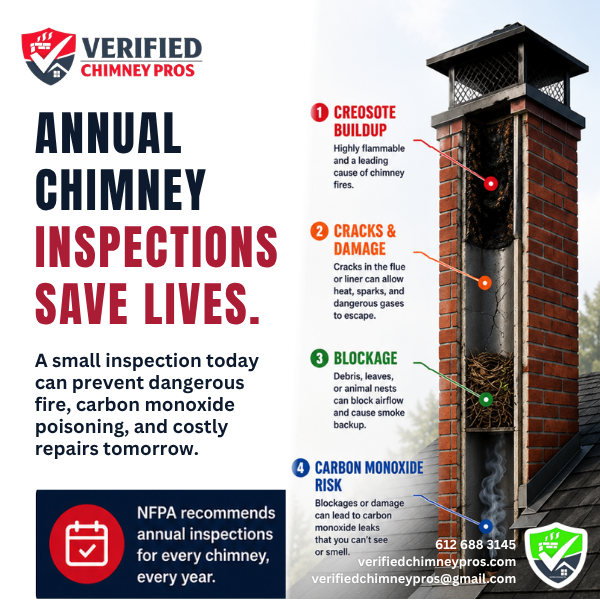
Inside the flue, creosote slowly accumulates with every fire you burn. Moisture gradually weakens mortar joints, chimney liners crack from years of heating and cooling, and birds or small animals often build nests inside unused chimneys. Because these problems happen gradually, they rarely produce obvious warning signs until significant damage has already occurred.
Many homeowners mistakenly believe that if their fireplace still works, everything must be fine. Unfortunately, waiting until you notice smoke backing into your living room or water stains around your chimney often means the damage has become much more expensive to repair.
An annual chimney inspection gives professionals the opportunity to detect these hidden issues while they’re still minor, helping homeowners avoid emergency repairs and unnecessary risks.
Why Skipping an Annual Chimney Inspection Can Put Your Family at Risk
Ignoring a yearly inspection isn’t just a maintenance decision—it can become a safety issue.
Creosote, a highly flammable byproduct of burning wood, is one of the leading causes of chimney fires. Even a relatively thin layer of buildup can ignite under high temperatures, causing fires that spread rapidly through the chimney system.
A damaged chimney liner can allow dangerous gases such as carbon monoxide to enter your home instead of safely venting outdoors. Water intrusion caused by damaged flashing or cracked masonry can weaken the chimney structure over time, resulting in costly repairs that could have been prevented with routine maintenance.
The National Fire Protection Association (NFPA) recommends that every chimney, fireplace, and venting system receive an inspection at least once each year, regardless of how often it’s used. This recommendation exists because hidden defects cannot be reliably identified through a simple visual inspection by the homeowner.
Scheduling an annual chimney inspection isn’t about expecting problems—it’s about preventing them before they threaten your family’s safety.
What Happens During an Annual Chimney Inspection? A Step-by-Step Guide
Many homeowners delay an annual chimney inspection simply because they don’t know what to expect. In reality, the inspection process is straightforward, thorough, and designed to identify problems before they become expensive repairs or safety hazards.
A qualified chimney professional evaluates both the visible and hidden components of your chimney system to ensure everything is operating safely and efficiently.
1. Inspecting Your Fireplace and Firebox for Early Warning Signs
The inspection begins inside your home.
A chimney professional examines the firebox, hearth, smoke chamber, damper, and other accessible fireplace components for signs of wear or damage.
During an annual chimney inspection, inspectors look for:
- Cracked firebricks
- Damaged dampers
- Excessive soot buildup
- Rust
- Moisture damage
- Signs of improper drafting
These early warning signs often indicate larger issues developing deeper within the chimney system.
2. Examining the Chimney Flue and Liner for Hidden Damage
The chimney liner is one of the most important parts of your entire fireplace system.
During an annual chimney inspection, professionals inspect the flue for:
- Creosote buildup
- Cracked clay liners
- Broken flue tiles
- Missing mortar joints
- Corrosion
- Obstructions
Many companies now use specialized inspection cameras to examine areas that cannot be seen from the fireplace opening.
This allows homeowners to receive photo or video documentation of any problems discovered during the inspection.
The Chimney Safety Institute of America (CSIA) explains the different inspection levels and why video inspections are recommended in many situations.
3. Checking the Exterior Chimney for Structural Damage
Your chimney is constantly exposed to rain, snow, wind, freezing temperatures, and intense summer heat.
Over time, these weather conditions can cause:
- Cracked bricks
- Deteriorating mortar
- Damaged chimney crowns
- Loose flashing
- Leaning chimneys
- Missing chimney caps
During an annual chimney inspection, these exterior components are carefully examined before small problems become major structural repairs.
Catching moisture intrusion early often saves homeowners thousands of dollars.
4. Testing Draft Performance and Ventilation Safety
A properly functioning chimney should safely remove smoke, gases, and combustion byproducts from your home.
During your annual chimney inspection, professionals evaluate:
- Airflow
- Draft performance
- Ventilation efficiency
- Smoke movement
- Appliance compatibility
Poor drafting can lead to smoke entering your living space or, more dangerously, carbon monoxide remaining inside your home.
The U.S. Consumer Product Safety Commission (CPSC) provides valuable information about carbon monoxide safety and prevention for homeowners.
5. Providing Professional Recommendations You Can Trust
One of the most valuable parts of an annual chimney inspection is receiving honest, documented recommendations.
A trustworthy chimney professional should provide:
- A written inspection report
- Photos of any damage
- Repair priorities
- Maintenance recommendations
- Transparent pricing
- Timeframes for future maintenance
There should never be pressure to approve repairs immediately.
Instead, you should leave the inspection with a clear understanding of your chimney’s current condition and any work that may be needed.
How Verified Chimney Pros Helps You Avoid Chimney Scams
Recognizing chimney scam red flags is important—but preventing scams before they happen is even better.
That’s why Verified Chimney Pros was created.
Instead of asking homeowners to spend hours researching contractors, verifying licenses, comparing reviews, and checking insurance documents, Verified Chimney Pros performs those verification steps before professionals are listed on the platform.
Every Verified Chimney Pro goes through a screening process that helps homeowners hire with greater confidence.
Our verification process includes reviewing applicable licensing requirements, confirming current insurance coverage, and evaluating professional business information before approval.
Instead of wondering whether a contractor is legitimate, homeowners can focus on finding the right professional for their needs.
Verification helps reduce uncertainty while making it easier to compare trusted professionals in one place.
Why Homeowners Trust Verified Chimney Pros for Annual Chimney Inspections
Finding a qualified chimney contractor shouldn’t feel like a gamble.
That’s exactly why Verified Chimney Pros exists.
Instead of spending hours comparing reviews, checking licenses, and researching insurance coverage, homeowners can search a directory of professionals who have already completed a comprehensive verification process.
Every Verified Chimney Pro has been screened for:
- Applicable licensing
- Current liability insurance
- Professional reputation
- Industry standards
- Business legitimacy
That means when you schedule an annual chimney inspection, you’re working with a professional whose credentials have already been reviewed before they ever appear in our directory.
Instead of wondering whether the recommendations you’re receiving are honest, you can focus on protecting your home with confidence.
The Long-Term Benefits of Scheduling an Annual Chimney Inspection
An annual chimney inspection is one of the most affordable ways to protect your home while avoiding expensive repairs. Instead of waiting for problems to become emergencies, yearly inspections help you stay ahead of issues that could affect your family’s safety and your home’s value.
When you schedule an annual chimney inspection every year, you benefit from:
- Early detection of hidden hazards such as creosote buildup, cracked flue liners, damaged masonry, and chimney blockages.
- Lower repair costs because small issues are identified before they become major structural problems.
- Reduced risk of chimney fires caused by excessive creosote accumulation.
- Improved protection against carbon monoxide leaks by ensuring your venting system is operating safely.
- Better fireplace performance with improved airflow and drafting.
- Longer chimney lifespan through regular preventative maintenance.
- Higher property value thanks to documented maintenance records that reassure future buyers.
- Greater peace of mind knowing your fireplace is safe for your family to enjoy.
An annual chimney inspection isn’t just about maintenance—it’s an investment in your home’s safety, efficiency, and long-term value.
FAQ
1. How often should I schedule an annual chimney inspection?
The National Fire Protection Association (NFPA) recommends scheduling an annual chimney inspection at least once every year, regardless of how often you use your fireplace.
2. What does an annual chimney inspection include?
A professional inspection typically includes evaluating the firebox, damper, flue liner, chimney crown, flashing, masonry, chimney cap, and overall structural condition.
3. Do gas fireplaces still require an annual chimney inspection?
Yes. Even gas fireplaces can develop venting issues, moisture damage, and blockages. An annual chimney inspection helps ensure safe operation.
4. What is the difference between a Level 1 and Level 2 chimney inspection?
A Level 1 inspection is recommended for chimneys under normal use, while a Level 2 inspection includes video scanning and is recommended after a home purchase, chimney fire, or appliance change.
5. How long does an annual chimney inspection usually take?
Most Level 1 inspections take approximately 45 to 60 minutes, depending on the size and condition of the chimney.
6. Can I inspect my chimney myself?
You can perform a basic visual check, but only a trained professional has the equipment and experience to properly inspect the chimney interior, flue liner, and venting system.
7. When is the best time to schedule an annual chimney inspection?
Late summer or early fall is ideal because it allows time for any needed repairs before fireplace season begins.
8. What are the most common problems found during a chimney inspection?
Common findings include creosote buildup, cracked liners, deteriorating mortar, damaged chimney caps, flashing leaks, water intrusion, and animal nests.
9. Does homeowners insurance require chimney inspections?
Insurance requirements vary by provider, but maintaining records of an annual chimney inspection can support future claims involving chimney-related damage.
10. How do I know if I need chimney cleaning after an inspection?
Your inspector will determine whether creosote buildup or debris has reached a level where professional cleaning is recommended.
11. How can I find a trustworthy chimney inspection company?
Choosing a contractor through Verified Chimney Pros helps eliminate the guesswork because listed professionals have already been screened for licensing, insurance, and professional standards.
Protect Your Home Before Small Chimney Problems Become Major Repairs
Every year you postpone an annual chimney inspection increases the chance that hidden damage will become a costly repair—or worse, a preventable safety hazard.
Don’t wait until smoke backs into your living room or water damage spreads through your chimney system.
Schedule your annual chimney inspection with a Verified Chimney Pro and enjoy the confidence that comes from knowing your fireplace is safe, efficient, and ready for the season ahead.